
How to Care for Alocasia Black Velvet
Grow Alocasia reginula, the jewel Alocasia, with bright indirect light, high humidity, and an airy, evenly moist mix.
Read the full Alocasia Black Velvet encyclopedia entry →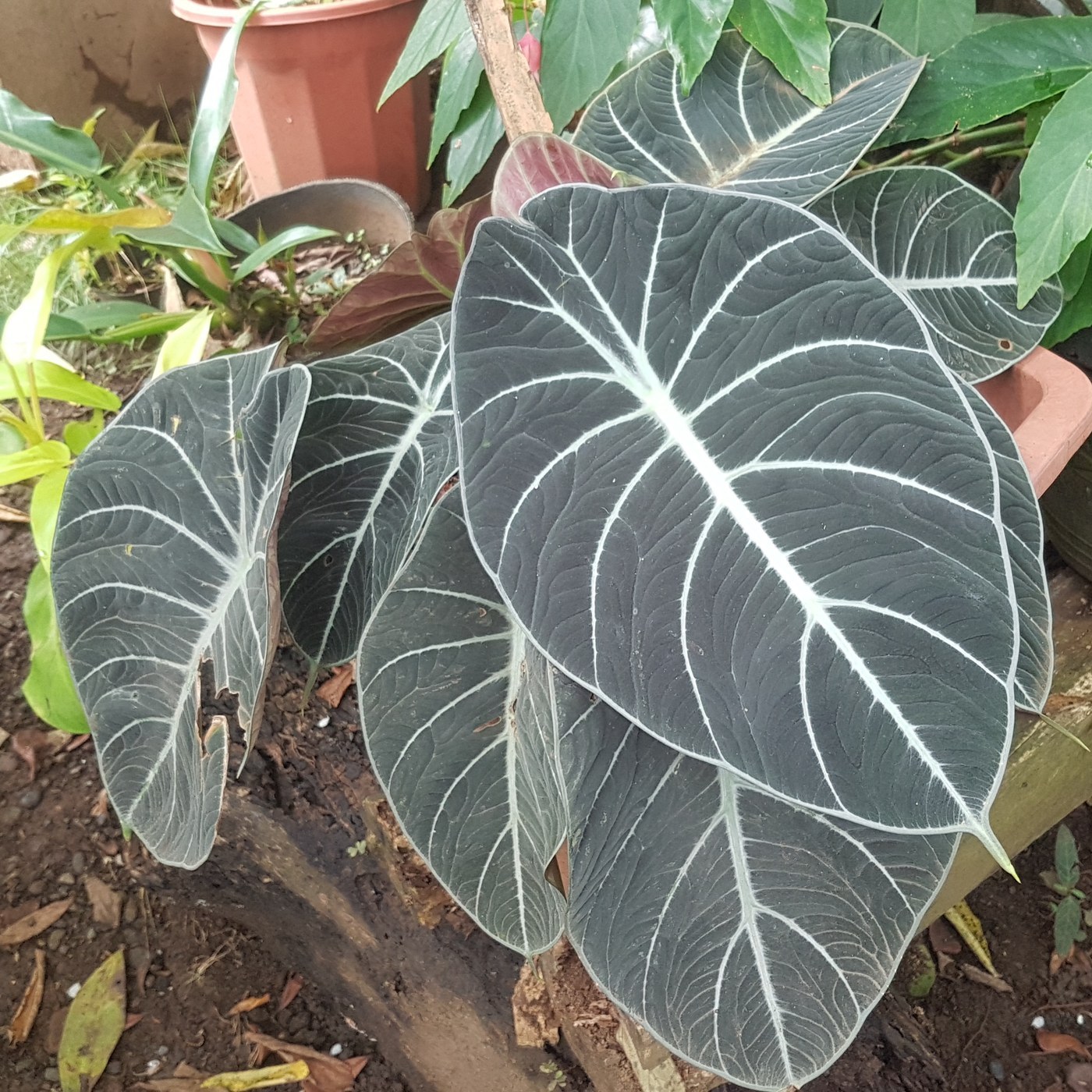
Alocasia Black Velvet (Alocasia reginula) is a compact jewel Alocasia grown for its dramatic, near-black velvety leaves etched with silvery-white veins. A small, slow-growing rhizomatous plant, it is more demanding than most houseplants, rewarding attentive humidity, light, and watering while punishing neglect and soggy roots.
Light
Give Black Velvet bright, indirect light. An east-facing window or a spot a few feet back from a brighter window is ideal, and it also does well under grow lights. Avoid direct sun, which scorches and bleaches the delicate velvety leaves, but do not let it languish in deep shade, where growth stalls and the plant weakens. Consistent, filtered brightness keeps the foliage compact and the silver veining vivid.
Water
Keep the soil lightly moist, letting the top inch dry before watering again. This jewel Alocasia is very sensitive to extremes: staying wet leads quickly to root and rhizome rot, while drying out completely causes rapid wilting and leaf loss. Water thoroughly, let the excess drain fully, and never leave the pot sitting in water. Use tepid water and reduce frequency in winter when growth slows. Many growers succeed by watering as soon as the surface begins to dry, keeping just-moist but never soggy conditions.
Soil & Potting
Use a light, airy, fast-draining mix that still holds some moisture. A blend of potting soil with generous amounts of perlite, orchid bark, and coco coir works well; some growers add a little charcoal. The goal is a chunky medium that drains freely around the rhizome yet stays evenly damp. Always pot in a container with drainage holes, and choose a snug pot rather than an oversized one, since excess soil stays wet and invites rot.
Humidity & Temperature
High humidity is critical: aim for 60-70% or more. In dry indoor air the leaf edges brown and the plant declines, so use a humidifier, a pebble tray, or a grouping of plants, or grow it in a cabinet or terrarium. Keep it warm, ideally in the range of about 65-80 F, and protect it from cold drafts, heating vents, and temperatures below the mid-50s F. Stable warmth and moisture are the keys to steady growth.
Feeding
Feed lightly during the active growing season. Apply a balanced houseplant fertilizer at quarter to half strength every three to four weeks in spring and summer, and stop feeding in fall and winter. This slow grower is easily overfed; salt buildup damages the sensitive roots, so flush the soil occasionally and always fertilize onto already-moist soil rather than dry.
Propagation
Propagate by division of the rhizome and its offsets. Unpot the plant, gently tease apart the clumping rhizomes or detach the small offsets that form at the base, making sure each division has roots, and pot them individually in the same airy mix. Spring or early summer, during active growth and repotting, is the best time. Keep divisions warm, humid, and just moist while they establish. These jewel types are not grown from leaf cuttings.
Repotting / Pruning
Repot only every couple of years, or when the pot is crowded with rhizomes, doing so in spring. Go up just one pot size at a time to avoid an overly large, moisture-retentive volume of soil. Refresh the mix and inspect the rhizome for rot during repotting. Pruning is minimal: simply trim away yellowed, damaged, or spent leaves at the base with clean shears. Removing tired outer leaves also improves airflow.
Common Problems & Pests
Root and rhizome rot from overwatering is the most common cause of decline; if the plant collapses, unpot it, cut away any mushy roots or rhizome, and repot the healthy remainder in fresh airy mix. Crispy brown leaf edges signal low humidity or dry soil; yellowing lower leaves can indicate overwatering. Spider mites are a frequent pest, especially in dry air, showing as fine webbing and stippled leaves, so raise humidity and treat promptly. Watch also for mealybugs, thrips, and fungus gnats in wet soil. Note that Alocasias often go dormant in winter and may drop leaves; the rhizome usually reflushes when warmth and light return.
Seasonal Care Tips
Spring and summer are the active season for watering, feeding, and repotting; growth is fastest with warmth, humidity, and bright indirect light. In fall, taper feeding and watering as growth slows. In winter the plant may pause or go partly dormant, sometimes losing leaves; keep it warm, hold back on water, stop fertilizing, and be patient, since the rhizome will push new growth in spring. Maintain high humidity year-round, which is often hardest in heated winter air.
Frequently asked questions
Why are the leaves on my Alocasia Black Velvet getting crispy brown edges?
Crispy edges almost always point to low humidity or soil that dried out too much. Raise humidity to 60-70% with a humidifier or pebble tray, keep the mix lightly moist, and shield the plant from dry heating vents.
How often should I water Alocasia Black Velvet?
Water when the top inch of the airy mix begins to dry, keeping it just-moist but never soggy. This varies with warmth and season, more often in summer and much less in winter. Never let it sit in water or fully dry out.
My Black Velvet lost all its leaves. Is it dead?
Not necessarily. Alocasias often go dormant in winter or after stress and drop leaves while the rhizome stays alive. Keep it warm, humid, and barely moist, and it usually pushes fresh growth when spring warmth and light return.
How do I propagate Alocasia Black Velvet?
Divide the rhizome. Unpot the plant and gently separate the clumping rhizomes or the small offsets at the base, making sure each piece has roots, then pot them individually in an airy mix and keep them warm and humid while they establish.