
How to Care for Alocasia Polly
Grow Alocasia Polly for its dramatic arrow-shaped leaves with bold white veins and wavy, glossy dark-green margins.
Read the full Alocasia Polly encyclopedia entry →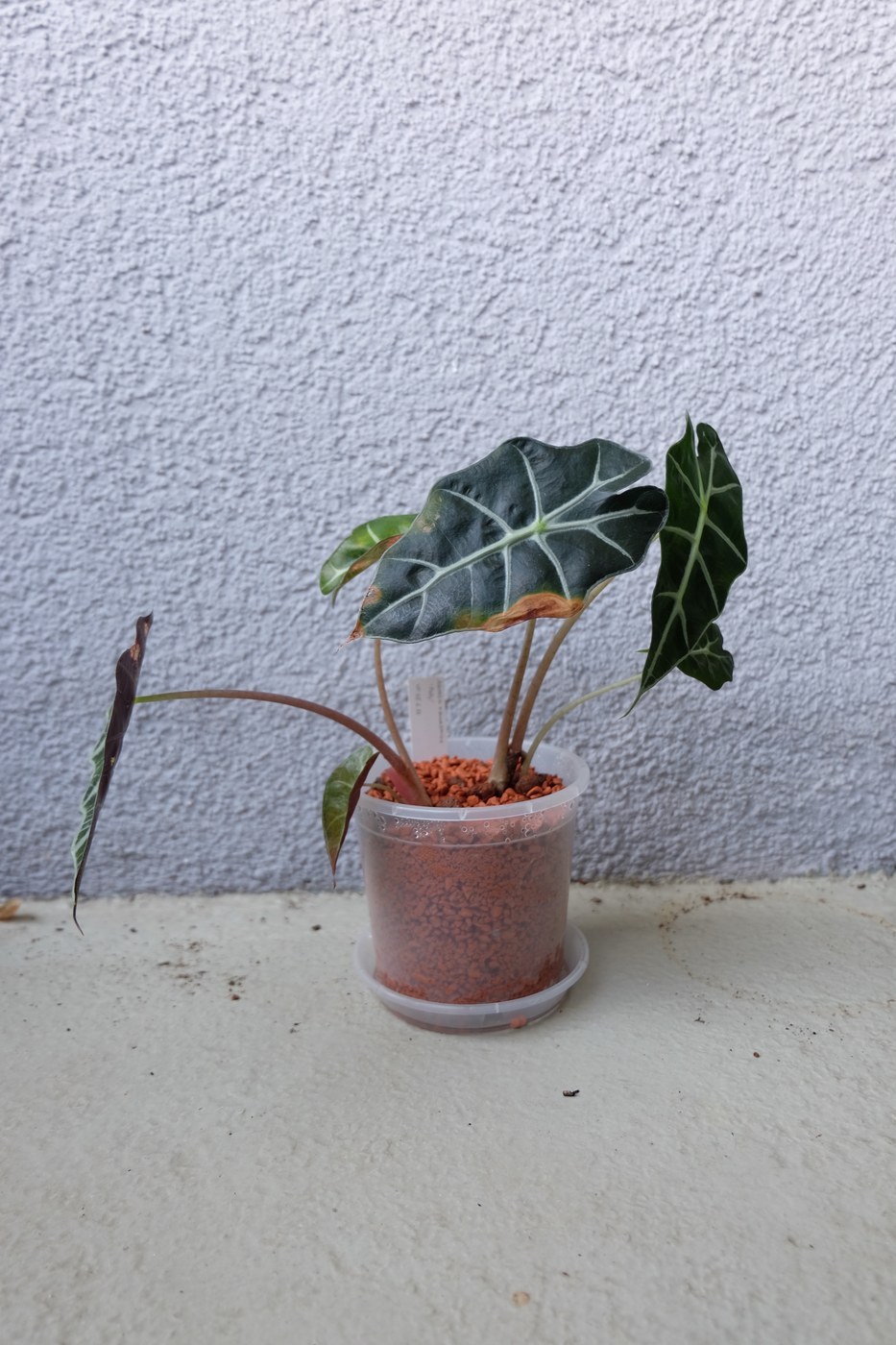
Alocasia Polly (Alocasia x amazonica 'Polly') is a compact, striking aroid famous for its arrowhead leaves marked with bright white veins against glossy near-black-green blades and scalloped, wavy edges. It is a rewarding but somewhat fussy houseplant that thrives when its warmth, humidity, and moisture needs are met consistently.
Light
Give it bright indirect light. An east-facing window or a few feet back from a brighter window is ideal. Direct midday sun will bleach and scorch the dramatic leaves, while too little light causes small, dull foliage and leggy petioles. Rotate the pot regularly for even, upright growth.
Water
Keep the soil lightly and evenly moist but never soggy. Water when the top inch begins to dry, then moisten thoroughly and let it drain. Alocasias are sensitive to both drought and waterlogging; consistency is key. Use room-temperature water and empty any saucer promptly.
Soil & Potting
Plant in a chunky, airy, well-draining mix; a blend of potting soil with perlite, orchid bark, and coco coir mimics its preferred loose, aerated root zone. A pot with drainage holes is essential, and Polly often does best slightly snug in its container.
Humidity & Temperature
High humidity, ideally 60% or more, keeps this plant happy and crisp-edge free. Use a humidifier or pebble tray in dry rooms. Maintain warm temperatures of 65-80 F (18-27 C) and protect it from cold drafts, air-conditioning blasts, and sudden chills, which can trigger leaf drop.
Feeding
Feed with a balanced, diluted liquid fertilizer every 3-4 weeks during spring and summer. Cut back or stop feeding in fall and winter when growth slows.
Propagation
Alocasia Polly grows from a rhizome and produces offset bulbs, or corms, around the base. Propagate by dividing the rhizome or potting up these small corms into moist, warm mix. Patience is required, as young offsets establish slowly.
Repotting / Pruning
Repot every one to two years in spring when roots fill the pot, going up just one size. Prune only to remove yellow or dying leaves, cutting them at the base. Handle the rhizome gently during any repotting or division.
Common Problems & Pests
Brown, crispy leaf edges usually mean low humidity or inconsistent watering. Yellowing leaves often signal overwatering or cold stress. Spider mites are a frequent nuisance, especially in dry air; inspect the undersides of leaves and rinse them regularly. Watch also for mealybugs and scale.
Seasonal Care Tips
Growth slows dramatically in winter, and Polly may drop leaves or go semi-dormant, especially in cool or low-light homes. Reduce watering, hold off on fertilizer, and keep it warm. If it loses all its leaves, keep the rhizome barely moist and warm, and it will often resprout when spring warmth and light return.
Frequently asked questions
Why are the edges of my Alocasia Polly turning brown and crispy?
This is almost always caused by low humidity or inconsistent watering. Raise humidity to 60% or more with a humidifier or pebble tray, and keep the soil evenly moist but not soggy.
My Alocasia dropped all its leaves. Should I throw it out?
Not necessarily. Alocasias can go dormant in cold or low-light conditions. Keep the rhizome warm and barely moist, and it will often push out fresh leaves when warmth and brighter light return.
How do I get rid of spider mites on my Alocasia Polly?
Rinse the leaves, especially the undersides, and raise humidity since mites thrive in dry air. Wipe foliage regularly and isolate the plant while you treat it to prevent spread.
How much light does Alocasia Polly need?
Bright indirect light is best. Avoid direct midday sun, which scorches the leaves, and avoid dim corners, which produce small, dull foliage and weak stems.