
How to Care for Angel Wing Begonia
Angel Wing Begonia (Begonia coccinea) is a cane-type houseplant with silver-spotted wing-shaped leaves and dangling clusters of bright flowers.
Read the full Angel Wing Begonia encyclopedia entry →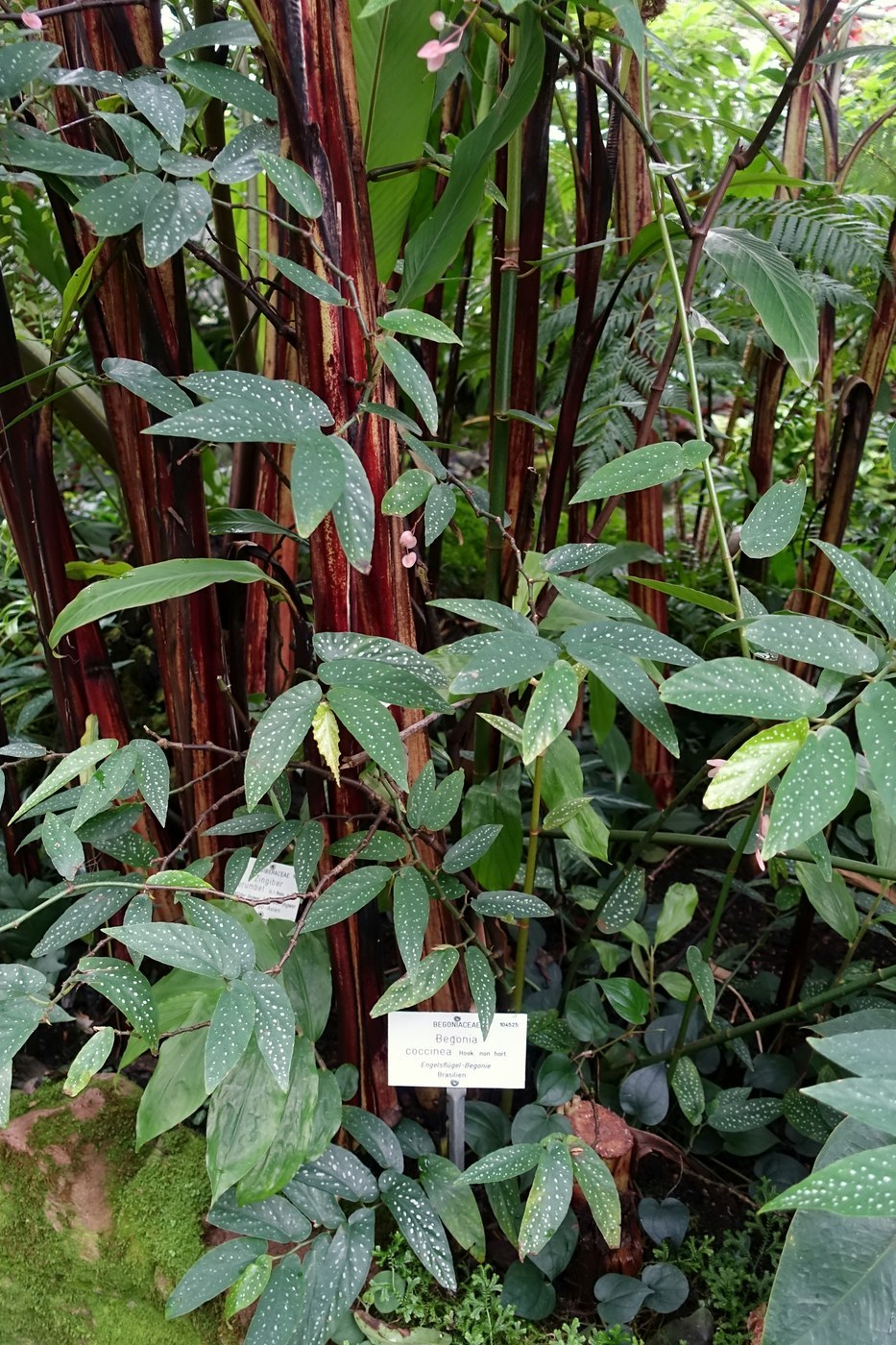
Angel Wing Begonia (Begonia coccinea and its hybrids) is a cane-type begonia beloved for its asymmetrical, wing-shaped leaves—often spotted silver above and flushed red beneath—and pendant clusters of pink, red, or orange flowers. Grown as a houseplant or patio plant, it offers year-round foliage interest and repeat bloom with steady, attentive care.
Light
Provide bright, indirect light for the best leaf coloration and flowering. An east-facing window or a few feet back from a bright south or west window is ideal. Too little light causes leggy, sparse growth and poor bloom, while harsh direct midday sun can scorch the foliage and fade the spots. A little gentle morning sun is welcome.
Water
Water when the top inch of soil dries, then water thoroughly until it drains freely, discarding excess. Angel Wing Begonias dislike both extremes: soggy soil leads quickly to root and stem rot, while complete drying causes leaf drop and crisping. Aim for consistently moist-but-not-wet soil, watering a little less in winter when growth slows. Water at the soil line to keep foliage dry.
Soil & Potting
Use a light, fast-draining, humus-rich potting mix—a peat- or coir-based houseplant mix lightened with perlite works well. These begonias have relatively fine roots and are prone to rot, so drainage is essential; always use a pot with drainage holes and avoid oversized containers that stay wet.
Humidity & Temperature
Angel Wing Begonias enjoy moderate to high humidity and warm, stable temperatures. Keep them in normal to warm room conditions and protect them from cold drafts, sudden chills, and heating or cooling vents. Raise humidity with a pebble tray or nearby humidifier if indoor air is dry, but avoid misting the foliage directly, which can encourage leaf disease.
Feeding
Feed regularly through the active growing season—roughly every two to four weeks—with a balanced houseplant fertilizer diluted to half strength, or a bloom-oriented formula to encourage flowering. Reduce or stop feeding in winter when growth slows. Steady, light feeding supports both lush canes and repeat bloom.
Propagation
Angel Wing Begonias root easily from stem-tip cuttings taken in spring or summer. Take a cutting with a few nodes, let the cut end callus briefly, and root it in water or moist, airy mix in warm, bright conditions. They can also be propagated from stem sections. Rooting hormone speeds success but is often unnecessary given how readily they strike.
Repotting / Pruning
Repot every year or two in spring when roots fill the pot, moving up just one size to avoid excess wet soil. Pruning is key to a full plant: pinch growing tips and cut tall, bare canes back to a lower node to encourage branching from the base. Regular tip-pinching keeps the plant bushy rather than leggy, and old woody canes can be renewed by hard pruning in spring.
Common Problems & Pests
The most common issue is overwatering, which causes yellowing leaves, stem rot, and root rot—let the top inch dry before rewatering. Powdery mildew and botrytis can develop in stagnant, overly damp air, so keep foliage dry and provide good airflow. Watch for mealybugs, spider mites, whiteflies, and thrips; treat with insecticidal soap and isolate affected plants. Leaf drop or scorch usually signals dry air, drafts, or excess direct sun.
Seasonal Care Tips
In spring and summer, provide bright indirect light, regular water, and feeding, and take cuttings or repot as needed. Pinch tips through the growing season for bushiness. In autumn and winter, reduce watering and feeding, keep the plant warm and away from cold windows and drafts, and maintain humidity against dry heated air. Prune leggy canes in early spring to refresh the plant for the new season.
Frequently asked questions
Why is my Angel Wing Begonia getting leggy?
Legginess comes from too little light and a lack of pinching. Move it to a brighter spot with bright indirect light and regularly pinch the growing tips. Cut tall bare canes back to a lower node to force bushier branching from the base.
How often should I water an Angel Wing Begonia?
Water when the top inch of soil feels dry, then water thoroughly and let it drain. These begonias rot easily in soggy soil but also drop leaves if they dry out completely, so aim for consistently moist-but-not-wet soil and water less in winter.
Why are the leaves turning yellow?
Yellowing leaves most often indicate overwatering or poor drainage. Check that the pot drains freely, let the top inch of soil dry between waterings, and use a light, fast-draining mix. Cold drafts and low humidity can also cause leaf problems.
How do I propagate Angel Wing Begonia?
Take stem-tip cuttings with a few nodes in spring or summer, let the cut end callus briefly, and root them in water or moist, airy potting mix in a warm, bright spot. They root readily, so results are usually quick and reliable.