
How to Care for Anthurium
Growing guide for Anthurium (Anthurium andraeanum), the flamingo flower prized for glossy heart-shaped leaves and lacquered red spathes.
Read the full Anthurium encyclopedia entry →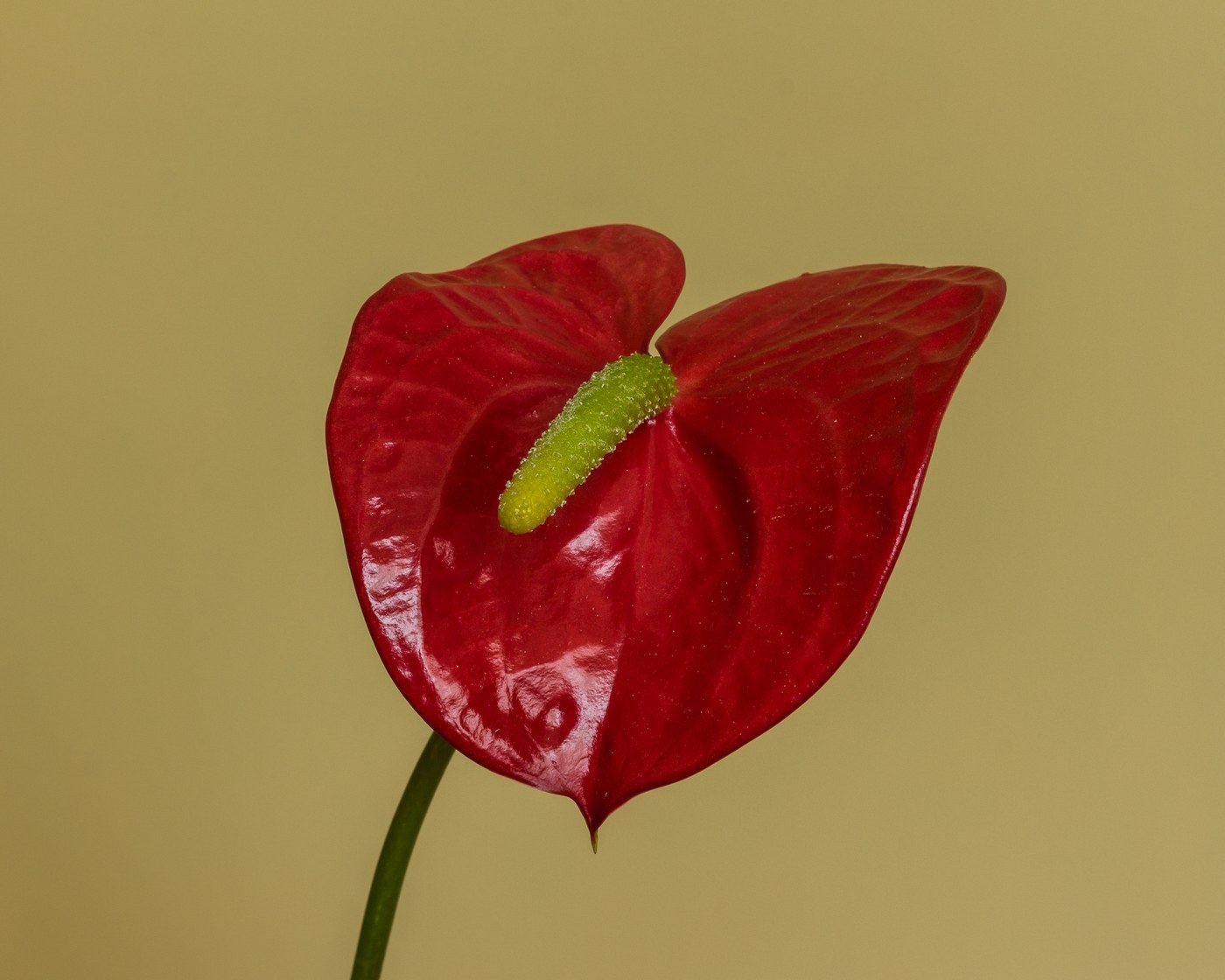
Anthurium (Anthurium andraeanum), often called the flamingo flower, is a tropical epiphyte grown for its long-lasting, lacquered heart-shaped spathes in red, pink, white, or coral and its deep green glossy foliage. With bright indirect light and steady humidity it can bloom almost year-round, making it a rewarding if slightly demanding houseplant.
Light
Give Anthurium bright, indirect light. An east-facing window or a spot a few feet back from a brighter window is ideal. Strong, filtered light drives the most abundant flowering, while too little light leaves the plant with lush leaves but few or no spathes. Avoid harsh direct midday sun, which scorches the foliage and bleaches the colorful bracts. Rotate the pot occasionally for even growth.
Water
Water when the top inch of the mix has dried, then water thoroughly until it drains freely. Anthurium likes consistent moisture but resents soggy roots, which quickly rot in its airy, epiphytic root system. Let the surface dry between waterings and never let the pot stand in water. In winter, when growth slows, reduce watering. Using room-temperature, low-mineral water helps prevent leaf-tip browning.
Soil & Potting
Because Anthurium grows on trees in the wild, it needs a very loose, chunky, fast-draining medium rather than dense potting soil. A blend of orchid bark, perlite, coco coir, and a little peat or compost mimics its natural rooting zone and keeps air around the roots. Always use a pot with drainage holes. The mix should hold some moisture while draining almost immediately.
Humidity & Temperature
High humidity is key to a thriving Anthurium, ideally 60 percent or more. Group it with other plants, set it on a pebble-and-water tray, or run a humidifier, especially in dry indoor air. It enjoys warm, stable temperatures roughly between 18 and 29 degrees Celsius and dislikes cold drafts, sudden chills, and temperatures below about 15 degrees Celsius, which stall growth and can damage foliage.
Feeding
Feed during the active growing season, spring through summer, with a balanced liquid fertilizer diluted to about a quarter to half strength, roughly every four to six weeks. A formula slightly higher in phosphorus encourages blooming. Anthurium is a light feeder, so avoid overfertilizing, which can burn the sensitive roots and cause leaf-tip scorch. Reduce or stop feeding in autumn and winter.
Propagation
The easiest method is division. When repotting a mature plant, gently separate it into clumps, each with roots and a few leaves, and pot them up individually. Anthurium also produces offsets at the base that can be detached once they have their own roots. Stem cuttings with an attached aerial root can be rooted in a moist, airy medium. Keep new divisions warm, humid, and out of direct sun until established.
Repotting / Pruning
Repot every two to three years or when roots crowd the pot, moving up just one pot size into fresh chunky mix. Anthuriums flower best when slightly snug, so avoid oversized pots. Prune by cutting away spent flower stalks at the base and removing yellowing or damaged leaves with clean, sharp scissors. Wipe the glossy leaves occasionally to remove dust and keep them photosynthesizing well.
Common Problems & Pests
Watch for spider mites, mealybugs, scale, and aphids, especially in dry air; treat early by wiping leaves and using insecticidal soap. Yellowing leaves often signal overwatering, while brown, crispy tips point to low humidity, mineral buildup, or fertilizer excess. Lack of flowers usually means insufficient light. Root rot from soggy, dense soil is the most serious risk, prevented by chunky mix and careful watering.
Seasonal Care Tips
In spring and summer, keep humidity high, feed regularly, and expect the strongest flushes of bloom. In autumn, ease back on water and feeding as growth slows. In winter, protect the plant from cold drafts and heating-dried air, water more sparingly, and maintain warmth and humidity to carry it through to the next growing season.
Frequently asked questions
Why won't my Anthurium flower?
The most common cause is too little light. Move it to a bright spot with plenty of indirect light and feed with a bloom-supporting fertilizer during the growing season to encourage spathes.
Why are the leaf tips turning brown?
Brown, crispy tips usually indicate low humidity, mineral buildup from tap water, or excess fertilizer. Raise humidity, use low-mineral water, and dilute feed more heavily.
How often should I water an Anthurium?
Water when the top inch of the chunky mix dries out, then drench thoroughly and let it drain. Avoid soggy soil, which causes root rot, and cut back in winter.
What kind of soil does an Anthurium need?
A loose, airy, fast-draining mix such as orchid bark, perlite, and coco coir with a little compost, mimicking its natural life growing on trees.