
Anthurium Identification Guide
Identify Anthurium by its glossy heart-shaped leaves and signature waxy, colorful spathe with a protruding spadix.
Read the full Anthurium encyclopedia entry →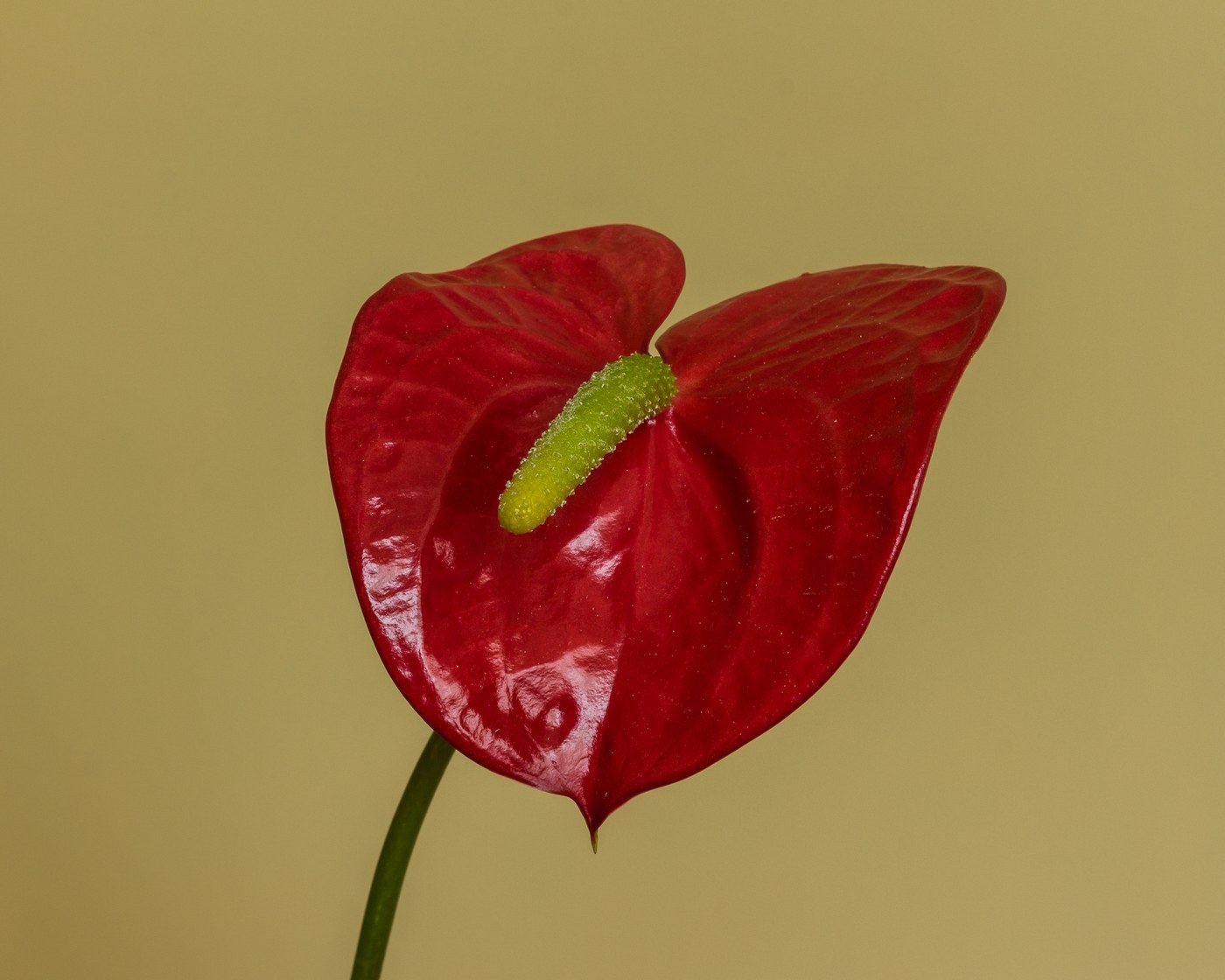
Key Identifying Features
Anthurium is a large genus of tropical aroids (family Araceae), best known as the Flamingo Flower or Laceleaf. Defining traits:
- A glossy, waxy, often heart-shaped colored spathe (the 'flower') in red, pink, white, purple, or green
- A straight or curled spadix (the central tail-like spike) projecting from the spathe
- Leathery, glossy leaves, often heart-shaped or strap-like depending on species
- A clumping, upright habit
Leaves & Stems
Leaf form depends on the type. The common florist anthuriums (A. andraeanum, A. scherzerianum) have heart-shaped (cordate), deep-green, glossy leaves held on long petioles. Foliage anthuriums (A. clarinervium, A. crystallinum) have velvety, dark leaves with bold white or silver veins, while bird's-nest types (A. plowmanii) have long, undulating strap leaves in a rosette.
Stems are usually short, producing leaves and flower stalks from a central crown; some species climb with aerial roots. New leaves emerge from a cataphyll, marking the aroid family.
Flowers & Fruit
The "flower" is the species' calling card and an aroid spathe-and-spadix: the colorful, waxy, often heart-shaped spathe is a modified bract, and the true tiny flowers cover the spadix (the central spike). In A. andraeanum the spathe is flat and glossy with a straight spadix; in A. scherzerianum the spadix is curled like a pig's tail. Pollinated spadices develop small berries (often orange or red) holding seeds. The long-lasting, glossy spathe is unmistakable.
How to Tell It Apart from Look-Alikes
- Peace Lily (Spathiphyllum): also an aroid with spathe and spadix, but the spathe is soft, matte white, not waxy and colored, and the leaves are softer and more lance-shaped.
- Flamingo lily vs. calla lily: calla (Zantedeschia) has a funnel-shaped spathe and arrow leaves, not the flat waxy heart of Anthurium.
- Foliage anthuriums vs. Alocasia: both have veined leaves, but Anthurium leaves are typically thicker, more leathery, and produce the characteristic colored spathe.
The waxy, glossy, colored heart-shaped spathe with a protruding spadix is the conclusive Anthurium trait.
Where You'll Find It
Native to tropical Central and South America (especially Colombia and Ecuador), anthuriums are grown worldwide as houseplants and cut flowers for their long-lasting blooms, and as collector foliage plants. They prefer warmth, high humidity, bright indirect light, and a chunky, airy aroid mix. Outdoors they grow in USDA zones 10-12.
Quick ID Checklist
- Waxy, glossy, colored spathe (red, pink, white, purple)
- Protruding spadix (straight or curled tail)
- Glossy or velvet-veined leathery leaves
- New leaves emerge from a cataphyll (aroid trait)
- Clumping upright crown
Frequently asked questions
Is the colorful part of an Anthurium really a flower?
Not exactly. The glossy heart-shaped part is a spathe, a modified leaf-like bract. The actual tiny flowers cover the spadix, the tail-like spike in the center. Together they form the aroid inflorescence.
How do I tell an Anthurium from a Peace Lily?
Anthurium has a waxy, glossy, brightly colored spathe (often red or pink) with a stiff spadix, while a Peace Lily has a soft, matte white spathe and softer leaves. The waxy colored spathe means Anthurium.
Why does my Anthurium have a curly tail in the flower?
That curled spadix is characteristic of Anthurium scherzerianum, the 'Pigtail' anthurium. The more common A. andraeanum has a straight spadix instead.
My Anthurium leaves have white veins and no flowers. Is it still an Anthurium?
Yes. Foliage species like A. clarinervium and A. crystallinum are grown for velvety dark leaves with striking white or silver veins rather than showy spathes. They are true anthuriums.