
Asparagus Identification Guide
How to identify asparagus (Asparagus officinalis) from its emerging spears to the tall feathery fern and red berries.
Read the full Asparagus encyclopedia entry →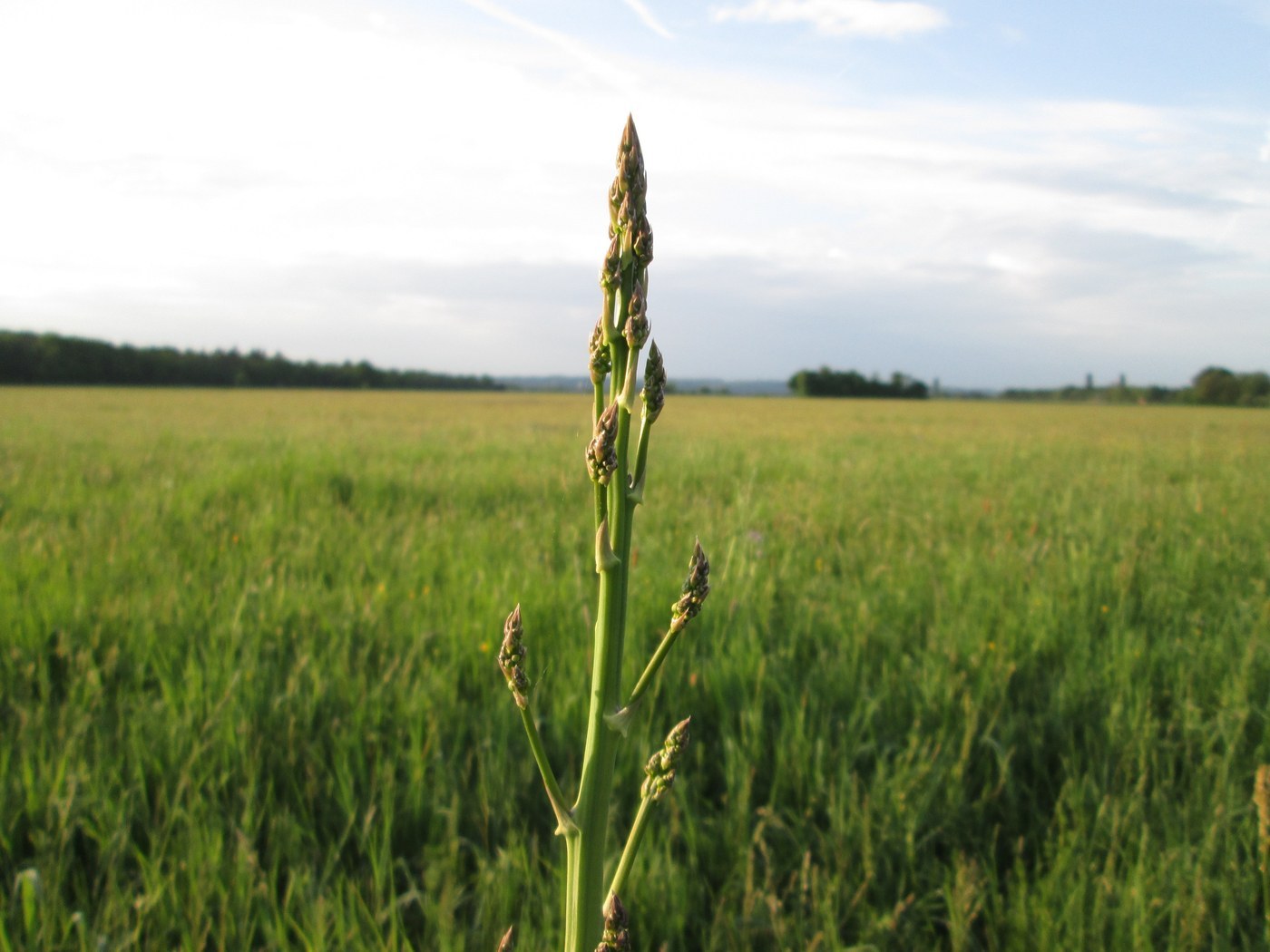
Key Identifying Features
Garden asparagus (Asparagus officinalis) is a hardy perennial. It is easiest to recognize in two very different stages: the young spears that push straight up from the soil in spring, and the mature tall, airy, fern-like plant that develops if spears are left to grow.
- Spring: smooth, scaly-tipped spears emerging directly from the ground
- Summer: 3-6 ft feathery "fern" of fine needle-like branchlets
- Tiny bell-shaped greenish-yellow flowers
- Female plants bear small red berries in fall
Leaves & Stems
The spear is a young shoot: a thick, smooth, succulent stem topped by a tightly closed pointed head of overlapping scale-like bracts, usually green (or white if blanched underground, or purple in some varieties). As it grows, the stem branches into a delicate "fern". What look like fine needles are not true leaves but cladodes (flattened needle-like stems) clustered in soft feathery tufts; the true leaves are tiny papery scales at the branch joints. Stems are smooth, round, and become woody at the base by season's end.
Flowers & Fruit
Asparagus is usually dioecious (separate male and female plants). Flowers are small, bell-shaped, greenish-yellow, about 1/4 in, hanging singly or in pairs along the branches. Female plants produce small round berries that ripen bright red (about 1/4 in, containing black seeds). The red berries are a reliable identification cue in late summer and fall.
How to Tell It Apart from Look-Alikes
- Ornamental asparagus ferns (e.g., Asparagus setaceus, A. densiflorus): closely related houseplants with similar feathery cladodes, but they are sprawling/trailing and do not form thick spears.
- Wild fennel or dill: also feathery, but these are carrot-family plants with a strong anise/dill smell and flat flower umbels; asparagus has no such scent and bears red berries.
- Horsetail (Equisetum): sends up shoots in spring too, but they are hollow, jointed, and gritty, with whorled branches, not the smooth scaly asparagus spear.
Where You'll Find It
Cultivated in gardens and dedicated beds (which can produce for 15-20 years). Asparagus has also escaped to the wild, where it grows in fencerows, roadside ditches, railway edges, meadows, and sandy or saline soils, often given away in fall by its tall golden fern and red berries.
Quick ID Checklist
- Spring: smooth spears with a scaly closed tip rising from bare soil
- Summer: tall feathery fern of fine needle-like cladodes
- Small greenish-yellow bell flowers
- Bright red berries on female plants in fall
- No dill/anise smell (rules out fennel/dill)
Frequently asked questions
How do I recognize asparagus before it ferns out?
Look for thick, smooth, succulent spears pushing straight up from the soil, each topped with a tightly closed, pointed head of overlapping scale-like bracts. They emerge individually from the ground in spring.
What are the feathery 'leaves' on a mature asparagus plant?
They are not true leaves but cladodes, flattened needle-like stems clustered in soft tufts. The real leaves are reduced to tiny papery scales along the branches.
How is garden asparagus different from the asparagus fern houseplant?
They are related and have similar feathery foliage, but ornamental asparagus ferns trail or arch and never form the thick spears that garden asparagus pushes up in spring.