
How to Care for Baby Rubber Plant
Grow a lush Peperomia obtusifolia with easy indoor care: bright indirect light, water when the top inch dries, and warm humidity.
Read the full Baby Rubber Plant encyclopedia entry →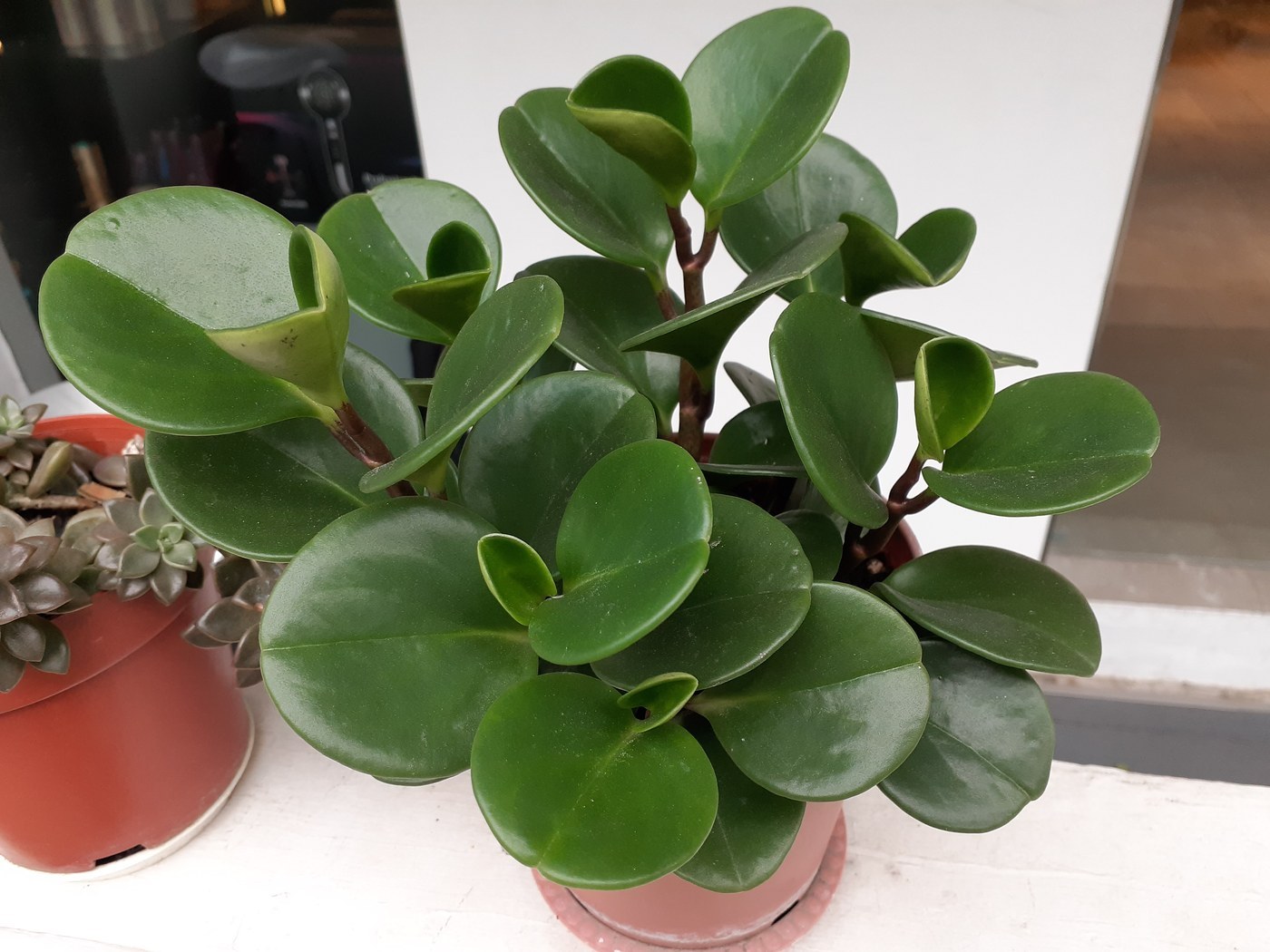
The Baby Rubber Plant (Peperomia obtusifolia) is a compact, easygoing houseplant prized for its thick, glossy, spoon-shaped leaves and upright bushy habit. Its semi-succulent foliage stores water, making it forgiving and ideal for beginners and small spaces.
Light
Give it medium to bright indirect light for the fullest, most compact growth and best leaf coloring, which is especially important for variegated forms that lose their creamy markings in low light. An east or north window, or a few feet back from a brighter window, is ideal. Avoid harsh direct midday sun, which can scorch or bleach the leaves. Rotate the pot every couple of weeks so growth stays even and the plant does not lean toward the light.
Water
Water when the top inch of soil dries out, then water thoroughly until it drains from the bottom. Because the leaves and stems hold moisture, this plant tolerates occasional forgetfulness far better than overwatering. Let excess drain fully and never leave the pot sitting in a saucer of water. In winter, when growth slows, extend the interval between waterings. Soft, wilting, or translucent stems usually signal too much water.
Soil & Potting
Use a light, well-aerated, fast-draining mix. A blend of standard potting soil with added perlite, orchid bark, or coarse sand works well; a mix formulated for aroids or succulents is also suitable. Always plant in a container with drainage holes. The chunky, airy medium keeps the fine roots oxygenated and prevents the soggy conditions that lead to rot.
Humidity & Temperature
Average household humidity is fine, though it appreciates moderate to slightly elevated humidity of 40 to 60 percent, and will look its best grouped with other plants or near a pebble tray. Keep temperatures between about 65 and 80 degrees Fahrenheit. Protect it from cold drafts, air-conditioning vents, and heat sources, and never expose it to temperatures below the low 50s.
Feeding
Feed monthly during the spring and summer growing season with a balanced, water-soluble houseplant fertilizer diluted to half strength. This plant is a light feeder, so avoid overfertilizing, which can cause salt buildup and leaf-tip burn. Stop feeding in fall and winter while growth is dormant.
Propagation
Peperomia propagates very easily. Take a stem-tip cutting with a few leaves and root it in water or moist potting mix. You can also use leaf cuttings: insert a healthy leaf with a bit of petiole into moist soil, and new plantlets will form at the base. Keep cuttings warm and humid with bright indirect light, and roots typically develop within a few weeks.
Repotting / Pruning
This plant likes to be slightly root-bound and grows slowly, so repot only every two to three years or when roots fill the pot. Move up just one pot size and refresh the soil. Prune or pinch back leggy stems in spring to encourage a fuller, bushier shape; the trimmings can be used as cuttings.
Common Problems & Pests
Overwatering is the most common issue, causing yellowing leaves, mushy stems, and root rot. Underwatering shows as wrinkled or drooping leaves that plump back up after a drink. Watch for mealybugs, which hide in leaf axils, and occasional spider mites in dry air. Treat pests by wiping leaves and applying insecticidal soap. Sudden leaf drop usually points to cold drafts or inconsistent watering.
Seasonal Care Tips
In spring and summer, resume regular watering and feeding as active growth returns, and this is the best time to propagate or repot. In fall and winter, cut back on water, pause fertilizer, and move the plant slightly closer to a bright window to compensate for weaker light while keeping it away from cold glass and drafts.
Frequently asked questions
Why are the leaves on my Baby Rubber Plant turning yellow?
Yellowing leaves most often indicate overwatering. Check that the soil drains freely, let the top inch dry between waterings, and make sure the pot is never sitting in standing water.
How often should I water a Baby Rubber Plant?
Water when the top inch of soil feels dry, usually every one to two weeks. Its semi-succulent leaves store moisture, so it is far better to underwater slightly than to overwater.
Why is my variegated Peperomia losing its markings?
Insufficient light causes variegated forms to revert toward solid green. Move it to a spot with brighter indirect light to restore the creamy variegation, avoiding harsh direct sun.
Does the Baby Rubber Plant need high humidity?
It tolerates average home humidity but looks its best at 40 to 60 percent. Grouping it with other plants or using a pebble tray helps in dry indoor environments.