
Baby Rubber Plant Identification Guide
Identify the Baby Rubber Plant (Peperomia obtusifolia) by its thick, glossy, spoon-shaped succulent leaves on upright reddish stems and its compact bushy habit.
Read the full Baby Rubber Plant encyclopedia entry →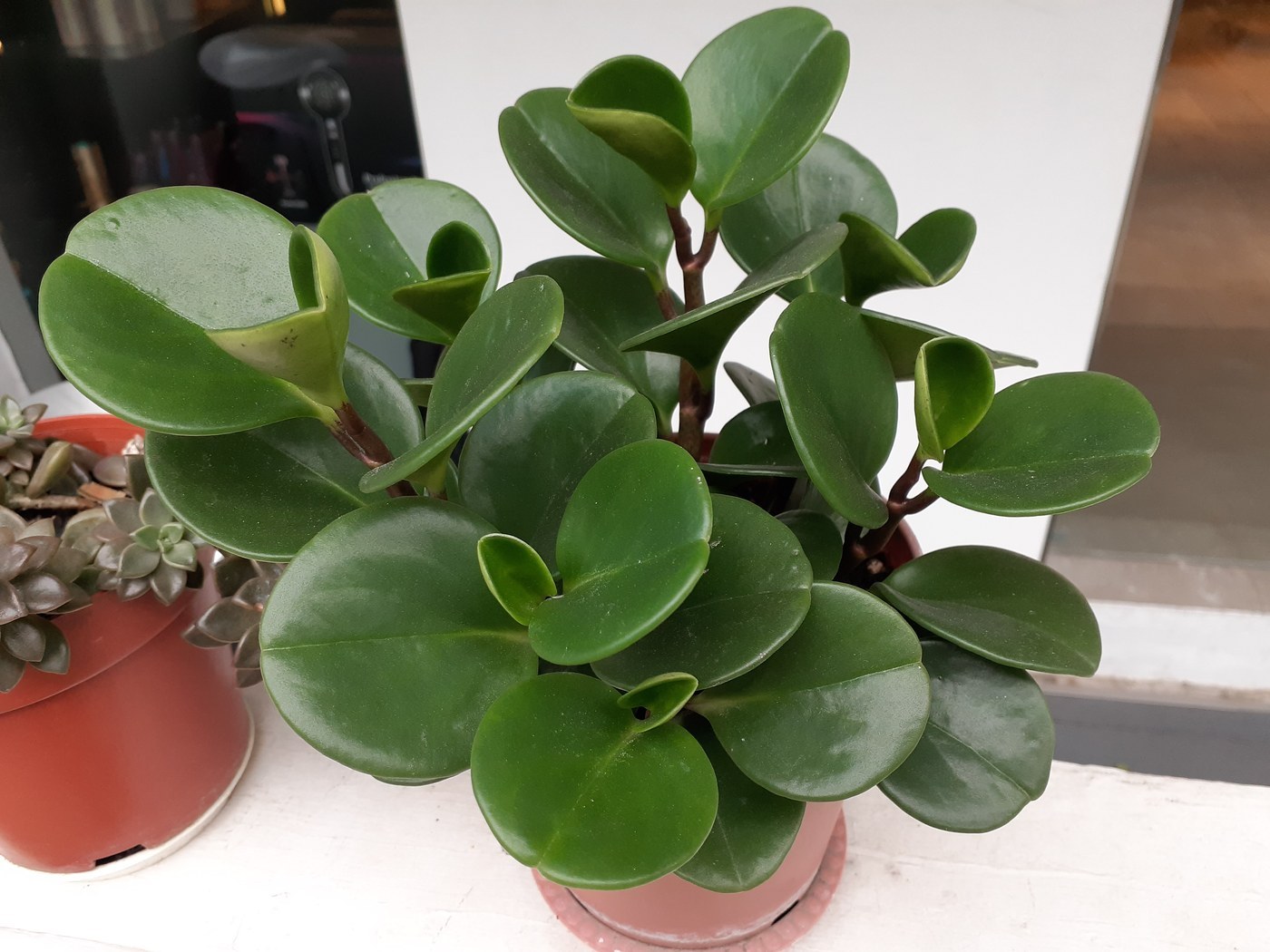
Key Identifying Features
The Baby Rubber Plant (Peperomia obtusifolia) is a compact, semi-succulent peperomia, not a true rubber plant (Ficus). Its hallmark is thick, glossy, rounded spoon-shaped leaves that are firm and waxy, on short upright stems forming a tidy bush.
- Thick, fleshy, glossy leaves
- Oval to spoon-shaped blades with a blunt, often notched tip
- Upright, succulent stems, frequently reddish-tinged
- Compact, mounding habit under about a foot tall
Leaves & Stems
Leaves are 2-4 inches long, very thick and rigid (storing water), with a smooth, shiny, cupped upper surface and a rounded or slightly indented tip, the species name obtusifolia means "blunt-leaved." They come in solid deep green or variegated forms with cream, gold, or gray-green margins and centers.
Stems are fleshy, sturdy, and upright to sprawling, often flushed red or maroon, holding the leaves in a dense cluster. The succulent stems and leaves give the plant a plump, sturdy feel distinct from thin-leaved houseplants.
Flowers & Fruit
A classic peperomia clue: it produces narrow, erect, greenish-white flower spikes shaped like rat tails or spikes (called catkins/spadices) that stand above the foliage. These slim non-showy spikes confirm the Peperomia genus.
How to Tell It Apart from Look-Alikes
- True Rubber Plant (Ficus elastica): a large tree with big, leathery, oval leaves and milky latex sap; the Baby Rubber Plant is small, succulent, and has no latex.
- Peperomia clusiifolia (Red-Edge): very similar but leaves are larger with distinct red margins; obtusifolia has rounder, blunter leaves.
- Jade plant (Crassula): also succulent but with smaller, more oval leaves and a woody branching trunk.
- Pilea peperomioides: round coin leaves on long central petioles, not thick spoon leaves on upright stems.
The lock is thick glossy blunt-tipped spoon leaves on reddish succulent stems with rat-tail flower spikes.
Where You'll Find It
Native to Mexico, the Caribbean, and tropical South America, often growing as an epiphyte on the forest floor or logs. Indoors it likes medium to bright indirect light, infrequent watering (succulent leaves store water), and compact spaces.
Quick ID Checklist
- Thick, fleshy, glossy leaves
- Spoon/oval shape with blunt or notched tip
- Upright reddish succulent stems
- Spike-like greenish flower tails
- Compact, no milky sap (rules out Ficus)
A bushy little plant of thick, glossy, blunt-tipped spoon leaves on reddish stems is the Baby Rubber Plant.
Frequently asked questions
Is the Baby Rubber Plant a real rubber plant?
No. Despite the name, it is Peperomia obtusifolia, not a Ficus. It is a small semi-succulent peperomia. The true Rubber Plant, Ficus elastica, is a large tree with big leathery leaves and milky latex sap.
What are the green spikes growing above the leaves?
Those are the plant's flower spikes, thin greenish-white catkin-like inflorescences typical of peperomias. They are a helpful clue confirming the plant is a Peperomia.
How do I tell the variegated form from other variegated houseplants?
Look at the leaf texture and stems. The Baby Rubber Plant's variegated leaves are still thick, glossy, and spoon-shaped on fleshy reddish upright stems, a combination most other variegated trailing plants lack.
Where does the Baby Rubber Plant grow naturally?
It is native to Mexico, the Caribbean, and tropical South America, where it often grows as an epiphyte on the forest floor or on logs. Indoors it prefers medium to bright indirect light and infrequent watering.