
Bamboo Palm Identification Guide
Identify the Bamboo Palm (Chamaedorea) by its clustering, bamboo-like green canes topped with arching feathery fronds of slender dark-green leaflets.
Read the full Bamboo Palm encyclopedia entry →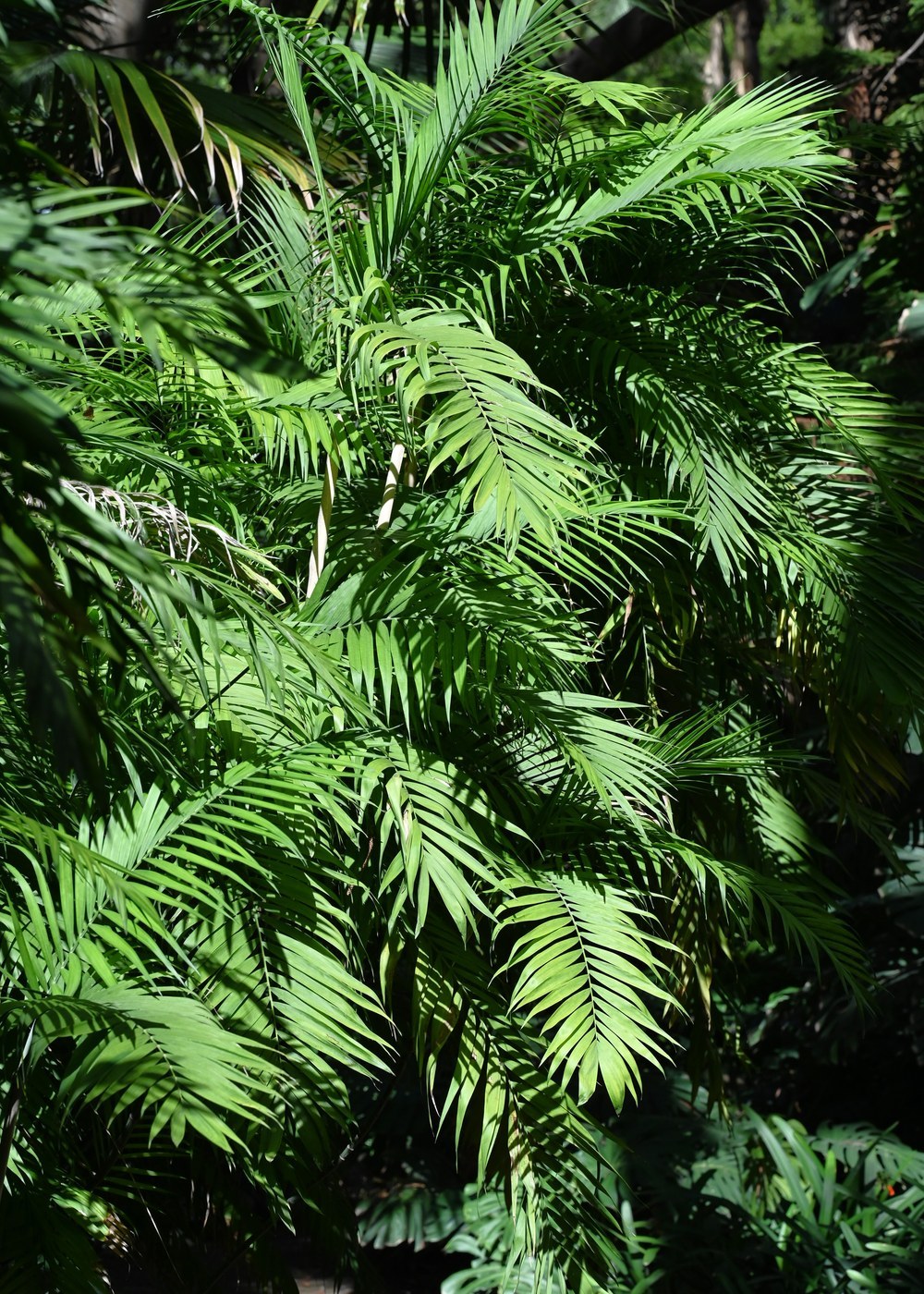
Key Identifying Features
Bamboo Palm (Chamaedorea species, commonly Chamaedorea seifrizii or Chamaedorea erumpens) is a clustering indoor palm named for its slim, segmented, bamboo-like green canes. The defining look is multiple thin upright reed stems topped with arching, feather-shaped fronds.
- Clustering, slender green canes ringed with leaf-scar nodes
- Pinnate (feather) fronds of many narrow leaflets
- Dark green, soft, arching foliage
- Forms a dense, upright clump
Leaves & Stems
Each cane is reed-thin, green, and marked with pale rings where old fronds dropped, giving it the bamboo resemblance. Multiple canes grow in a clump from the base. Atop each cane sit pinnate fronds: a central stalk lined with numerous slender, lance-shaped leaflets (often 10-20+ pairs), dark green and gently drooping, creating a soft, airy, tropical texture.
Unlike true bamboo (a grass), the leaflets are arranged feather-style along a frond, and there are no woody branching culms, this is a palm, so look for the fronds emerging from the cane tips, not leaves all along the stem.
Flowers & Fruit
Mature plants may produce sprays of small yellow-orange flowers on branched stalks, and female plants can bear small black berry-like fruits. Indoors blooms are modest; rely on the cane-and-frond structure for ID.
How to Tell It Apart from Look-Alikes
- Parlor Palm (Chamaedorea elegans): a close relative but generally single-stemmed or sparsely clustered and shorter, with daintier fronds; Bamboo Palm is taller with obvious clumping bamboo canes.
- Areca/Butterfly Palm (Dypsis lutescens): also clustering and feathery, but has yellow-green canes and upright, V-shaped fronds; Bamboo Palm canes are greener and more bamboo-ringed.
- Lady Palm (Rhapis): has fan-shaped (palmate) leaves, not feathery fronds.
- True bamboo: a grass with branching, hollow culms and leaves all along the stems, not terminal palm fronds.
The lock is green ringed canes in a clump + feathery terminal fronds.
Where You'll Find It
Native to Mexico and Central America (rainforest understory), Bamboo Palms tolerate low to medium indirect light and are popular as floor plants and natural screens; they're also noted as good indoor air plants.
Quick ID Checklist
- Clustering thin green canes with pale rings
- Feathery pinnate fronds of narrow leaflets
- Fronds emerge from cane tips, not all along stems
- Soft, arching, dense upright clump
- Not fan-shaped (rules out Lady Palm)
A leafy clump of bamboo-like green canes crowned with soft feathery fronds is a Bamboo Palm.
Frequently asked questions
Is the Bamboo Palm actually bamboo?
No. It is a true palm in the genus Chamaedorea. It earns the name because its slender, ringed green canes resemble bamboo culms, but it produces feathery palm fronds rather than the branching leafy stems of real bamboo grass.
How do I tell it from an Areca Palm?
Both are clustering feather palms, but Areca has yellow-green canes and stiffer, upward V-shaped fronds, while Bamboo Palm has greener, distinctly ringed bamboo-like canes and softer, more arching fronds.
Why are the lower fronds turning brown?
Some lower-frond browning is natural aging, but widespread browning often signals dry air, underwatering, or salt buildup. This is a care issue rather than an identification trait; trim spent fronds and keep humidity up.