How to Care for Begonia Maculata
Grow the striking Polka Dot Begonia with silver-spotted angel-wing leaves: bright indirect light, careful watering, and warm humidity.
Read the full Begonia Maculata encyclopedia entry →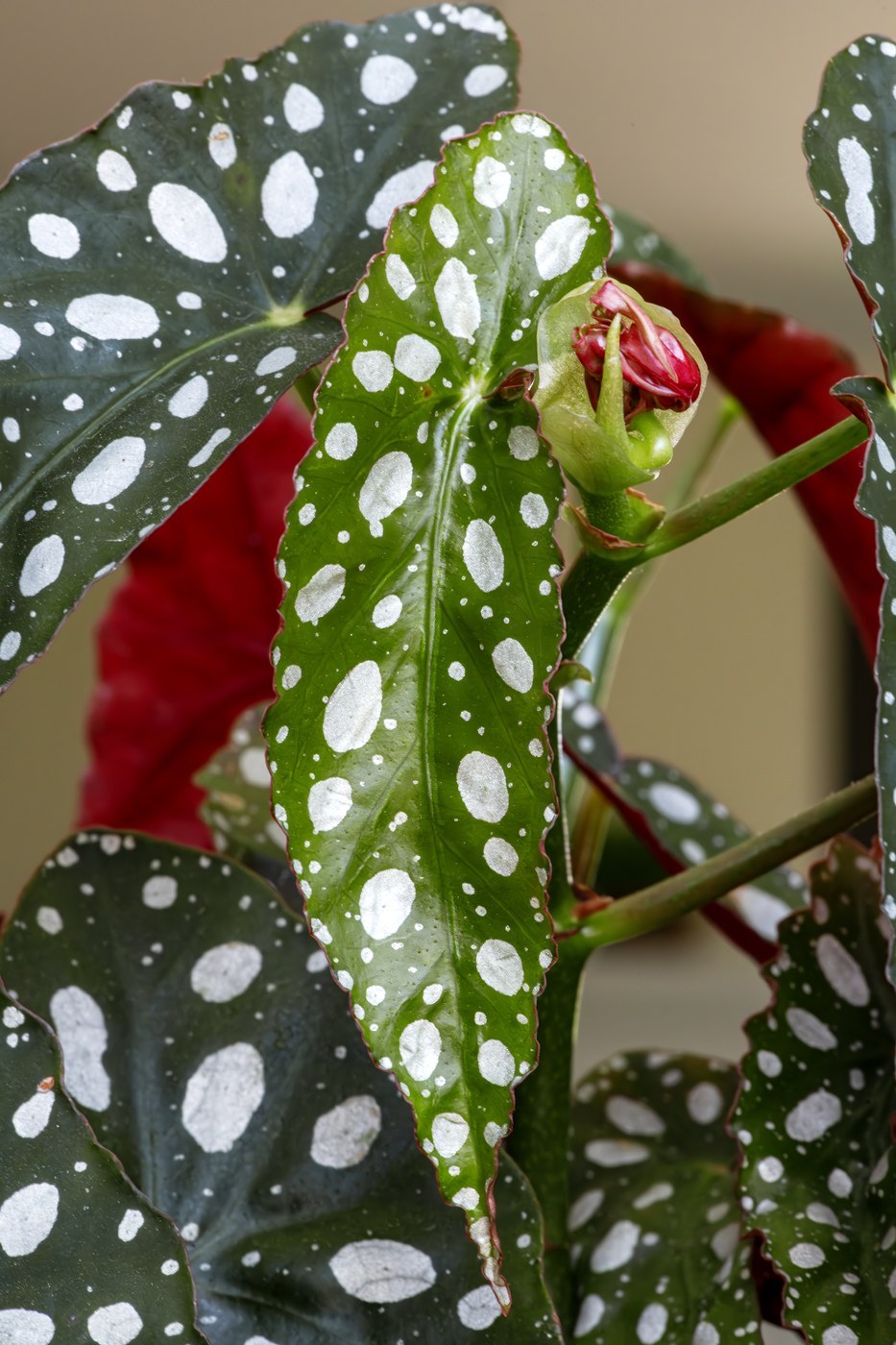
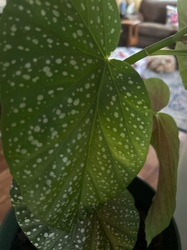
Begonia maculata, the Polka Dot Begonia, is prized for its olive-green angel-wing leaves flecked with silver spots and backed in deep burgundy. It is a moderate-difficulty houseplant that rewards attentive watering and steady warmth with fast, showy growth and clusters of white flowers.
Light
Give bright indirect light for the best leaf color and compact form. An east-facing window or a spot a few feet back from a bright south or west window is ideal. Direct midday sun scorches and fades the foliage, while too little light causes leggy, stretched stems and dull spots. Rotate the pot every week or two so growth stays even. Under grow lights, 12 to 14 hours a day keeps it full.
Water
Water when the top inch of soil dries out, then water thoroughly until it drains from the bottom. This begonia dislikes both extremes: soggy soil quickly leads to stem and root rot, while prolonged dryness causes wilting and crispy leaf edges. Let the surface dry between drinks and always empty the saucer. Water at the soil line rather than over the leaves, since sitting moisture on foliage encourages fungal spotting. Expect to water less in winter.
Soil & Potting
Use a light, fast-draining mix. A blend of standard potting soil with added perlite and orchid bark or coco coir keeps roots airy and prevents compaction. A pot with drainage holes is essential. These begonias have relatively shallow, fibrous roots, so a wide, shallow container suits them better than a deep one and reduces the volume of wet soil around the roots.
Humidity & Temperature
Warmth and humidity drive lush growth. Keep temperatures between 65 and 80 degrees Fahrenheit and protect the plant from cold drafts, air-conditioning blasts, and windows that dip below 60. Aim for 50 percent humidity or higher; a pebble tray, room humidifier, or grouping with other plants all help. Avoid misting the leaves directly, which can promote powdery mildew.
Feeding
Feed every two to four weeks during spring and summer with a balanced liquid fertilizer diluted to half strength. Steady, light feeding supports the plant's rapid growth and flowering. Stop or greatly reduce feeding in late fall and winter when growth slows, and always feed onto moist soil to avoid root burn.
Propagation
Begonia maculata roots readily from stem cuttings. Take a cutting with at least one node, remove the lower leaves, and place it in water or moist potting mix. Roots usually appear within two to four weeks in water; pot up once they are an inch or two long. You can also propagate from leaf cuttings pinned to damp soil. Warmth and humidity speed the process.
Repotting / Pruning
Repot every one to two years in spring, moving up just one pot size when roots fill the container. Prune regularly to keep the plant bushy: pinch growing tips and cut back leggy canes just above a node to encourage branching. Remove spent flowers and any yellowing leaves. Cane-type begonias can be cut back hard in spring to rejuvenate a stretched plant.
Common Problems & Pests
Powdery mildew is the most common issue, appearing as white patches in stagnant, humid air; improve airflow and keep water off the foliage. Yellowing lower leaves usually signal overwatering, while crispy brown edges point to dry air or underwatering. Watch for mealybugs, spider mites, and thrips, treating early with insecticidal soap or neem and wiping leaves clean. Leaf drop often follows cold drafts or sudden environmental changes.
Seasonal Care Tips
In spring and summer, water and feed actively and provide the humidity that fuels new canes and blooms. In fall, taper feeding and watering as light levels drop. In winter, keep the plant warm and away from cold glass, water sparingly, and consider a grow light to prevent dormancy stretch. A hard spring pruning restores fullness after a lean winter.
Frequently asked questions
Why is my Begonia maculata dropping leaves?
Sudden leaf drop is usually a reaction to cold drafts, a big swing in temperature or humidity, or letting the soil go bone dry. Keep it warm, away from drafty windows and vents, and water consistently when the top inch dries.
How do I keep my Polka Dot Begonia bushy instead of leggy?
Give it bright indirect light and pinch the growing tips regularly. Cutting leggy canes back to just above a node forces branching, and a hard prune in spring rejuvenates a stretched plant.
What are the white patches on the leaves?
That is typically powdery mildew, which thrives in stagnant, humid air. Improve airflow around the plant, avoid misting or wetting the foliage, and water at the soil line.
How often should I water Begonia maculata?
Water when the top inch of soil feels dry, soaking thoroughly and letting excess drain away. Avoid keeping the soil soggy, which causes rot, and water less often in winter.
Begonia Maculata identified by the community
Recent Begonia Maculata specimens identified with Plant Identifier.