How to Care for Bird's Nest Fern
Grow a lush Bird's Nest Fern indoors: medium-bright indirect light, evenly moist soil, and warm, humid air for glossy rippled fronds.
Read the full Bird's Nest Fern encyclopedia entry →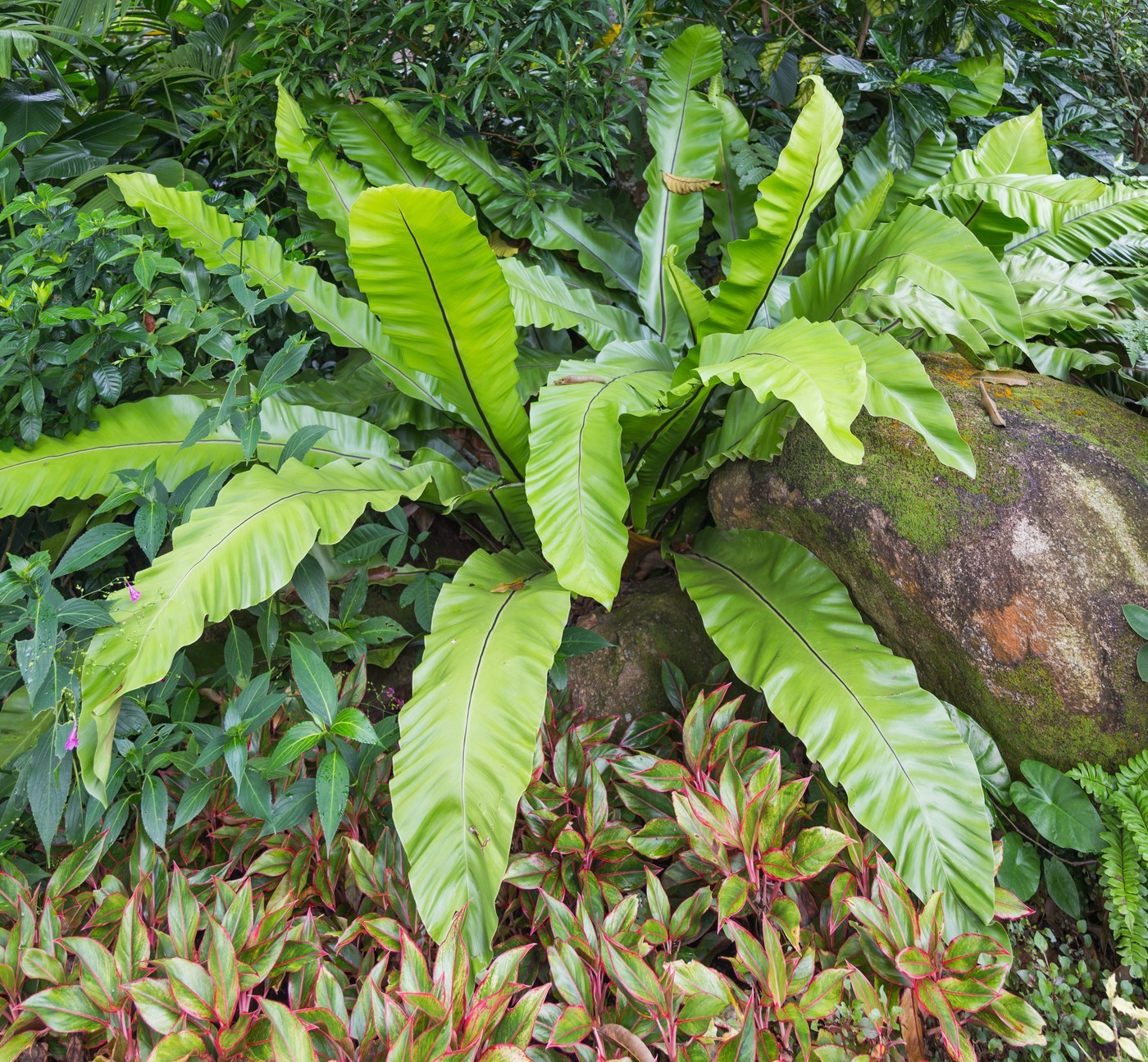
The Bird's Nest Fern (Asplenium nidus) is an easygoing epiphytic fern that forms a rosette of glossy, apple-green fronds radiating from a fuzzy central crown resembling a nest. Grown for its bold, ripple-edged foliage, it is one of the most forgiving ferns for indoor culture.
Light
Give medium to bright indirect light. Bird's Nest Fern grows well a little back from an east or north window, or filtered behind a sheer curtain in brighter rooms. Avoid direct sun, which scorches and bleaches the fronds, and deep shade, which produces sparse, weak growth. Consistent, gentle light keeps the fronds broad and glossy.
Water
Keep the soil evenly moist but never waterlogged, watering when the top inch begins to dry. Pour water onto the soil around the crown rather than into the central rosette, where trapped water can cause the crown to rot. Reduce watering slightly in winter. Use tepid water and avoid letting the pot stand in a saucer of water.
Soil & Potting
Use a light, airy, humus-rich mix that holds moisture yet drains freely, such as a peat- or coir-based houseplant mix loosened with orchid bark and perlite. As a natural epiphyte it dislikes dense, compacted soil around its roots. A pot with drainage holes is essential.
Humidity & Temperature
This fern loves warmth and high humidity. Keep it in the range of about 65-80 F (18-27 C) and away from cold drafts, heating vents, and sudden temperature swings. Boost humidity with a pebble tray, grouping with other plants, or a humidifier; a bathroom or kitchen with good light suits it well. Dry air causes brown, crispy frond edges.
Feeding
Feed lightly during the growing season, roughly monthly in spring and summer, with a balanced houseplant fertilizer diluted to half strength. Apply to the soil, not into the crown, and avoid overfeeding, which can distort or brown the fronds. Do not feed in winter when growth slows.
Propagation
Bird's Nest Fern does not produce offsets or runners and is not easily divided, since it grows from a single crown. It is propagated commercially from spores, which appear as brown lines on the undersides of mature fronds; home spore propagation is possible but slow and demanding. For most growers the plant is simply enjoyed and grown on rather than divided.
Repotting / Pruning
Repot every couple of years in spring, or when roots fill the pot, moving up one size into fresh airy mix and handling the delicate crown gently. Pruning is minimal: trim off old, browned, or damaged fronds at the base to keep the rosette tidy. Avoid cutting into the tender central crown.
Common Problems & Pests
Brown, crispy frond edges usually mean low humidity or dry soil, while yellowing or a mushy crown points to overwatering or water sitting in the rosette. Pale, scorched patches indicate too much direct sun. Watch for scale and mealybugs on the fronds and crown. Steady moisture, humidity, indirect light, and good airflow keep it healthy.
Seasonal Care Tips
In spring and summer, water regularly, feed monthly at half strength, and repot if needed as new fronds unfurl from the crown. In autumn and winter, cut back on water and stop feeding, keep the plant warm and away from drafts and radiators, and raise humidity to counter dry indoor heating.
Frequently asked questions
Why are the tips of my Bird's Nest Fern turning brown?
Usually low humidity or soil drying out. Keep the soil evenly moist and raise humidity with a pebble tray, grouping, or a humidifier.
Should I water into the center of the fern?
No. Water the soil around the crown, not into the central rosette, because trapped water there can rot the tender crown.
How much light does it need?
Medium to bright indirect light. Avoid direct sun, which scorches the fronds, and deep shade, which makes growth thin and weak.
Can I divide my Bird's Nest Fern?
Not really. It grows from a single crown with no offsets, so it is propagated from spores rather than division and is usually just grown on.
Why are new fronds small or deformed?
Often too little light, overfeeding, or damage to the crown. Give steady indirect light, feed only at half strength, and handle the crown gently.
Bird's Nest Fern identified by the community
Recent Bird's Nest Fern specimens identified with Plant Identifier.