Bird's Nest Fern Identification Guide
Identify the Bird's Nest Fern (Asplenium nidus) by its rosette of undivided, glossy strap-like fronds rising from a central nest-like crown. Includes look-alike tips.
Read the full Bird's Nest Fern encyclopedia entry →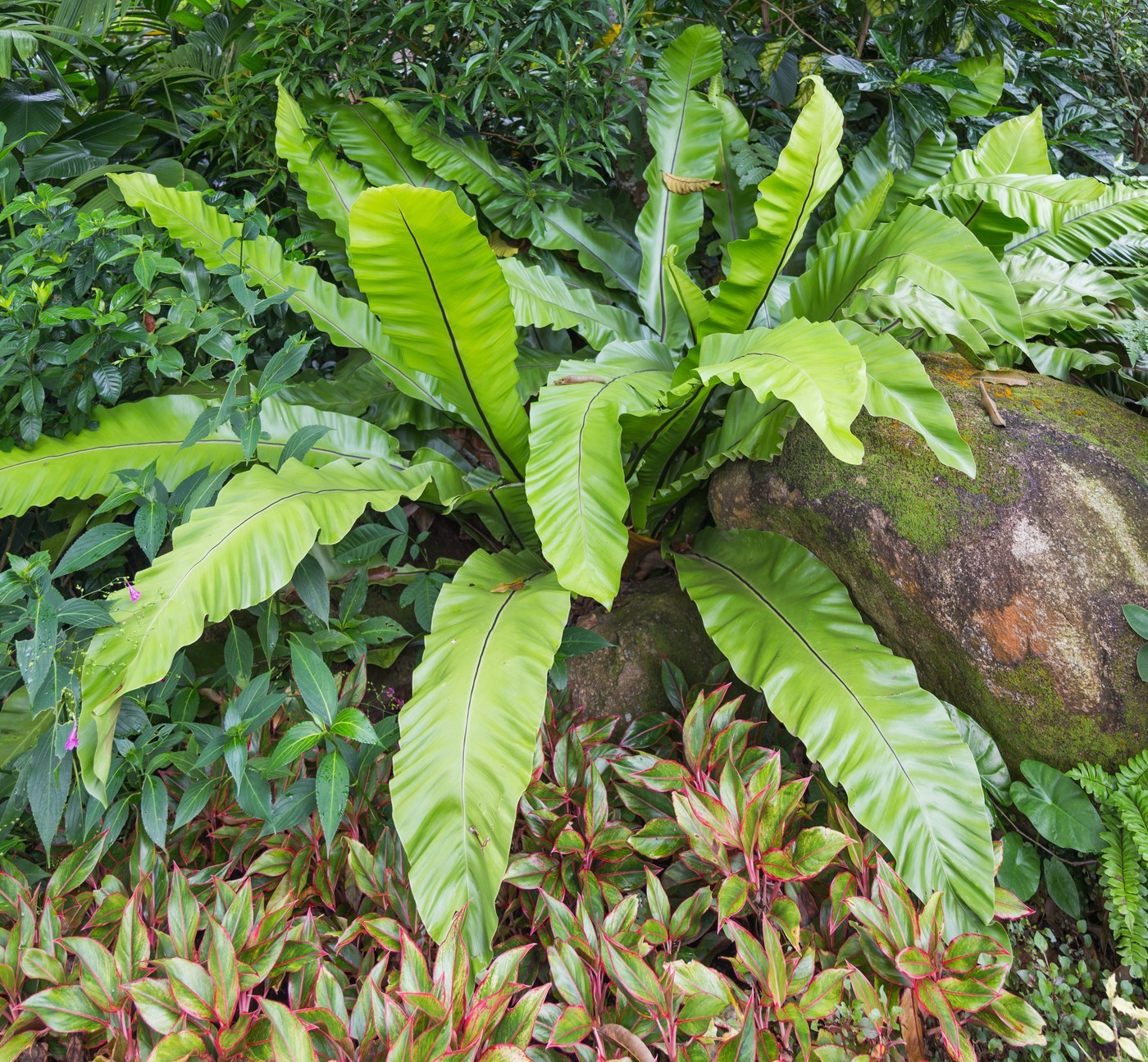
Key Identifying Features
The Bird's Nest Fern (Asplenium nidus) is an epiphytic fern instantly recognized by its rosette of broad, undivided, bright green strap-like fronds that emerge from a central cup or "nest", unlike the lacy, divided fronds of most ferns.
- Simple, undivided (entire) fronds in a vase-like rosette
- Glossy, apple-green fronds with wavy or rippled edges
- A central nest-like crown where new fronds unfurl
- Prominent dark midrib on each frond
Leaves & Stems
Fronds are broad, lance- to tongue-shaped, and not divided into leaflets, 1-3 feet long, arching outward from a tight central rosette. They are glossy and bright green with a distinctive dark brown to black central rib (costa) and often wavy or crinkled margins (especially in cultivars like 'Crispy Wave'). New fronds emerge curled from the fuzzy central "nest," which collects debris and water in the wild. There is no true creeping rhizome; the plant grows from a compact central base.
Flowers & Fruit
As a fern it produces no flowers or seeds. Spores form in long, neat brown lines (sori) running outward from the midrib on the undersides of fronds, parallel and herringbone-like, a clear diagnostic of Asplenium.
How to Tell It Apart from Look-Alikes
- Boston Fern and most ferns have divided, feathery fronds; Bird's Nest fronds are solid and undivided.
- Blue Star / Kangaroo Paw Ferns have lobed fronds and creeping rhizomes, not a tight rosette.
- Hart's Tongue Fern (Asplenium scolopendrium) is similar (strap fronds) but a temperate relative with narrower, more leathery leaves and a different growth setting.
The rosette of undivided glossy strap fronds rising from a central nest is unmistakable.
Where You'll Find It
Native to tropical Asia, Australia, and the Pacific, it grows as an epiphyte high in rainforest trees, its rosette catching falling leaves and moisture. As a houseplant it thrives in medium to bright indirect light and high humidity. Water around the base, not into the central nest, to avoid rot.
Quick ID Checklist
- Undivided, strap-like glossy fronds
- Arranged in a vase/rosette around a central crown
- Nest-like center where new fronds unfurl
- Dark central midrib and often wavy edges
- Linear brown sori under fronds (no flowers)
A rosette of solid, glossy strap fronds from a central nest confirms Asplenium nidus.
Frequently asked questions
Why are its fronds not feathery like other ferns?
Bird's Nest Fern has simple, undivided fronds rather than the divided, lacy fronds typical of many ferns. This solid strap shape is its main identifying feature.
Why is the center called a nest?
New fronds unfurl from a central rosette that forms a cup or nest shape, which in the wild collects water and falling debris for nourishment.
Should I water into the central cup?
No. Water around the soil and base rather than into the nest, since water pooling in the crown can cause rot.
Does it flower?
No. It is a fern and reproduces by spores, which form in long brown lines on the undersides of the fronds.
Bird's Nest Fern identified by the community
Recent Bird's Nest Fern specimens identified with Plant Identifier.