
How to Care for Black Medic
Black medic is a tough, low-growing clover-like legume with tiny yellow flowers, thriving in poor, dry soils and full sun with almost no care.
Read the full Black Medic encyclopedia entry →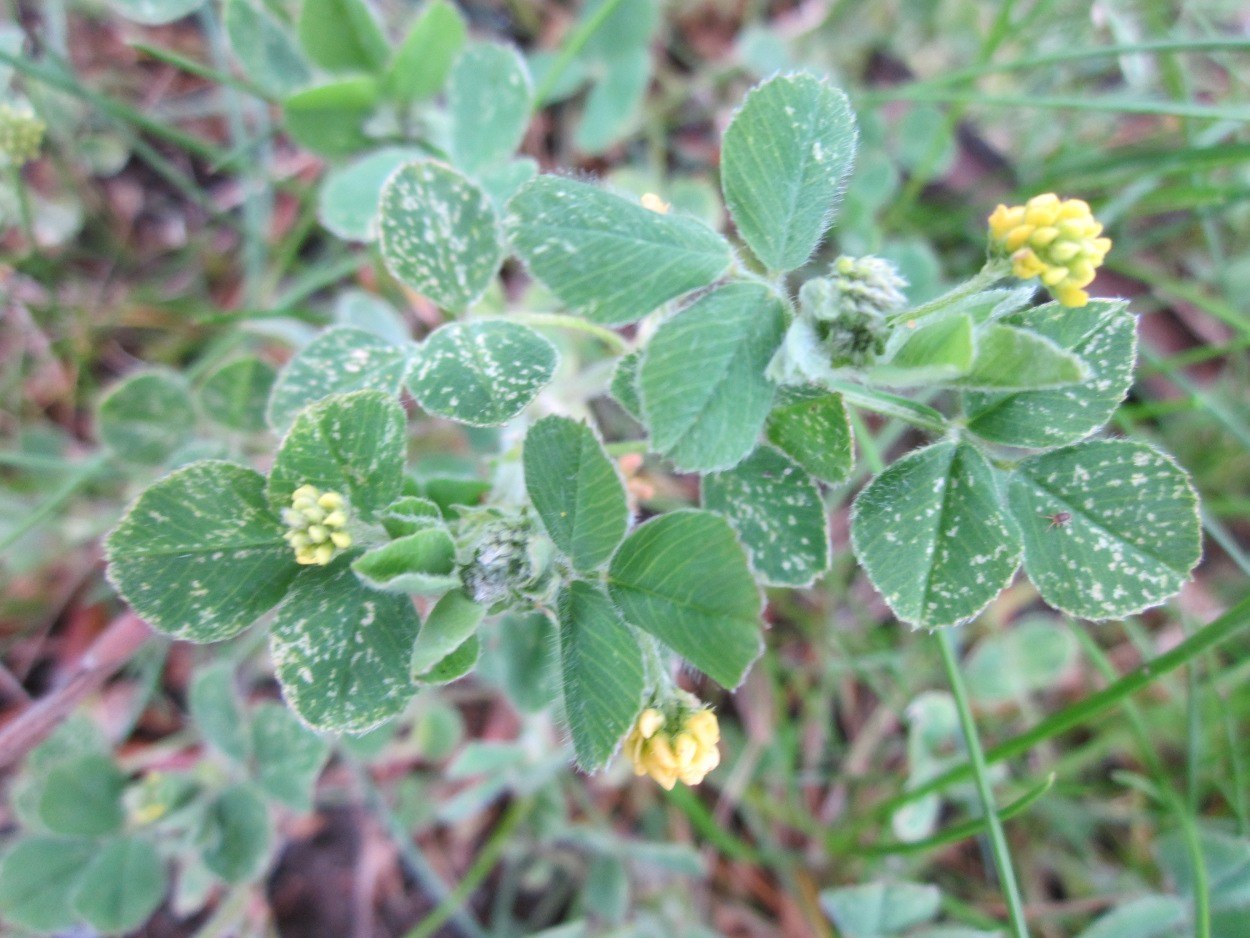
Medicago lupulina is a low, sprawling annual or short-lived perennial legume in the clover family, recognizable by its trifoliate leaves and small round clusters of bright yellow flowers followed by tightly coiled black seed pods. Extremely tough and adaptable, it is grown as a hardy groundcover and as a soil-improving cover crop that fixes nitrogen through its roots.
Light
Black medic performs best in full sun to part shade. Full sun produces the densest growth and most abundant flowering, while it will still persist in lightly shaded spots. As a low, mat-forming plant it is well suited to open, sunny ground, verges, and gravelly areas.
Water
Keep watering low to moderate; black medic is notably drought-tolerant thanks to a deep taproot. Water occasionally to establish young plants, then let nature take over. It thrives in dry, lean conditions and rarely needs supplemental irrigation once rooted. Avoid soggy ground, which it dislikes.
Soil & Potting
One of black medic's great strengths is its tolerance of poor, compacted, dry, and even alkaline soils where little else grows. It does not need rich or amended ground. Good drainage is helpful but it is remarkably unfussy. As a legume it improves the soil it grows in by fixing atmospheric nitrogen.
Humidity & Temperature
This is a resilient, temperate plant that copes with heat, dryness, and a wide range of humidity levels. It is hardy and self-sows readily, often behaving as an annual in colder areas and a short-lived perennial in milder ones. It tolerates cool conditions well and needs no special protection.
Feeding
Black medic needs no feeding. As a nitrogen-fixing legume it actually enriches the soil rather than depleting it, which is why it is used as a green manure. Supplemental fertilizer, especially nitrogen, is unnecessary and simply encourages competing weeds.
Propagation
Propagation is easy from seed, which the plant produces prolifically in its coiled black pods and scatters freely. Sow directly onto prepared or bare ground in spring; germination is reliable in warm, open conditions. Once established, it tends to maintain itself through self-seeding.
Repotting / Pruning
As a low, spreading groundcover, black medic needs little pruning. Mow or shear it back to control spread or tidy an area, and it will regrow readily. If growing it as a cover crop, cut or turn it in before it sets excessive seed if you wish to limit self-sowing.
Common Problems & Pests
Black medic is exceptionally trouble-free and largely pest- and disease-resistant. Its main drawback is vigor: it self-seeds enthusiastically and can spread into areas where it is not wanted, so manage it by mowing before seed set. Powdery mildew occasionally appears on foliage in damp, crowded conditions but rarely causes lasting harm. In lawns it competes readily, which can be a feature or a nuisance depending on your goals.
Seasonal Care Tips
In spring, sow seed and allow plants to establish. Through summer, enjoy the yellow flowers with minimal care and only occasional water in extreme drought. In late summer, decide whether to let it set seed or cut it back to limit spread. In autumn and winter it dies back or persists at ground level depending on climate, returning readily from self-sown seed.
Frequently asked questions
Does black medic need much watering?
No. It is strongly drought-tolerant thanks to a deep taproot. Water only to establish young plants, then let it fend for itself. It thrives in dry, lean soil and dislikes constantly wet ground.
Will black medic improve my soil?
Yes. As a legume it fixes atmospheric nitrogen through its roots, which is why it is grown as a green-manure cover crop. It enriches poor soil rather than depleting it and needs no fertilizer of its own.
How do I keep black medic from spreading too much?
Mow or shear it before the coiled black seed pods mature, since it self-seeds prolifically. Cutting it back or turning it in before seed set is the simplest way to control its spread in beds and lawns.
What kind of soil does black medic prefer?
Almost any. It tolerates poor, dry, compacted, and even alkaline soils where most plants struggle, and does not need rich or amended ground. Reasonable drainage helps but it is otherwise very unfussy.