
Blazing Star Identification Guide
Identify Blazing Star (Liatris) by its tall spike of fluffy purple flower heads that bloom top-down, its grass-like leaves, and its prairie habitat full of butterflies.
Read the full Blazing Star encyclopedia entry →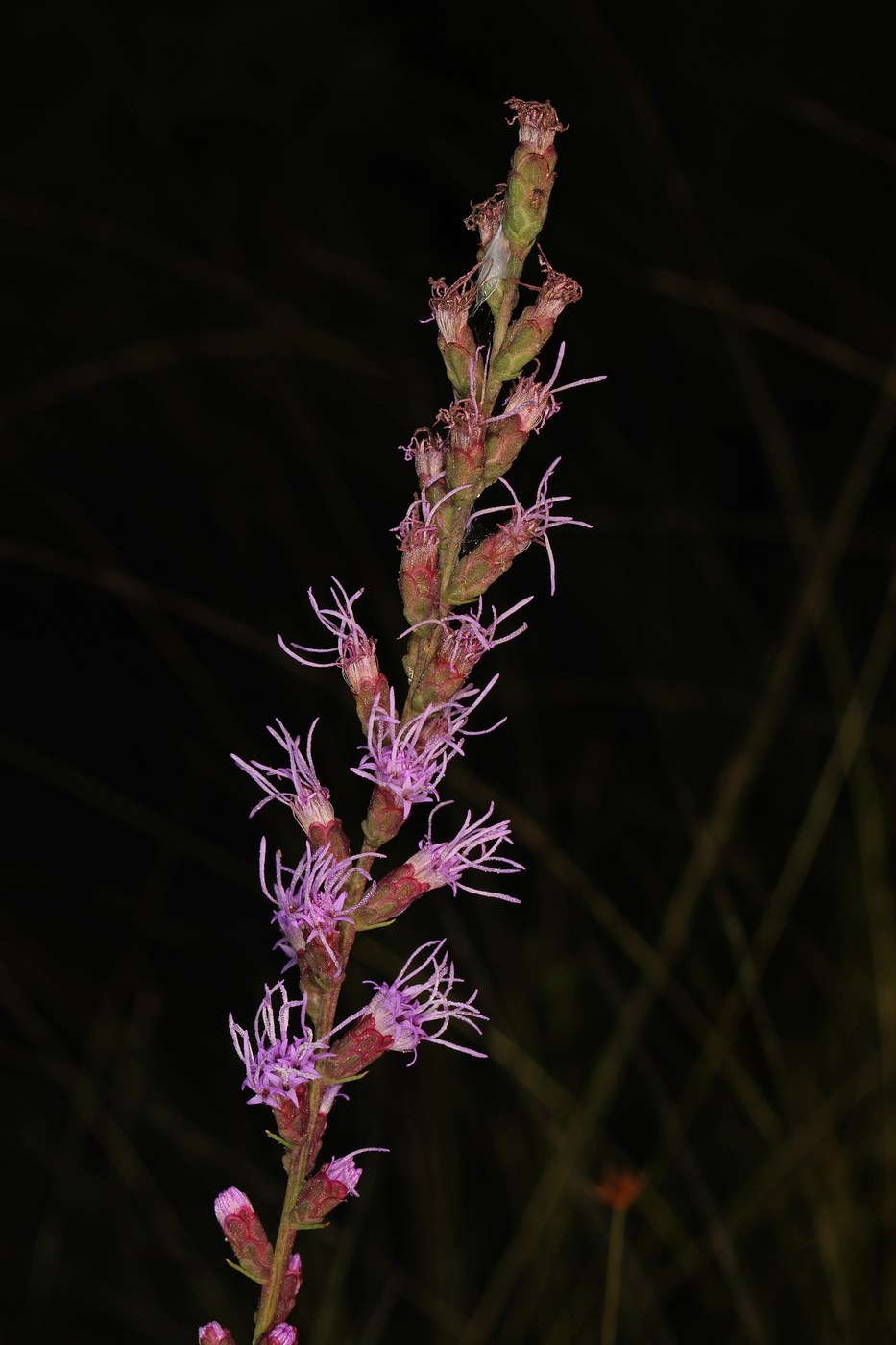
Key Identifying Features
Blazing Star (Liatris spp., such as L. spicata, L. pycnostachya, L. aspera) is a tall, eye-catching prairie wildflower in the aster family, beloved by butterflies. Recognize it by:
- A tall, narrow spike or wand of fuzzy purple (magenta-pink) flower heads
- Flowers that bloom from the top of the spike downward (unusual for spikes)
- A feathery, bottle-brush texture from many protruding thread-like florets
- Grass-like, narrow leaves crowding the stem
- Plants 2-5 feet tall, often in clumps
Leaves & Stems
The stem is stiff, erect, and usually unbranched, growing from a rounded underground corm. Leaves are narrow, linear, and grass-like, longest near the base and shrinking upward, arranged alternately and densely along the stem. There are no broad leaves or ray petals; the look is grassy and vertical. Some species have hairy leaf margins or dotted glands. This grassy foliage plus a purple spike is a strong first cue.
Flowers & Fruit
Each "flower" is actually a head of small disk florets (no rays), and many heads pack the spike. The florets have long protruding styles, giving the fluffy, feathery look. Color is typically rosy-purple to magenta (rarely white). The hallmark trait is top-down blooming: flowering starts at the spike's tip and moves downward, opposite to most spike flowers. Bloom time is mid to late summer (July-September). Fruits are small, dry, feathery-plumed seeds (achenes) that disperse on the wind. Blazing Star is a magnet for monarchs, swallowtails, and bees.
How to Tell It Apart from Look-Alikes
- Among Liatris species: L. spicata has a dense, smooth cylindrical spike; L. pycnostachya (Prairie Blazing Star) is tall with a long fluffy spike; L. aspera (Rough Blazing Star) has button-like heads spaced apart along the stem. All bloom top-down.
- Gayfeather/other spikes: many flowers spike from the bottom up, so the top-down sequence is a key separator.
- Vervain or loosestrife: have flat or differently shaped flowers and broader leaves, not feathery purple heads on grassy stems.
Where You'll Find It
Blazing Star is classic tallgrass prairie, open meadow, savanna, and roadside-prairie flora, in full sun and well-drained to moist soil. Native across the central and eastern U.S., it is also widely planted in pollinator and native gardens, where its purple wands are unmistakable.
Quick ID Checklist
- Tall purple spike of fuzzy, feathery flower heads
- Heads bloom from the top of the spike downward
- No ray petals; disk florets only, bottle-brush texture
- Narrow, grass-like leaves crowding the stem
- 2-5 ft tall, in prairies/meadows, full sun
- Blooms mid to late summer; butterfly magnet
Frequently asked questions
Why does Blazing Star bloom from the top down?
Unlike most spike flowers that open from the bottom up, Liatris opens its flower heads starting at the tip of the spike and progressing downward. This top-down blooming is a reliable identification trait for the genus.
Are the purple tufts petals?
No. Each fuzzy unit is a flower head made of many small tubular disk florets with long protruding styles. Blazing Star has no ray petals, which gives it its feathery bottle-brush look.
Which butterflies does Blazing Star attract?
It is a strong nectar source for monarchs, swallowtails, fritillaries, skippers, and many bees, making it a favorite in pollinator and prairie gardens.
How do I tell different Liatris species apart?
Look at the spike: L. spicata has a dense smooth cylinder, L. pycnostachya has a long fluffy spike, and L. aspera has rounded button heads spaced along the stem. All share grassy leaves and top-down blooming.