
Bloodgood Japanese Maple Identification Guide
Identify Acer palmatum 'Bloodgood' by its deep red-purple five-to-seven-lobed palmate leaves, upright vase form, reddish bark, and red winged seeds.
Read the full Bloodgood Japanese Maple encyclopedia entry →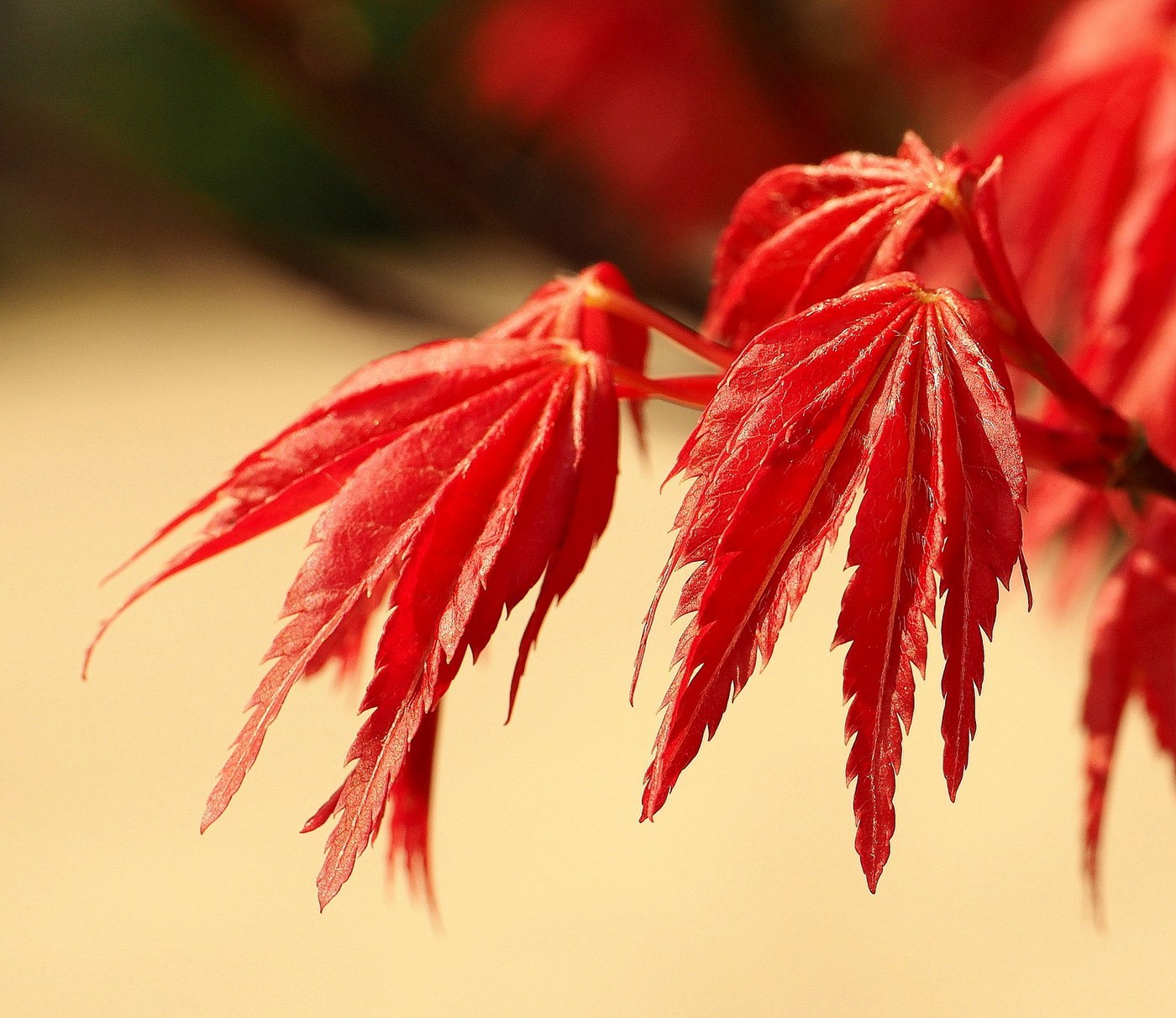
Key Identifying Features
'Bloodgood' is the most popular red-leaf upright Japanese maple (Acer palmatum 'Bloodgood'). It is a small ornamental tree recognized by:
- Deep burgundy-red to purple-black palmate leaves that hold their color through summer better than most red cultivars
- Five to seven sharply pointed, toothed lobes cut more than halfway to the leaf base
- An upright, rounded, vase-shaped form, typically 15-20 ft tall
- Reddish to dark twigs and red-tinged winged seeds (samaras)
- Bright crimson-scarlet fall color
Leaves & Stems
Leaves are opposite, simple, and palmately lobed, 2-4 inches across, with 5-7 (usually 7) deep, slender, finger-like lobes that are sharply toothed and taper to fine points. The classic star-shaped, hand-like ("palmatum") outline is the genus signature. In 'Bloodgood' the leaves emerge and stay a rich dark red-purple through the growing season — a key distinction from cultivars that fade to green or bronze in summer heat. In autumn they turn brilliant scarlet before dropping.
The form is upright and vase-like maturing to a rounded crown. Twigs and young bark are reddish to dark reddish-green, smooth, and slender; older bark is gray-brown. The opposite branching pattern is typical of all maples.
Flowers & Fruit
Flowers are small, reddish-purple, in dangling clusters in spring — easy to miss but adding to the red theme. The fruit is the maple's classic paired samara ("helicopter"), here often flushed red, with the two wings set in a wide angle. The samaras ripen and spin to the ground in late summer and fall.
How to Tell It Apart from Look-Alikes
- Green Japanese maple (Acer palmatum): identical leaf shape but green foliage.
- Laceleaf/dissectum maples (e.g. 'Crimson Queen'): also red but with finely dissected, threadlike, feathery leaves and a low weeping mound form — Bloodgood's lobes are broader and the tree is upright.
- Other upright red cultivars ('Emperor', 'Fireglow'): very similar; Bloodgood is distinguished mainly by reliable dark-red summer color and vigorous upright habit.
- Red-leaf smoke tree or purple beech: have unlobed simple leaves, not palmate hands.
The palmate 5-7 deeply cut lobes + persistent dark red-purple color + upright vase form identify Bloodgood.
Where You'll Find It
A cultivated specimen and accent tree in USDA zones 5-8, common in foundation plantings, courtyards, and Japanese-style gardens across North America, Europe, and East Asia. It prefers part shade and moist, well-drained soil; harsh afternoon sun can scorch leaves. It does not grow wild; every Bloodgood is a planted ornamental.
Quick ID Checklist
- Small upright vase-shaped tree, 15-20 ft
- Palmate leaves with 5-7 deep, sharply toothed, pointed lobes
- Dark red-purple foliage all summer, scarlet in fall
- Opposite branching; reddish smooth twigs
- Small reddish spring flowers in hanging clusters
- Paired winged samaras, often red-tinged
An upright small maple with hand-shaped, deeply lobed leaves in steady deep burgundy-red is almost certainly Bloodgood Japanese maple.
Frequently asked questions
How is Bloodgood different from a laceleaf Japanese maple?
Bloodgood is an upright tree with broad palmate leaves of 5-7 deeply cut but solid lobes. Laceleaf (dissectum) types like 'Crimson Queen' have finely shredded, threadlike, fern-like leaves and form low, cascading mounds.
Does Bloodgood stay red all summer?
Yes, that reliability is why it is so popular. Its leaves hold a deep burgundy-red through the growing season, whereas many red cultivars fade to bronze or greenish in summer heat, then it turns bright scarlet in fall.
How many lobes do the leaves have?
Usually seven, sometimes five, deep, slender, sharply toothed lobes radiating from the leaf base in a hand-like palmate shape, which is the defining outline of Acer palmatum.
Why are my Bloodgood's leaves scorching?
Japanese maples, including Bloodgood, prefer part shade and moist soil. Hot afternoon sun, drying wind, or drought can brown the leaf edges. Planting in dappled shade with consistent moisture prevents most leaf scorch.