
Blue Star Fern Identification Guide
Identify the Blue Star Fern (Phlebodium aureum) by its blue-green, deeply lobed fronds and fuzzy golden rhizomes. Includes look-alike comparisons and habitat notes.
Read the full Blue Star Fern encyclopedia entry →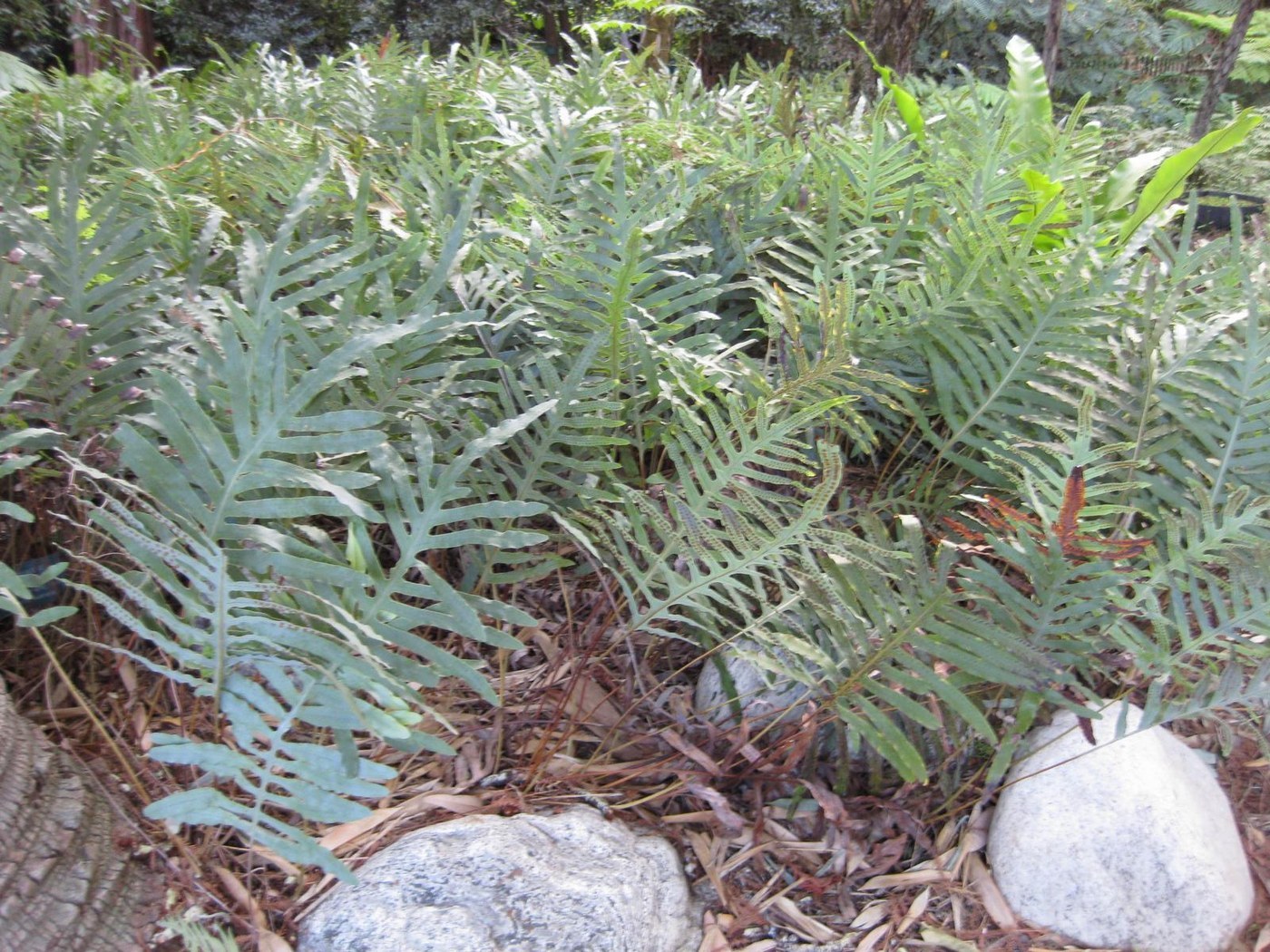
Key Identifying Features
The Blue Star Fern (Phlebodium aureum, formerly Polypodium aureum) is an epiphytic fern recognized by its frosty blue-green to gray-green fronds that are deeply pinnately lobed, and its distinctive furry, golden-orange creeping rhizomes. The unusual cool blue cast of the foliage sets it apart from most ferns.
- Blue-green / glaucous fronds with a powdery look
- Deeply lobed (pinnatifid) fronds with finger-like segments
- Fuzzy golden-brown rhizomes creeping along the surface
- Smooth, leathery, hairless frond surface
Leaves & Stems
Fronds are broad and deeply cut into wavy lobes (not fully divided into separate leaflets), giving a hand- or star-like outline. They are smooth, leathery, and matte blue-green, often 1-3 feet long on mature plants. The defining structure is the rhizome: a thick, surface-creeping stem covered in soft golden to reddish-brown scales, giving rise to the names "golden polypody" and "hare's foot." The rhizome crawls over soil, bark, or pot edges.
Flowers & Fruit
Like all ferns, it produces no flowers or seeds. Reproduction is by spores borne in round sori arranged in neat rows on the undersides of fertile fronds. The sori are golden when ripe (the species name aureum means golden), an easy confirming feature.
How to Tell It Apart from Look-Alikes
- Bird's Nest Fern has undivided, strap-like fronds in a rosette and lacks lobes and creeping rhizomes.
- Boston Fern has finely divided, arching, bright green fronds, not blue-gray broad lobes.
- Rabbit's Foot Fern (Davallia) also has fuzzy rhizomes but its fronds are lacy and finely divided, and green rather than blue.
The blue-green lobed fronds + golden furry rhizome combination is diagnostic.
Where You'll Find It
Native to tropical and subtropical the Americas (Florida, the Caribbean, Central and South America), it grows as an epiphyte on trees and palms or on rocks. As a houseplant it likes bright indirect light and high humidity. Keep the fuzzy rhizome on top of the soil, never buried.
Quick ID Checklist
- Blue-green/glaucous fronds
- Deeply lobed, finger-like frond segments
- Fuzzy golden-brown rhizomes creeping on the surface
- Round sori in rows under fertile fronds (no flowers)
- Smooth, leathery, hairless leaf texture
Blue fronds plus a golden hairy rhizome reliably identify Phlebodium aureum.
Frequently asked questions
Why are the fronds blue instead of green?
A natural waxy, glaucous coating gives the fronds their frosty blue-green color, which is normal and a key identification feature.
What is the fuzzy orange thing growing over the soil?
That is the creeping rhizome covered in golden scales. It should sit on top of the soil and is a hallmark of the species, not a pest.
Does the Blue Star Fern flower?
No. Ferns reproduce by spores, which form in round golden sori on the undersides of fertile fronds, not by flowers or seeds.
How is it different from a Bird's Nest Fern?
Bird's Nest Fern has solid, strap-shaped fronds in a rosette. Blue Star Fern has blue-green, deeply lobed fronds and a furry creeping rhizome.