How to Care for Blue Star Juniper
Grow Juniperus squamata 'Blue Star' for silvery-blue, low-mounding evergreen texture - a tough, drought-tolerant, low-care shrub.
Read the full Blue Star Juniper encyclopedia entry →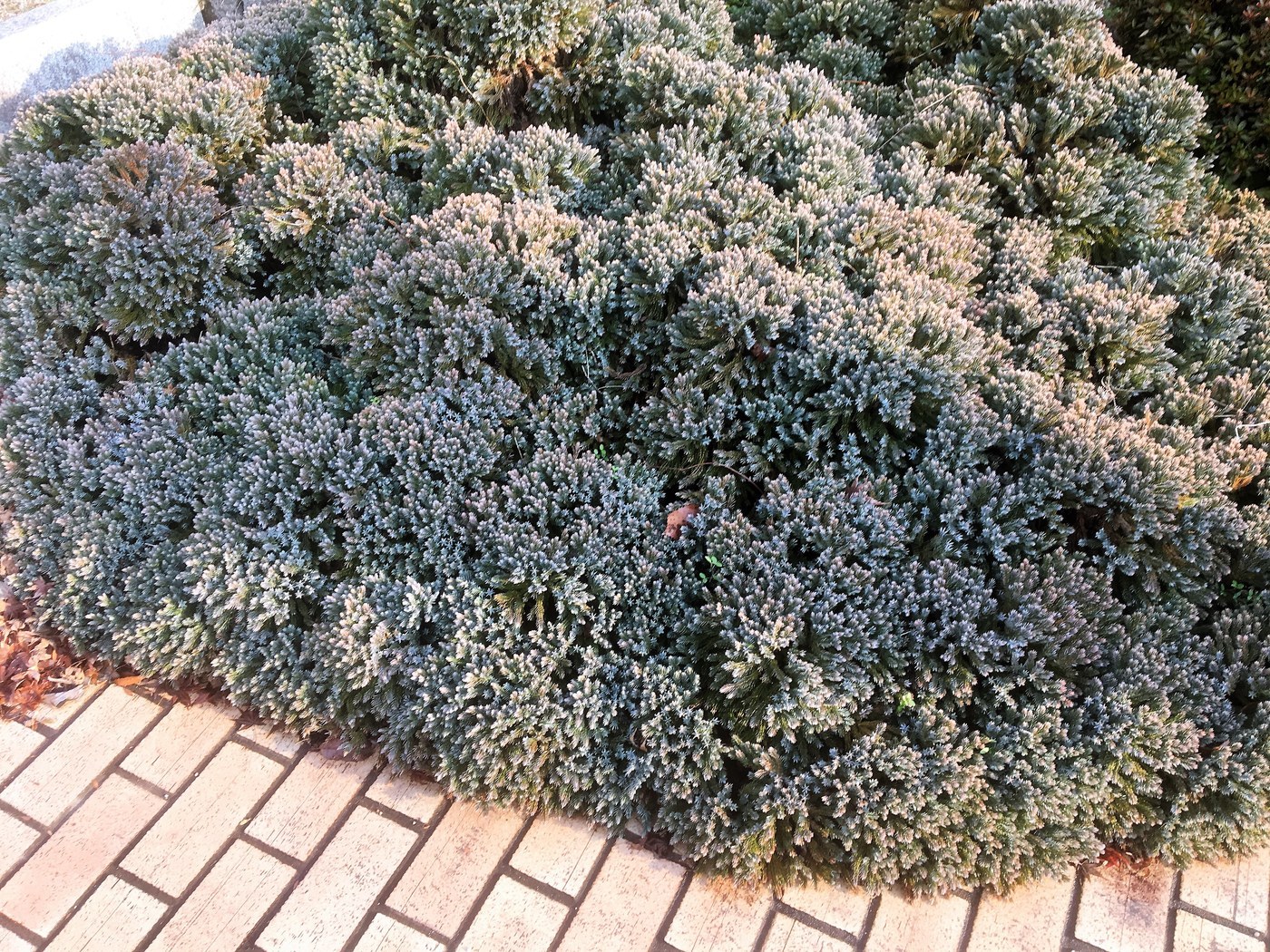
Blue Star juniper (Juniperus squamata 'Blue Star') is a slow-growing, dwarf evergreen shrub forming a dense, rounded mound of silvery blue-green, star-like needles. It is exceptionally tough, low-maintenance, and valued for its steady color and neat shape in rock gardens, borders, and containers.
Light
Grow Blue Star juniper in full sun. At least six hours of direct sun keeps the foliage densest and brings out the best silvery-blue color. In too much shade it thins, loses its tight form, and the blue fades toward dull green.
Water
This juniper prefers low, careful watering and demands sharp drainage. Water regularly during the first season to establish roots, then only during prolonged dry spells - it is quite drought-tolerant once established. It strongly dislikes wet feet; soggy soil is its greatest enemy.
Soil & Potting
Well-drained soil is essential. Blue Star tolerates poor, rocky, sandy, and lean soils and a range of pH. Avoid heavy, water-holding clay unless amended with grit. In containers, use a gritty, fast-draining mix and a pot with generous drainage; never let it sit in a saucer of water.
Humidity & Temperature
Cold-hardy and adaptable, Blue Star tolerates heat, cold, and wind well. It is not fussy about humidity and actually prefers good air movement, which helps keep foliage dry and healthy.
Feeding
This is a light feeder. A single application of slow-release evergreen or all-purpose fertilizer in early spring is plenty. Over-fertilizing pushes soft, weak growth and can distort the tidy natural form, so keep feeding minimal.
Propagation
Cultivars like 'Blue Star' are propagated from cuttings taken in late autumn or winter (semi-hardwood), rooted in a gritty medium with patience, as junipers root slowly. Seed does not reproduce the cultivar true.
Repotting / Pruning
Blue Star needs very little pruning thanks to its naturally compact habit. Trim only to remove dead or wayward shoots or lightly shape in spring; avoid cutting into old bare wood, which does not readily resprout. Repot container specimens every few years into fresh gritty mix.
Common Problems & Pests
Most problems trace to excess moisture: root rot, needle browning, and dieback in soggy or poorly drained sites. Watch for spider mites in hot, dry conditions (rinse foliage), plus occasional bagworms, scale, and juniper tip blight - prune out affected growth and improve air circulation.
Seasonal Care Tips
Plant in spring or fall. Feed once in early spring and shape lightly then. Water only during summer droughts. In fall, ease off watering as growth slows. In winter it holds its color; in snowy regions, gently brush off heavy snow loads to prevent branches splaying.
Frequently asked questions
Why is my Blue Star juniper turning brown?
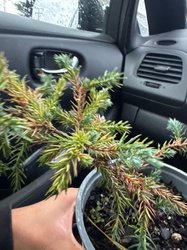
Browning usually signals waterlogged soil and root rot, or spider mites in hot dry spells. Improve drainage, water less, and check the undersides of foliage for mites.
How big does Blue Star juniper get?
It is a true dwarf, growing very slowly into a low mound roughly one to two feet tall and two to three feet wide over many years.
Does Blue Star juniper need pruning?
Rarely. Its compact form needs only occasional trimming of dead or stray shoots. Avoid cutting into old bare wood, which does not resprout.
Can I grow Blue Star juniper in a pot?
Yes. Use a gritty, fast-draining mix and a well-drained container in full sun, and avoid overwatering - it makes an excellent long-lived container evergreen.
Blue Star Juniper identified by the community
Recent Blue Star Juniper specimens identified with Plant Identifier.