Blue Star Juniper Identification Guide
How to identify Blue Star Juniper (Juniperus squamata 'Blue Star'), a compact silvery-blue mounding shrub with prickly awl-shaped needles. Covers its dwarf garden form and look-alikes.
Read the full Blue Star Juniper encyclopedia entry →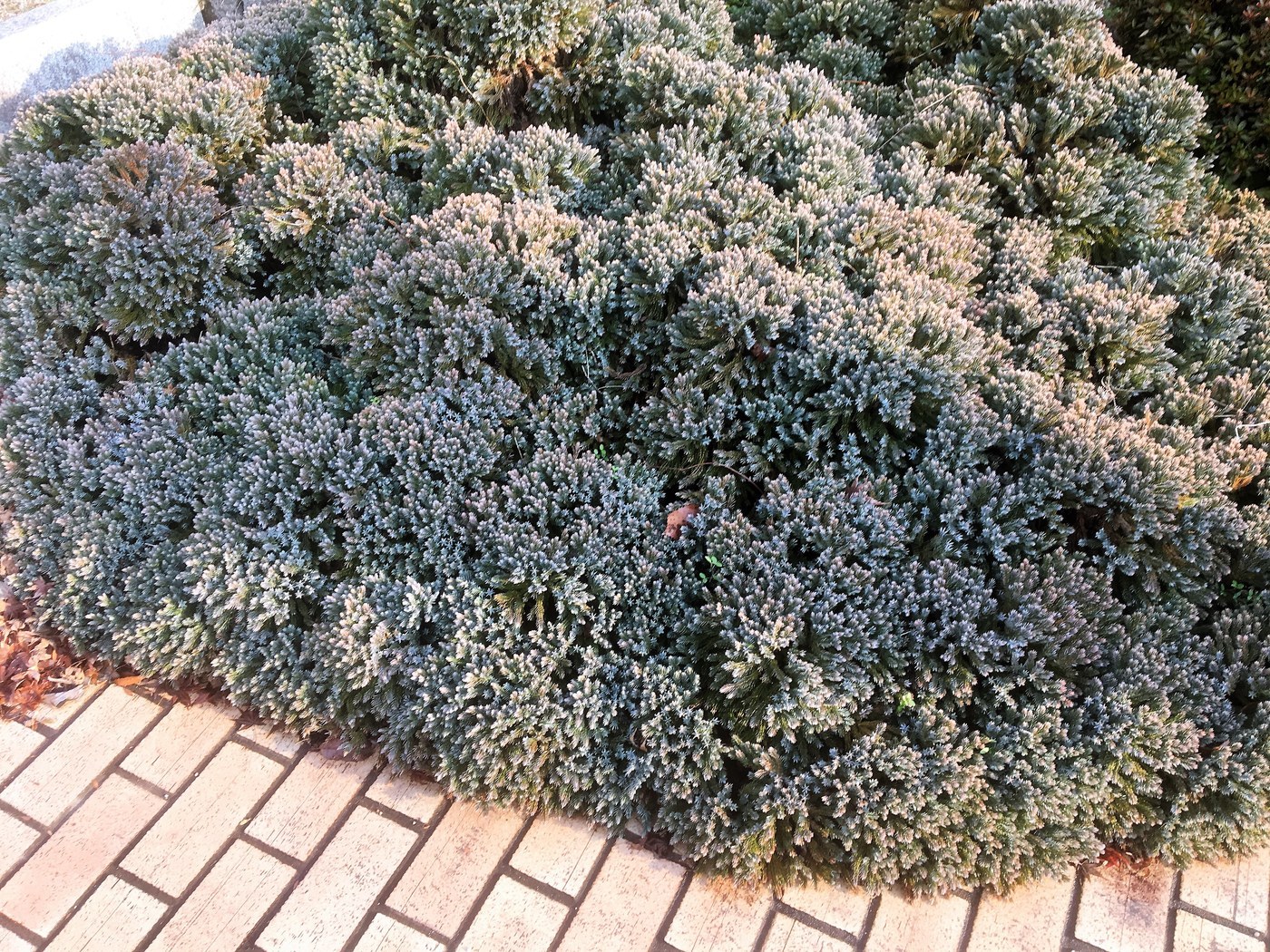
Key Identifying Features
Blue Star Juniper (Juniperus squamata 'Blue Star') is a popular dwarf, low-mounding ornamental prized for its dense silvery-blue, star-like sprays of awl-shaped needles. Unlike many junipers, it keeps needle-like (awl) foliage even when mature, giving the foliage a soft, frosted, spiky texture. It forms a tidy compact cushion rather than a tree.
Leaves & Stems
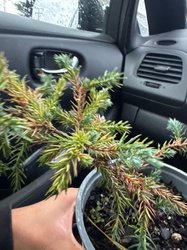
- Foliage awl-shaped (short, pointed needles), about 5 to 8 mm, spreading slightly from the stem — prickly to the touch, not the pressed scales of many junipers.
- Color intense silvery-blue to powder-blue, with a bright white stomatal band on the upper surface that creates the frosted, starry look (the white shows when needles flare out).
- Crushed foliage is resinous and aromatic.
- Growth dense, slow, and mounding, typically 1 to 2 feet tall and 2 to 3 feet wide, with stiff radiating branchlets.
- Inner foliage often shows older brownish needles persisting near the center.
Flowers & Fruit
- A cultivated clone, it rarely fruits conspicuously; when present, female cones are small berry-like, blue-black structures typical of Juniperus squamata.
- Most plants are grown purely for foliage and seldom produce notable cones in cultivation.
How to Tell It Apart from Look-Alikes
- Creeping juniper (Juniperus horizontalis) cultivars are flatter, ground-hugging mats, often with finer scale foliage; Blue Star is a rounded cushion of prickly awl needles.
- Singleseed juniper other cultivars like 'Blue Carpet' are lower and more spreading; 'Blue Star' is distinctly compact and mounded.
- Blue spruce dwarfs have stiffer single needles on woody pegs, not soft junipery awls, and a different growth habit.
- The dwarf silvery-blue mound of soft prickly awl-needles is the giveaway for 'Blue Star'.
Where You'll Find It
Almost exclusively a landscape and rock-garden plant, grown in foundation beds, borders, containers, and alpine gardens across temperate zones. The species Juniperus squamata is native to the Himalayas and China, but 'Blue Star' itself is a garden cultivar selected for its color and compact form.
Quick ID Checklist
- Compact, low, mounding dwarf shrub (1 to 2 ft tall)
- Silvery-blue, star-like foliage with frosted look
- Awl-shaped (needle-like), prickly leaves, not flat scales
- Slow-growing dense cushion; aromatic when crushed
- Found in rock gardens, borders, and containers
Frequently asked questions
Why is it called Blue Star?
Its short, awl-shaped needles flare outward and show a bright white band, creating a dense silvery-blue, star-like or frosted appearance on a compact mounded plant.
Does Blue Star Juniper have needles or scales?
It keeps awl-shaped, prickly needle-like leaves even when mature, unlike many junipers that switch to flat scale foliage. This soft spiky texture helps identify it.
How big does it get?
It is a dwarf, typically reaching only 1 to 2 feet tall and spreading 2 to 3 feet wide, growing slowly into a neat cushion.
How do I tell it from a dwarf blue spruce?
Blue Star has soft, junipery awl-needles and aromatic foliage in a low mound, while dwarf blue spruces have stiff single needles attached to woody pegs and a more upright form.
Blue Star Juniper identified by the community
Recent Blue Star Juniper specimens identified with Plant Identifier.