
Bok Choy Identification Guide
Identify bok choy by its non-heading rosette of smooth dark-green leaves on thick, juicy white or pale-green spoon-shaped stalks clustered at the base.
Read the full Bok Choy encyclopedia entry →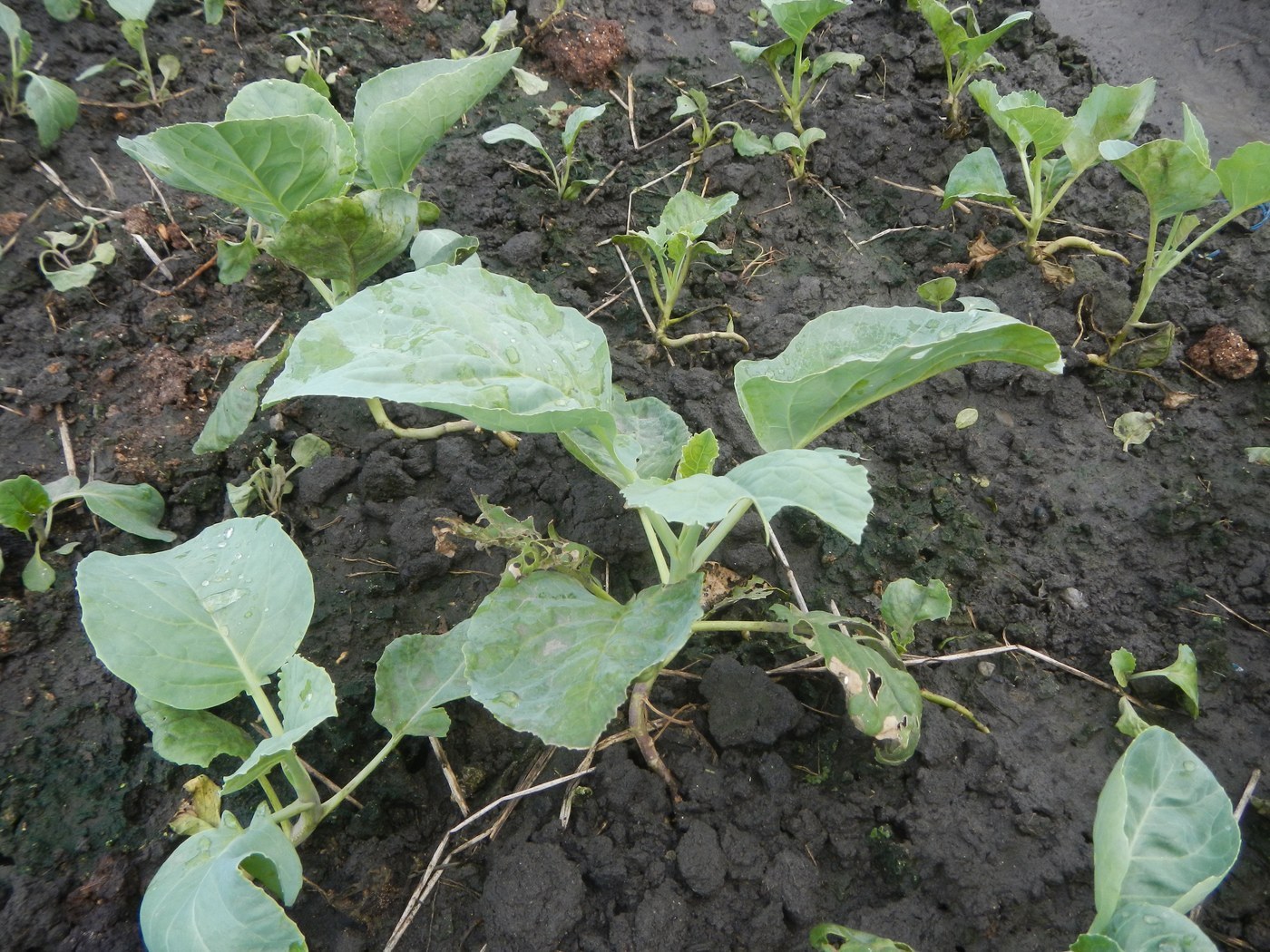
Key Identifying Features
Bok choy (Brassica rapa subsp. chinensis), also called pak choi or Chinese white cabbage, is a cool-season biennial grown as an annual in the cabbage family (Brassicaceae). It is recognized as a vase-shaped, non-heading cluster of upright leaves, each with a broad, smooth, dark-green blade tapering into a thick, fleshy, spoon-like white or light-green stalk that all fan out from a compact base.
- Growth habit: tight basal clump/rosette, typically 6–18 inches tall depending on type
- Form: does NOT form a tight ball-head like cabbage — leaves stay loose and upright
Leaves & Stems
The leaves are the signature: oval to spoon-shaped (spatulate) blades, glossy and smooth (not crinkled), deep green, with a slightly wavy margin and a network of pale veins. Each blade narrows abruptly into a thick, succulent, flattened petiole (stalk) that is bright white (white-stemmed types) or pale jade-green (Shanghai/green-stemmed types). These crunchy stalks broaden and overlap at the base. There is no waxy bloom as heavy as on cabbage, and the texture is crisp and watery.
Flowers & Fruit
If allowed to bolt in warm weather or its second year, bok choy sends up a branched flowering stalk with small four-petaled yellow flowers in the classic crucifer cross shape. These are followed by slender upright seed pods (siliques) containing tiny round seeds. Most plants are harvested before flowering.
How to Tell It Apart from Look-Alikes
- Napa cabbage (Brassica rapa subsp. pekinensis): forms a tall, tight oblong head with crinkled, frilly pale-green leaves — very different from bok choy's open rosette.
- Swiss chard: has colorful or white stalks too, but the blades are large, glossy, and savoyed, and it's in a different family (no four-petaled yellow flowers).
- Celery / celtuce: stalks are stringy and ribbed, leaves divided, not the smooth spoon shape.
- Tatsoi: related, but forms a flat, ground-hugging rosette of small dark spoon leaves rather than upright stalks.
The upright spoon-shaped green leaves on thick white/jade stalks in a loose vase is the bok-choy giveaway.
Where You'll Find It
A staple of East Asian cuisine, bok choy is grown in vegetable gardens and farms worldwide as a fast cool-season crop. Look for it in spring and fall gardens, raised beds, and market stalls; baby bok choy is a smaller, tender version of the same plant.
Quick ID Checklist
- Loose upright rosette, no tight ball head
- Smooth, glossy, dark-green spoon-shaped leaves
- Thick, fleshy, crisp white or pale-green stalks widening at the base
- Yellow 4-petaled flowers and slender pods if it bolts
- Crisp, juicy, mild texture (mustard-family crop)
Frequently asked questions
How is bok choy different from napa cabbage?
Bok choy forms a loose, upright vase of smooth dark-green leaves on thick white stalks, while napa cabbage forms a dense, elongated head of pale, frilly, crinkled leaves. Both are Brassica rapa but very different in form.
What is the difference between white-stemmed and green-stemmed bok choy?
White-stemmed types have bright white, broad stalks and a bolder flavor, while Shanghai (green-stemmed) types have pale jade stalks and a more spoon-like, tender shape. Both share the same growth habit.
Does bok choy flower?
Yes, if it bolts in heat or its second year it sends up a stalk of small yellow four-petaled flowers (typical of the mustard family) followed by slim seed pods. It's usually harvested before this.
How do I tell baby bok choy from a young head of other greens?
Baby bok choy still shows the classic clustered spoon-shaped green blades on thick pale stalks fanning from a small base — just a miniature version of the mature plant.