
Box Honeysuckle Identification Guide
Identify box honeysuckle (Lonicera nitida) by its tiny glossy boxwood-like opposite leaves, dense arching habit, and use as a clipped evergreen hedge.
Read the full Box Honeysuckle encyclopedia entry →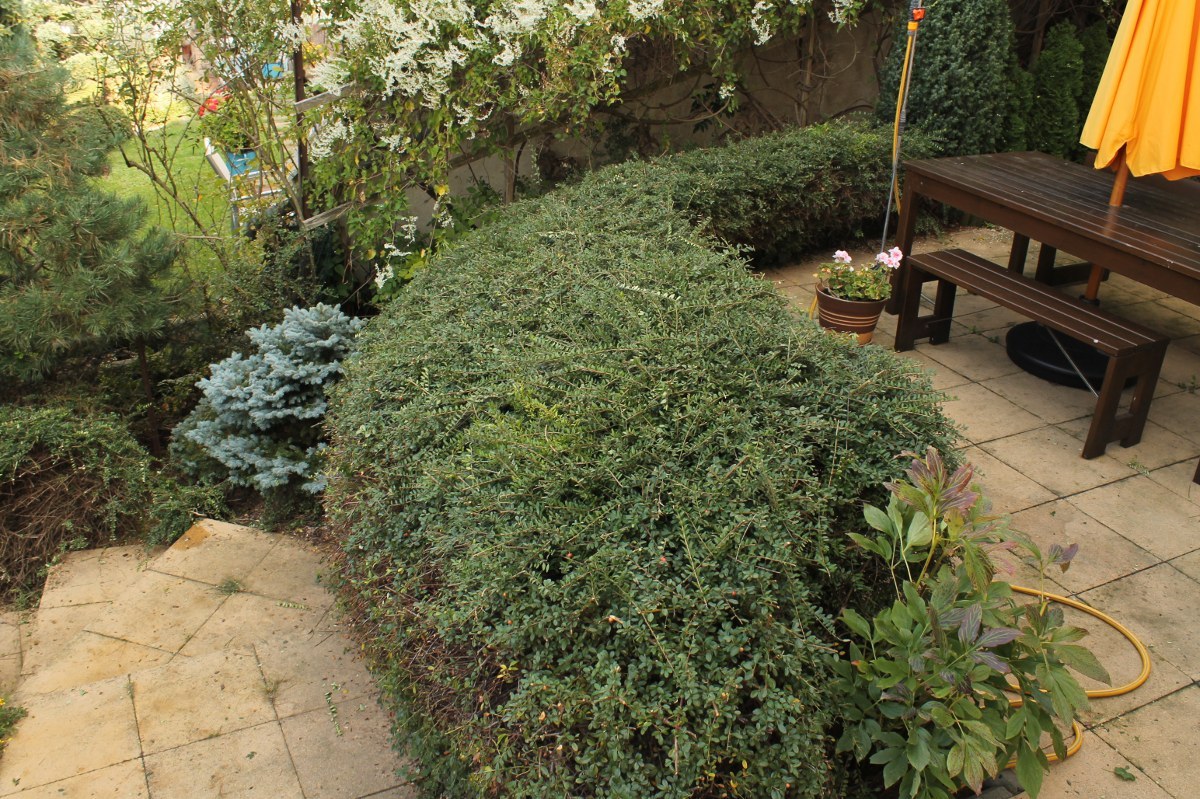
Key Identifying Features
Box honeysuckle (Lonicera nitida) is a small-leaved evergreen shrub used as a fine-textured hedge or topiary, often as a faster-growing alternative to boxwood. Despite being a honeysuckle, it bears tiny boxwood-like leaves rather than showy flowers — the name reflects its boxwood resemblance, not big honeysuckle blooms.
- Dense, twiggy evergreen shrub, 3–6 ft, with arching wiry stems
- Very small (¼–½ in), glossy, oval opposite leaves
- Tiny, inconspicuous creamy flowers, then small translucent berries
- Fine, dense texture ideal for clipping
Leaves & Stems
Leaves are opposite, simple, tiny (about ¼–½ in), oval, glossy, and dark green with smooth margins — closely mimicking boxwood. The key separator from boxwood is the arrangement and stems: box honeysuckle has wiry, arching, reddish-purple young stems and the small leaves are spaced along long whippy shoots, giving a looser, more billowing look than the stiff boxwood. Some cultivars (like 'Baggesen's Gold') have golden-yellow foliage. New stems are slender and purplish.
Flowers & Fruit
Flowers are tiny, creamy-white, paired, and tubular (typical honeysuckle pairing) but so small and hidden they're easily missed; they're lightly fragrant in late spring. They may be followed by small, semi-translucent purple-violet berries, though fruiting is sparse and inconsistent. The plant is grown almost entirely for foliage, not bloom.
How to Tell It Apart from Look-Alikes
- Boxwood (Buxus): leaves notched at the tip with a distinctive pungent smell; box honeysuckle leaves are pointed, glossier, and odorless, and its stems are wirier and arching.
- Privet: larger leaves and showy white flower panicles.
- Japanese holly (Ilex crenata): similar tiny leaves but alternate and slightly toothed; box honeysuckle leaves are strictly opposite.
- Other shrubby honeysuckles: have larger leaves and more conspicuous flowers.
The tiny opposite glossy leaves + wiry arching purplish stems + dense clippable habit identifies box honeysuckle, with the opposite leaf arrangement distinguishing it from boxwood and Japanese holly.
Where You'll Find It
Common in temperate gardens (especially the UK and Europe) as low hedging, topiary, and edging. It's vigorous, tolerant of sun to part shade and most soils, and responds well to frequent shearing. Because it roots and resprouts readily, it can become weedy or sprawl if not maintained.
Quick ID Checklist
- Dense evergreen shrub with arching wiry stems
- Tiny (¼–½ in) glossy oval opposite leaves
- Boxwood-like but pointed tips and no boxwood smell
- Young stems slender, reddish-purple
- Tiny paired creamy flowers; sparse purple berries
- Often clipped into hedges or topiary
If you see a billowing, fine-textured evergreen hedge with tiny glossy boxwood-like leaves arranged in opposite pairs on wiry stems, it's box honeysuckle.
Frequently asked questions
Is box honeysuckle a real honeysuckle?
Yes, it's Lonicera nitida, a true honeysuckle, but a shrubby species grown for its tiny evergreen foliage rather than showy flowers. Its blooms are minute and easily overlooked, which is why most people know it only as a hedge plant.
How is it different from boxwood?
Box honeysuckle mimics boxwood's small glossy leaves but its leaves are pointed and odorless, its stems are wiry, arching, and purplish, and it grows faster and looser. Boxwood leaves are notched at the tip and give off a distinctive pungent smell when handled.
Why is it used instead of boxwood?
It grows faster, tolerates shearing well, and is often planted as a quick, inexpensive substitute for slower boxwood hedging — though it needs more frequent clipping to stay tidy and lacks boxwood's density at the base.
Does box honeysuckle produce berries?
Occasionally. After its tiny paired flowers, it can set small, semi-translucent purple-violet berries, but fruiting is sparse and inconsistent, so the plant is valued for foliage rather than fruit.