
How to Care for Brunnera
Grow shade-loving Brunnera macrophylla for heart-shaped foliage and airy blue spring flowers with steady moisture and cool shade.
Read the full Brunnera encyclopedia entry →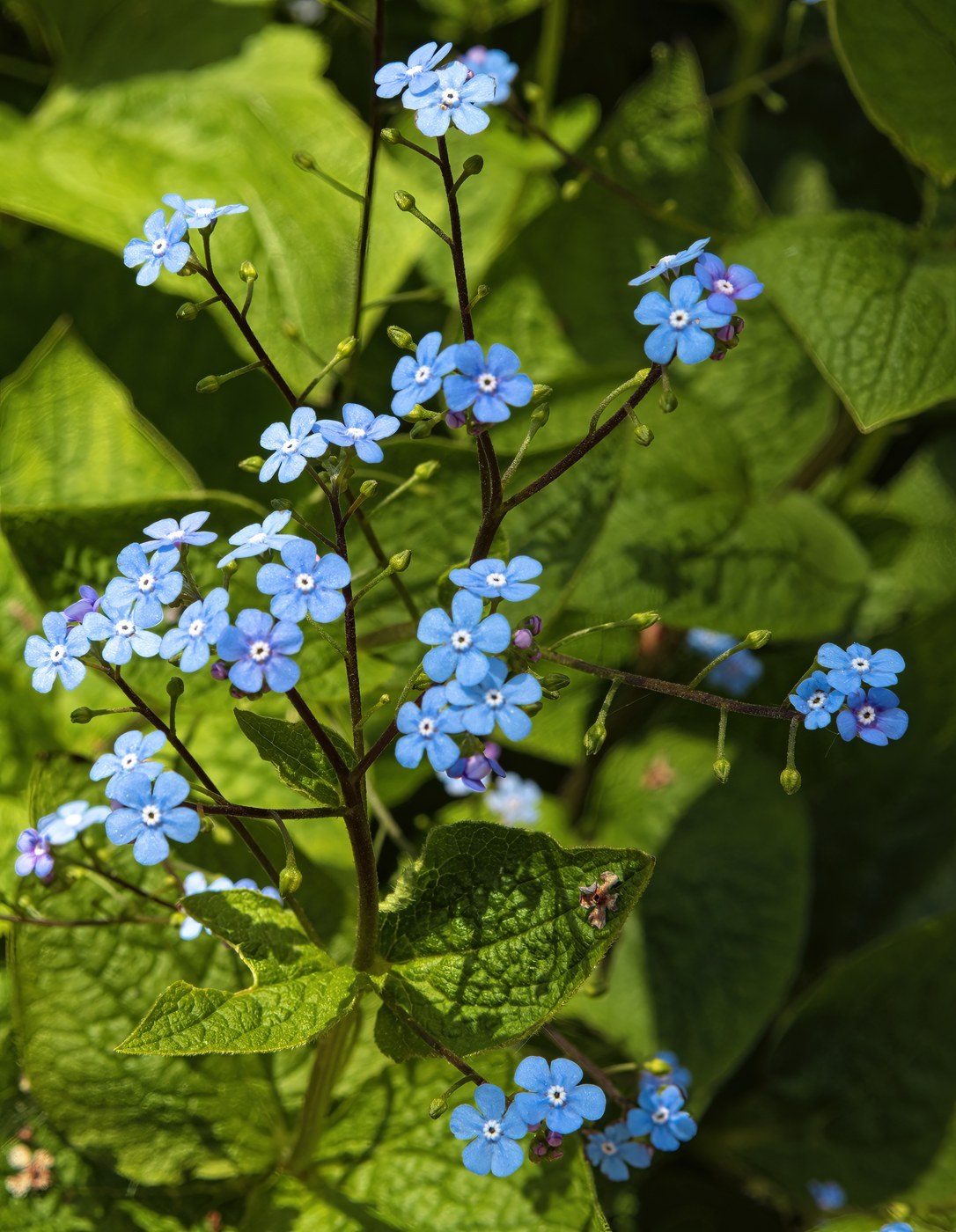
Brunnera macrophylla is a clump-forming shade perennial grown for its large heart-shaped leaves, often silver-marked, and delicate sprays of blue forget-me-not-like flowers in spring. It is an easy, dependable groundcover for shady beds.
Light
Brunnera thrives in part to full shade. Dappled woodland light or a spot with morning sun and afternoon shade is ideal. Silver-leaved varieties especially need shade to prevent scorching, and too much direct sun causes crisping and leaf browning.
Water
Keep the soil evenly moist with regular watering, particularly during dry spells and in warmer weather. Brunnera dislikes drying out, which causes wilting and browned leaf edges. It is not drought-tolerant, so consistent moisture is key to keeping the foliage looking fresh all season.
Soil & Potting
Plant in humus-rich, moisture-retentive but well-drained soil with a neutral to slightly acidic pH. Amend with compost or leaf mold at planting to hold moisture and feed the roots. A shredded-bark or leaf-mold mulch keeps the root zone cool and moist.
Humidity & Temperature
Brunnera prefers cool, temperate conditions and appreciates ambient outdoor humidity. It is cold-hardy and reliably perennial in temperate climates. It struggles in hot, dry heat, so cool shade and mulch help it endure summer, and it dies back gracefully with winter cold.
Feeding
Feed lightly in spring with a balanced slow-release fertilizer or a top-dressing of compost. Brunnera is not a heavy feeder, and rich organic soil often supplies most of what it needs. Avoid excess fertilizer, which is unnecessary for this understated woodland plant.
Propagation
Propagate by division in early spring or fall, splitting mature clumps to make new plants and reinvigorate old ones. Root cuttings taken in winter can also be used. Named silver-leaf cultivars should be divided rather than grown from seed to keep their foliage patterns true.
Repotting / Pruning
Cut back tattered or scorched leaves through the season to encourage a fresh flush of foliage. Remove spent flower stems after blooming for a tidy look. Divide crowded clumps every few years in spring or fall to maintain vigor and control spread.
Common Problems & Pests
Brunnera is relatively trouble-free. The main issues are leaf scorch and browned edges from too much sun or dry soil. Slugs and snails may chew the foliage in damp conditions, and powdery mildew can appear in poor airflow. Keeping soil moist and shade adequate prevents most problems.
Seasonal Care Tips
In spring, enjoy the blue flowers, divide if needed, and mulch. Through summer, keep the soil consistently moist and trim damaged leaves. In fall, clean up dying foliage as the plant prepares for dormancy. It needs little winter care and returns reliably the following spring.
Frequently asked questions
Why are my Brunnera leaves turning brown at the edges?
Browned or scorched edges usually mean too much sun or soil that dried out. Move it to more shade and keep the soil consistently moist; trim damaged leaves to refresh growth.
Does Brunnera need sun or shade?
Brunnera prefers part to full shade. Silver-leaved varieties especially need protection from direct sun, which scorches the foliage.
How do I propagate Brunnera?
Divide mature clumps in early spring or fall. Division keeps named silver-leaf cultivars true to their foliage pattern, unlike seed-grown plants.
How often should I water Brunnera?
Water regularly to keep the soil evenly moist, especially in warm or dry weather. Brunnera is not drought-tolerant and wilts or browns if it dries out.