
Buckhorn Plantain Identification Guide
Identify buckhorn plantain by its rosette of long, narrow, ribbed lance-shaped leaves and slender stalks topped with short cone-like flower heads ringed by white stamens.
Read the full Buckhorn Plantain encyclopedia entry →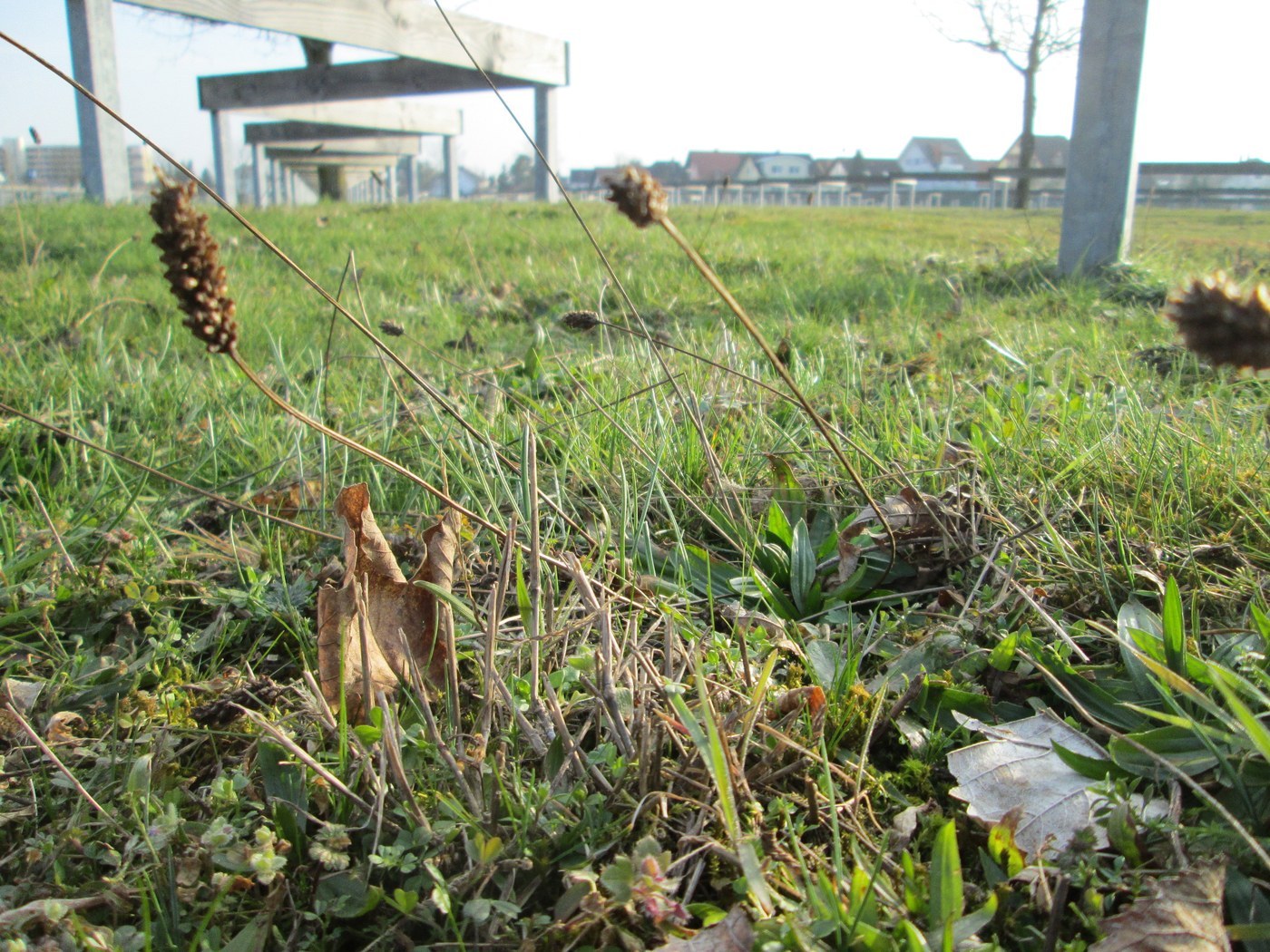
Key Identifying Features
Buckhorn plantain (Plantago lanceolata), also called narrowleaf or ribwort plantain, is a cool-season perennial weed that forms a basal rosette of long, narrow leaves with prominent parallel veins. Its distinctive flower is a short, dense cone-like head held atop a tall, leafless, deeply grooved stalk, often encircled by a halo of white stamens during bloom. The narrow ribbed leaves separate it immediately from the broad-leaved plantains.
- Rosette of long, narrow lance-shaped leaves
- Strong parallel ribs/veins running the leaf length
- Tall, grooved leafless flower stalks
- Short, dense cone-shaped flower heads with white stamen rings
Leaves & Stems
Leaves are lance-shaped (long and narrow), 3 to 10 inches long, tapering at both ends, with 3 to 7 prominent parallel veins that make the leaf look ribbed. They grow directly from the crown in a rosette, are slightly hairy, and often twist or stand semi-upright. The leaf bases are sometimes woolly. There are no true above-ground stems other than the flowering stalks.
Flowers & Fruit
Flower stalks are tall, slender, leafless, and distinctly furrowed/grooved, rising well above the leaves. Each is topped by a short, compact, cone-like to cylindrical flower head, brown to greenish, from which protrude rings of tiny white-to-cream stamens that bloom from the bottom of the cone upward. After flowering, small seed capsules form. The grooved stalk plus stubby flower cone is a reliable combination.
How to Tell It Apart from Look-Alikes
- Broadleaf plantain (Plantago major): Has wide, oval leaves and long slender flower spikes, versus buckhorn's narrow leaves and short cone heads.
- Grasses: Buckhorn's parallel-veined leaves can resemble grass at a glance, but grasses lack the rosette form and the cone-shaped flower head on a grooved stalk.
- Plantain seedlings vs. other rosette weeds: The strongly ribbed, narrow leaves are the key check.
Where You'll Find It
Buckhorn plantain is one of the most common lawn and turf weeds, also occupying pastures, roadsides, fields, gardens, and compacted disturbed ground worldwide. It tolerates mowing, poor soil, and drought, persisting from a deep fibrous root system and flowering from late spring through summer.
Quick ID Checklist
- Rosette of long, narrow ribbed leaves
- 3-7 strong parallel veins per leaf
- Tall, grooved leafless flower stalks
- Short cone-shaped flower head ringed with white stamens
- Perennial weed of lawns and disturbed ground
Narrow ribbed rosette leaves plus a grooved stalk topped by a stubby flower cone confirm buckhorn plantain.
Frequently asked questions
How do I tell buckhorn plantain from broadleaf plantain?
Buckhorn plantain has long, narrow, lance-shaped leaves and short cone-like flower heads on grooved stalks, while broadleaf plantain has wide, oval leaves and long, slender flower spikes.
Why do the leaves look ribbed?
Buckhorn plantain leaves have 3 to 7 prominent parallel veins running their length, which give them a strongly ribbed appearance and inspire the alternate name 'ribwort plantain.'
Is buckhorn plantain a perennial?
Yes, it is a cool-season perennial that regrows each year from a persistent crown and deep fibrous roots, which is why it survives mowing and returns reliably in lawns and pastures.
What do the flowers look like up close?
Each flower head is a short brown-to-greenish cone on a tall grooved stalk, and during bloom a ring of small white-to-cream stamens protrudes around the cone, flowering from the base upward.