
How to Care for Bugleweed
Grow Ajuga reptans as a fast, low groundcover with glossy foliage and blue flower spikes in sun or part shade.
Read the full Bugleweed encyclopedia entry →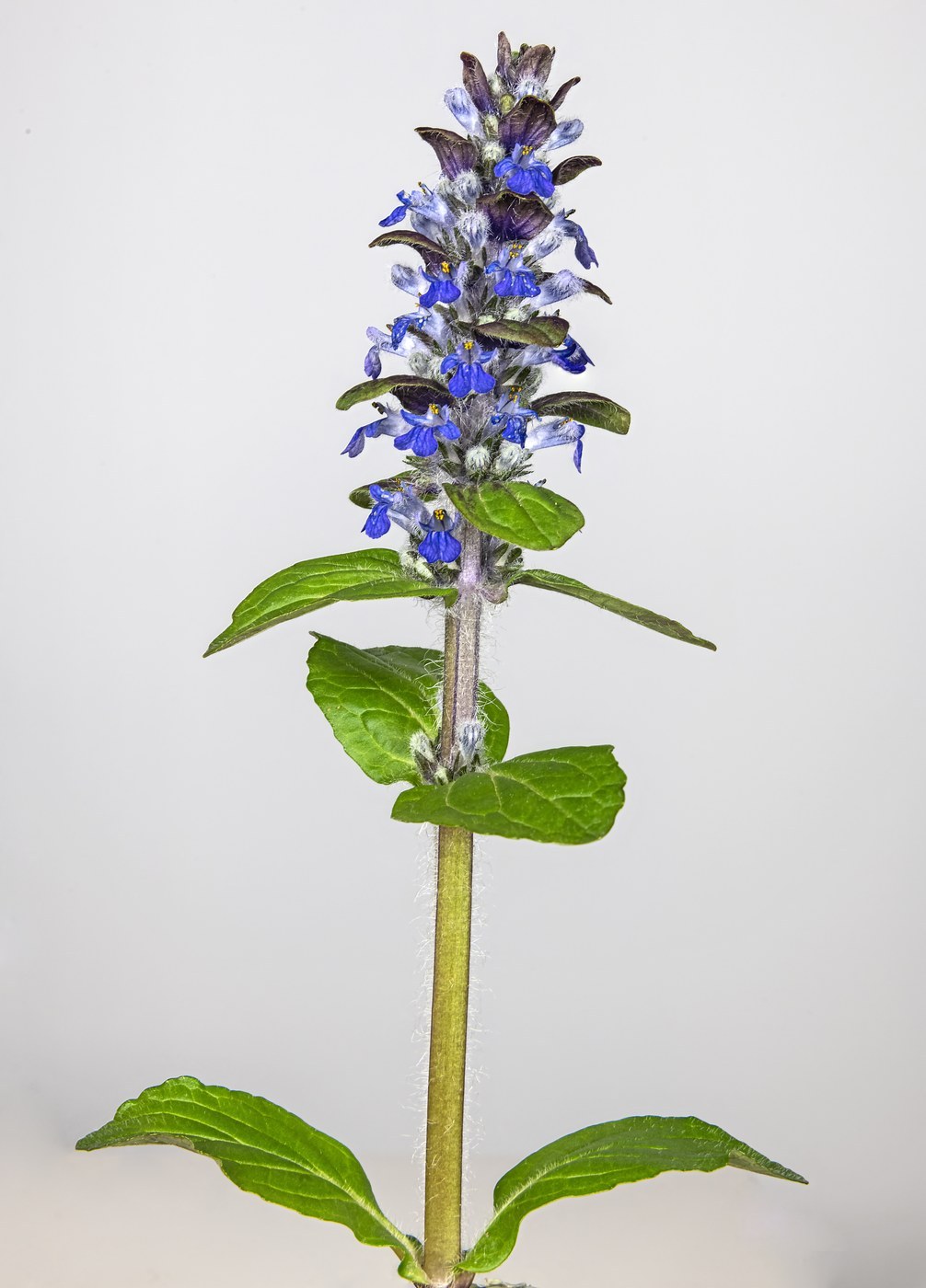
Bugleweed (Ajuga reptans) is a vigorous, low-growing perennial groundcover that forms a dense carpet of glossy rosettes topped in spring by short spikes of blue-violet flowers. Grown for its ornamental foliage that ranges from deep bronze-purple to variegated cream and pink, it spreads quickly by runners to knit shady beds and slopes together.
Light
Bugleweed adapts to full sun through part shade. In full sun the foliage colors deepen and flowering is heaviest, but the soil must stay reliably moist to prevent scorch. In part to dappled shade it grows more lushly and is a superb groundcover under trees and shrubs. Variegated and dark-leaved cultivars generally hold their color best with a few hours of sun; too much deep shade can dull the tones and make growth leggy.
Water
Keep the soil evenly moist, especially during establishment and in sunny sites. Bugleweed is not deeply drought-tolerant; prolonged dryness causes wilting, browning leaf edges, and thinning of the mat. Water when the top inch of soil begins to dry, aiming for consistent moisture without waterlogging. Once established in shade, it needs only occasional supplemental watering during dry spells.
Soil & Potting
It tolerates a wide range of soils but performs best in moderately fertile, well-drained ground with good organic content. Heavy, constantly waterlogged soil can invite crown and root rot. Work compost into poor or compacted soil before planting. In containers, use a standard quality potting mix and ensure drainage holes; Bugleweed makes an attractive spiller in mixed pots.
Humidity & Temperature
Bugleweed is a cool-temperate perennial that handles a broad temperature range and is quite cold-hardy, dying back or semi-evergreen in winter and reflushing in spring. It appreciates good air circulation, since stagnant, humid conditions in dense plantings can encourage fungal issues. Average outdoor humidity is fine; no special humidity measures are needed.
Feeding
Bugleweed rarely needs much feeding. A light top-dressing of compost or a single application of balanced slow-release fertilizer in early spring is plenty to support foliage and flowering. Avoid heavy nitrogen feeding, which promotes soft, floppy growth and can worsen crown rot susceptibility in dense mats.
Propagation
Propagation is effortless. The plant sends out stolons (creeping runners) that root as they spread, and these rooted plantlets can be lifted and transplanted at almost any time in the growing season. You can also divide established clumps in spring or early fall, separating rooted rosettes and replanting them 6-12 inches apart. Seed is possible for the species but division and runners are faster and truer to type.
Repotting / Pruning
After the spring flush of bloom, shear off the spent flower spikes to keep plantings tidy and encourage fresh foliage. Thin or divide crowded stands every couple of years to improve airflow and reduce disease. Because it spreads aggressively, edge the planting or install a border to keep it out of lawns and neighboring beds. Container plants can be divided and refreshed each spring.
Common Problems & Pests
The most common serious issue is crown rot (Southern blight), which strikes dense, poorly drained plantings in hot, humid conditions, causing patches of the mat to collapse; improve drainage and airflow and thin crowded stands to prevent it. Powdery mildew and leaf spots can appear in stagnant air. Pests are few, though aphids may cluster on flower stems and slugs and snails can chew foliage in damp shade. Its most notable drawback is its vigor, since runners can escape into lawns.
Seasonal Care Tips
Spring is the main show, with dense flower spikes rising above the foliage; deadhead after bloom. Through summer, keep soil moist in sunny sites and watch for rot in humid weather. Divide and transplant in early fall while soil is still warm so plants establish before winter. In cold regions the foliage may thin or die back over winter, returning reliably in spring; a light mulch helps in the coldest zones.
Frequently asked questions
Does Bugleweed grow in full sun or shade?
Both. It thrives in full sun through part shade. Sun deepens foliage color and boosts flowering but demands consistently moist soil, while part shade produces lush growth and is ideal under trees.
How do I stop Bugleweed from spreading into my lawn?
It spreads by rooting runners, so install a physical edging or border, keep it out of adjacent turf, and pull or dig up stray plantlets promptly. Regular edge trimming keeps the carpet contained.
Why are patches of my Bugleweed suddenly dying?
Sudden collapsing patches usually indicate crown rot, favored by dense growth, heat, humidity, and poor drainage. Thin crowded stands, improve airflow and drainage, and remove affected plants to slow its spread.
How do I propagate Bugleweed?
Simply lift the rooted plantlets that form along its runners and replant them, or divide an established clump in spring or early fall. Space divisions 6-12 inches apart and keep them moist until established.