
Bugleweed Identification Guide
How to identify Bugleweed (Ajuga reptans), a low, spreading groundcover in the mint family, by its glossy rosettes, creeping runners, and blue flower spikes.
Read the full Bugleweed encyclopedia entry →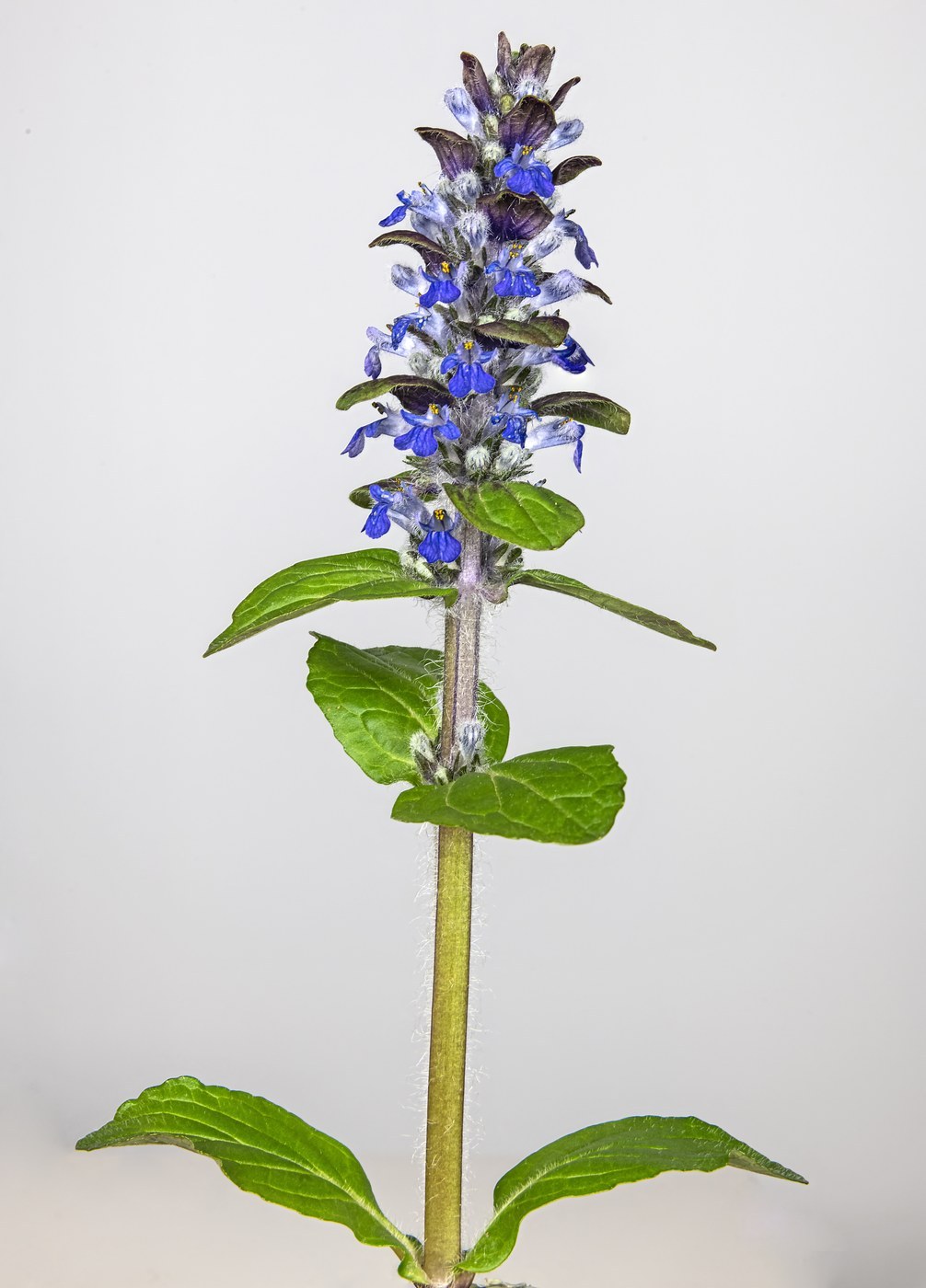
Key Identifying Features
Bugleweed (Ajuga reptans) is a low, mat-forming perennial groundcover in the mint family (Lamiaceae). The fastest way to recognize it is the combination of glossy, oval rosette leaves hugging the ground, above-ground runners (stolons) that root as they creep, and short upright spikes of blue-violet flowers in spring.
- Grows only 4-9 inches tall in flower; foliage mats stay 2-4 inches high
- Spreads aggressively by stolons, forming dense carpets
- Square stems typical of the mint family, but with no minty smell
- Common cultivars have bronze, purple, or variegated cream-and-pink leaves
Leaves & Stems
Leaves form tight basal rosettes. Each leaf is oval to spoon-shaped (obovate), 2-4 inches long, with a slightly scalloped or wavy margin and a smooth, often glossy surface. The wild species has dark green leaves; popular garden forms like 'Atropurpurea' are deep bronze-purple, while 'Burgundy Glow' is tricolor pink, cream, and green.
The flowering stems are distinctly four-sided (square) when rolled between your fingers. Unlike true mints, crushed bugleweed foliage has little or no aromatic scent.
Flowers & Fruit
From mid to late spring, short flower spikes rise above the mat. Flowers are blue to violet-blue (occasionally pink or white in cultivars), arranged in whorls up the spike. Each bloom is a typical mint-family two-lipped tube, with a tiny upper lip and a larger three-lobed lower lip. Bees love them. Fruit is an inconspicuous cluster of four nutlets.
How to Tell It Apart from Look-Alikes
- Creeping Charlie / ground ivy (Glechoma): also square-stemmed and blue-flowered, but has kidney-shaped, round-toothed leaves and a strong minty smell when crushed. Bugleweed leaves are oval and nearly scentless.
- Wild violets: heart-shaped leaves and five-petaled flowers, no stolons, no flower spike.
- Lycopus (also called "bugleweed"): a confusingly named wetland mint with narrow, sharply toothed leaves and tiny white flowers; not a groundcover and not glossy-leaved.
- Ajuga genevensis / A. pyramidalis: close relatives, but they lack stolons and stay clumped rather than running.
Where You'll Find It
Bugleweed thrives in part shade to full sun in moist, well-drained soil. In gardens it's planted as a groundcover under trees, along paths, and on slopes. It readily escapes into lawns, woodland edges, and shady borders, where it can become weedy. Look for it forming solid, weed-suppressing carpets that turn blue with bloom in spring.
Quick ID Checklist
- Low mat, 2-4 in. foliage, runners rooting along the ground
- Glossy oval rosette leaves, wavy-edged, often bronze or variegated
- Square stems, but no strong mint smell
- Short spring spikes of whorled blue-violet flowers
- Spreads by visible stolons (key vs. clumping look-alikes)
If you see a flat carpet of shiny rosettes sending out runners, topped by stubby blue flower spikes in spring, you're almost certainly looking at Bugleweed.
Frequently asked questions
How do I tell bugleweed from creeping Charlie?
Both are blue-flowered mints, but creeping Charlie has round, kidney-shaped, scalloped leaves and a strong minty odor when crushed, while bugleweed has glossy oval rosette leaves and almost no scent.
Why are some bugleweed leaves purple or pink?
Those are cultivated varieties. 'Atropurpurea' is bronze-purple and 'Burgundy Glow' is tricolor pink, cream, and green. The wild species (Ajuga reptans) has plain dark green leaves.
Is bugleweed a mint?
Yes, it belongs to the mint family (Lamiaceae) and has the family's square stems and two-lipped flowers, but unlike culinary mints its leaves are essentially scentless.
When does bugleweed bloom?
It blooms in mid to late spring, sending up short spikes of whorled blue-violet flowers above the foliage mat.