
How to Care for Burros Tail
Grow burro's tail (Sedum morganianum), a trailing succulent with plump blue-green beads, in bright light with infrequent watering.
Read the full Burros Tail encyclopedia entry →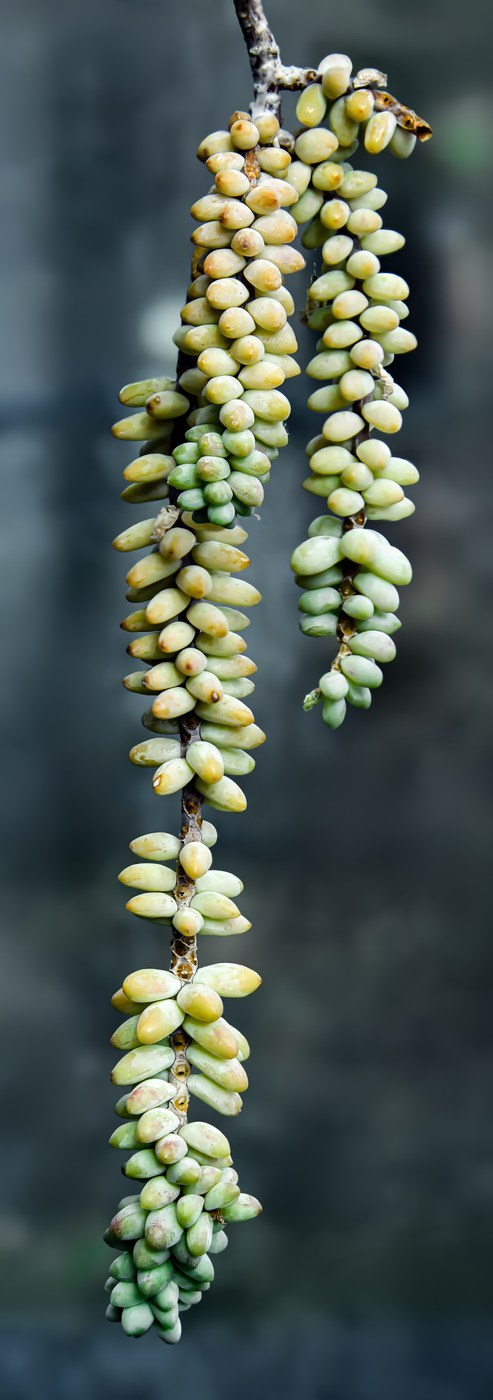
Burro's tail (Sedum morganianum) is a trailing succulent famed for its long, rope-like stems packed with plump, blue-green, tear-drop leaves. It is an easy plant, perfect for hanging baskets, provided you give it bright light, sharp drainage, and only occasional water.
Light
Provide bright light with some direct sun. A spot that gets a few hours of gentle morning sun with bright light the rest of the day keeps the stems full and the foliage a healthy blue-green with a slightly frosted bloom. Too little light causes stretched, sparse stems, while sudden intense midday sun can scorch the leaves, so acclimate plants gradually.
Water
Water every two to three weeks in the growing season, letting the soil dry out completely between waterings. Burro's tail stores water in its beaded leaves and is very drought-tolerant; overwatering is the quickest way to lose it. Reduce watering further in winter. Water the soil directly and avoid leaving the crown or leaves sitting wet.
Soil & Potting
Use a gritty, fast-draining succulent or cactus mix amended with extra perlite, pumice, or coarse sand. Excellent drainage is essential to prevent rot. A container with drainage holes is a must. Because the trailing stems are heavy and pull outward, a hanging pot or a spot on a shelf where the stems can cascade freely shows the plant at its best.
Humidity & Temperature
Burro's tail prefers warm, dry conditions and ordinary household humidity. It is frost-tender and should be kept above roughly 40 degrees Fahrenheit; move it indoors or under cover before cold weather. It tolerates heat well as long as it has airflow and is shielded from harsh, unfiltered midday sun in the hottest climates.
Feeding
This is a light feeder. A diluted, balanced or low-nitrogen succulent fertilizer applied once or twice during the spring and summer growing season is sufficient. Do not feed in winter. Overfeeding produces weak, soft growth that is more prone to dropping leaves and rot.
Propagation
Burro's tail propagates with remarkable ease. Individual plump leaves that fall off will often root where they land; simply lay them on dry succulent mix and mist occasionally until tiny plantlets and roots form. Stem cuttings also root readily after the cut end calluses for a few days. Its fragility means propagation happens almost by accident.
Repotting / Pruning
Handle very gently, as the beaded leaves detach at the lightest touch and do not regrow on the bare stem. Repot only when necessary, every couple of years, into fresh gritty mix, supporting the delicate stems as you work. Prune leggy or bare stems to tidy the plant and use the trimmings as cuttings; the plant rarely needs shaping otherwise.
Common Problems & Pests
The number one issue is rot from overwatering or poorly draining soil, showing as mushy, translucent stems and leaves. Leaf drop is usually caused by handling, drafts, or stress. Stretched, thin growth signals insufficient light. Watch for mealybugs tucked among the dense leaves and for aphids on any flower stalks.
Seasonal Care Tips
In spring and summer, resume regular watering as growth picks up and feed lightly; this is when stems lengthen most. In the hottest part of summer, shield from scorching midday sun. In autumn, begin tapering water. Through winter keep the plant cool, bright, and nearly dry, watering only enough to keep the leaves from shriveling, and protect it from frost.
Frequently asked questions
Why is my burro's tail dropping leaves?
The plump leaves detach at the slightest touch, so handling is the most common cause. Drafts, stress, or overwatering can also trigger drop. Place it where it won't be brushed against.
How often should I water burro's tail?
About every two to three weeks in the growing season, always letting the soil dry out completely first. Water less in winter, since overwatering is the main way this succulent is lost.
Why is my burro's tail stretching out?
Thin, stretched stems with widely spaced leaves indicate too little light. Move it to a brighter spot with some gentle direct sun to keep the stems plump and full.
How do I propagate burro's tail?
Lay fallen leaves or callused stem cuttings on dry succulent mix and mist occasionally. They root easily and form small plantlets, making this one of the simplest succulents to multiply.