
How to Care for Calathea Orbifolia
Grow the elegant Calathea Orbifolia (Goeppertia orbifolia) with bright indirect light, even moisture, high humidity, and gentle warmth.
Read the full Calathea Orbifolia encyclopedia entry →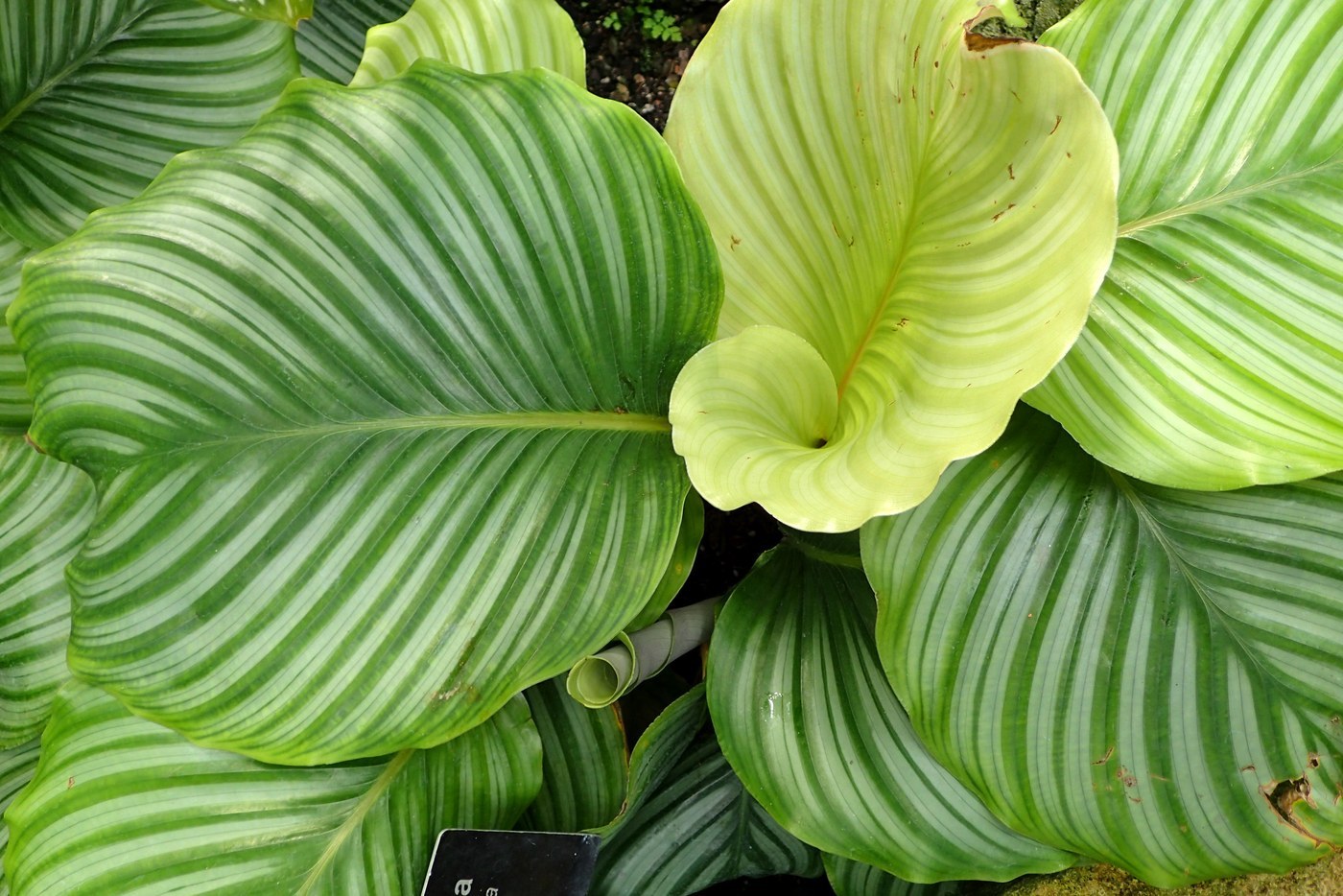
Calathea Orbifolia (Goeppertia orbifolia) is a prayer-plant relative prized for its large, rounded leaves banded in silvery-green stripes. It is a beautiful but somewhat fussy tropical that rewards attentive, consistent care with a stunning display of patterned foliage.
Light
Provide bright, indirect light – this is the key to good leaf color and pattern. An east-facing window or a spot a few feet from a brighter window with a sheer curtain is ideal. Avoid direct sun, which fades the silvery markings and scorches the delicate leaves. Too little light dulls the variegation and slows growth. Rotate the pot occasionally for even, symmetrical development.
Water
Keep the soil evenly moist but never waterlogged. Water when the top inch begins to dry, aiming for steady, gentle moisture rather than a wet-then-bone-dry cycle. Orbifolia is sensitive to mineral buildup, so use filtered, distilled, or rainwater, or tap water left to stand overnight – fluoride and salts cause brown leaf edges. Empty any saucer promptly so the roots never sit in water. Reduce frequency slightly in winter while keeping the mix from fully drying.
Soil & Potting
Use a light, airy, moisture-retentive mix that drains freely. A blend of peat or coco coir with perlite and a little orchid bark or fine compost works well, balancing moisture retention with aeration. Always pot in a container with drainage holes. The goal is soil that stays damp but breathes, so the fine roots never suffocate in compacted, soggy medium.
Humidity & Temperature
High humidity is essential – aim for 60% or higher. Dry air is the number-one cause of crispy brown edges. Run a humidifier, cluster it with other plants, or set the pot on a pebble-humidity tray. Keep temperatures steady and warm, between 65–80°F (18–27°C), and shield it from cold drafts, heating vents, and sudden temperature swings, all of which stress the foliage.
Feeding
Feed lightly during the growing season, spring through early fall, using a balanced liquid houseplant fertilizer diluted to half strength every 4–6 weeks. Orbifolia is sensitive to fertilizer salts, so avoid overfeeding, which burns the leaf margins. Do not feed in winter when growth naturally slows. Flushing the soil with clean water periodically helps prevent salt accumulation.
Propagation
Propagate by division at repotting time in spring. Gently tease apart the rootball into clumps, each with several leaves and a healthy portion of roots, and pot each up in fresh mix. Keep divisions warm, humid, and evenly moist while they re-establish. This plant does not propagate from leaf or stem cuttings, so division is the reliable method.
Repotting / Pruning
Repot every one to two years in spring, moving up only one pot size, as Orbifolia prefers a snug container. Refresh the mix to prevent salt buildup and compaction. Pruning is minimal – simply snip off yellowed, damaged, or badly browned leaves at the base with clean scissors. You can trim brown edges to shape, cutting just inside the dead tissue while following the leaf's natural outline.
Common Problems & Pests
Browning, crispy leaf edges are the classic complaint, caused by low humidity, mineral-heavy water, or inconsistent watering – raise humidity and switch to filtered water. Yellowing leaves often signal overwatering or soggy soil, while curling leaves suggest thirst or dryness. Faded pattern indicates too much light. Watch for spider mites, which thrive in dry air and stipple the leaves, plus thrips and fungus gnats; treat with insecticidal soap and improve conditions.
Seasonal Care Tips
In spring, resume light feeding, repot or divide if needed, and enjoy renewed growth. Through summer, keep humidity and moisture consistent and shield from hot direct sun. In fall, begin easing back on feeding as growth slows. In winter, reduce watering slightly, stop fertilizing, and be extra vigilant about dry indoor heating – run a humidifier and keep the plant away from radiators and cold windows.
Frequently asked questions
Why does my Calathea Orbifolia have crispy brown edges?
This usually comes from low humidity or mineral buildup from tap water. Raise humidity above 60% with a humidifier or pebble tray, and switch to filtered, distilled, or rainwater to protect the sensitive leaf margins.
What kind of water should I use for Calathea Orbifolia?
Use filtered, distilled, or rainwater, or tap water left to sit out overnight. Orbifolia is very sensitive to fluoride and salts, which cause the brown edges that plague this species.
Why are the leaves on my Orbifolia curling?
Curling leaves typically mean the plant is thirsty or the air is too dry. Check that the soil is evenly moist, not bone dry, and increase humidity around the plant to help the leaves relax.
Can I propagate Calathea Orbifolia from a cutting?
No – it will not root from leaf or stem cuttings. Propagate by dividing the rootball at repotting time in spring, making sure each section has healthy roots and several leaves.