
Calathea Orbifolia Identification Guide
Identify Calathea orbifolia (Goeppertia orbifolia) by its large, round, silvery-striped leaves and prayer-plant leaf movement.
Read the full Calathea Orbifolia encyclopedia entry →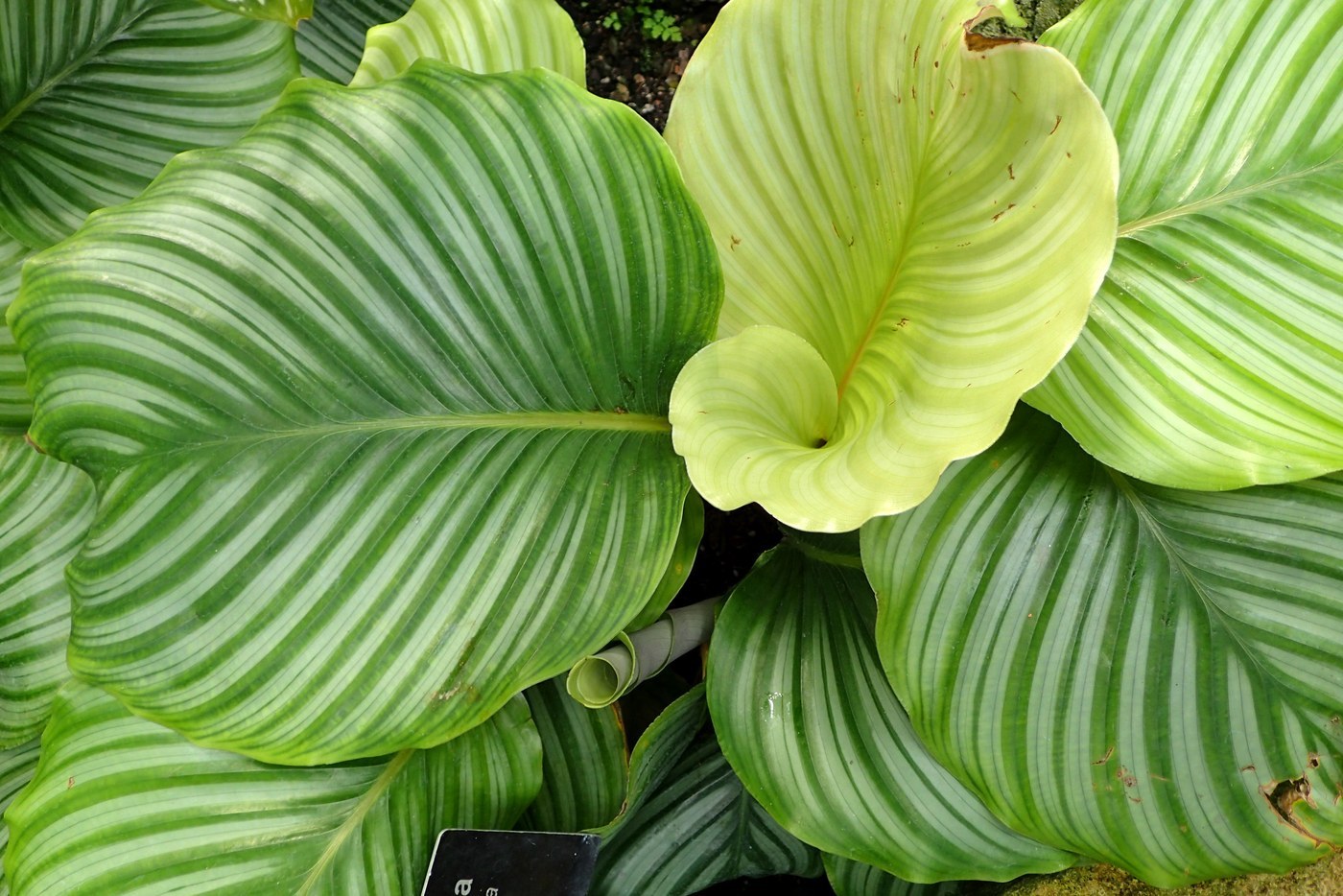
Key Identifying Features
Calathea orbifolia (now Goeppertia orbifolia) is a prayer plant grown for its bold rounded foliage. Identify it by:
- Large, nearly round (orbicular) leaves
- Broad silvery-green and darker green stripes running from the midrib to the margin
- A bushy, clumping habit on tall petioles
- Nyctinastic movement — leaves fold up at night and lower by day
The big circular leaf banded with pale silver-green stripes is its defining look.
Leaves & Stems
Leaves are very broad and rounded, often 8-12+ inches across, light to mid-green with alternating wide stripes of pale silvery-blue-green and deeper green fanning out from the central vein. The surface is matte and slightly textured, and the underside is pale green (not purple, unlike some calatheas). Leaves are held singly on long, upright petioles rising from a clumping rhizome, giving a full, arching mound. At night the leaves raise and fold (the "prayer" movement), then relax flat in daylight.
Flowers & Fruit
Indoors it rarely flowers and is grown solely for foliage; any blooms are small and inconspicuous.
How to Tell It Apart from Look-Alikes
- Calathea 'Medallion' (G. veitchiana) has oval leaves with purple undersides and a feathered pattern — not round, not silvery-striped on both sides.
- Calathea zebrina has velvety elongated leaves with darker zebra bands and purple undersides.
- Calathea rufibarba has wavy, narrow leaves with fuzzy reddish undersides.
- Maranta (true prayer plant) is low/trailing with small leaves and red veins, not large round silvery foliage.
The large round leaf with symmetrical silver-green striping and a pale green underside marks orbifolia apart from oval, purple-backed calatheas.
Where You'll Find It
Native to Bolivian rainforest understory, it's grown worldwide as a humidity-loving houseplant in bright indirect light. It dislikes dry air and hard tap water, often browning at the edges otherwise.
Quick ID Checklist
- Large, nearly circular leaves
- Silvery-green and dark-green stripes from midrib outward
- Pale green (not purple) underside
- Leaves on long upright petioles, bushy clump
- Folds up at night (prayer movement)
Match these and you have Calathea orbifolia. To keep it looking its best, give high humidity and filtered or rain water, since it browns easily in dry air or with mineral-heavy water.
Frequently asked questions
How do I distinguish orbifolia from other calatheas?
Look for its large, nearly round leaves with symmetrical silvery-green striping and a pale green underside; most other calatheas have oval leaves, often with purple undersides.
Why do the leaves move?
Calatheas are prayer plants with nyctinastic movement: leaves rise and fold upward at night and lower flat during the day in response to light, driven by cells at the leaf base.
Why are the leaf edges turning brown?
Usually low humidity, dry air, or mineral-heavy tap water. Use filtered or rain water and keep humidity high to prevent crispy brown edges.
Is it the same as a Maranta prayer plant?
No. Both fold their leaves, but Maranta is a low, trailing plant with small red-veined leaves, while orbifolia is an upright clump of large round silver-striped leaves.