
Calico Kitten Identification Guide
Identify Calico Kitten (Crassula pellucida ssp. marginalis 'Variegata') by its trailing stems of small, stacked heart-shaped leaves washed in cream, pink, and green.
Read the full Calico Kitten encyclopedia entry →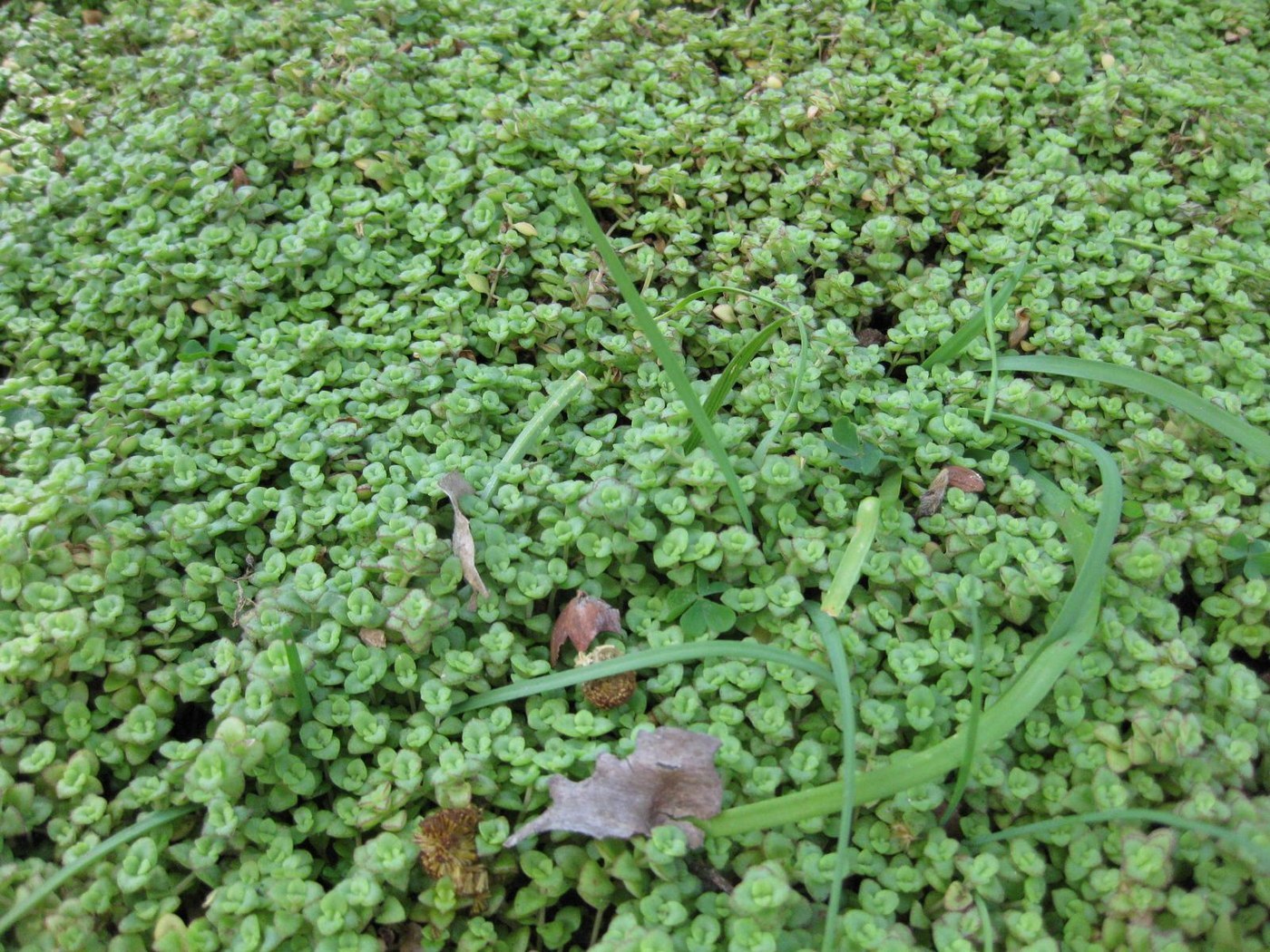
Key Identifying Features
Calico Kitten (Crassula pellucida subsp. marginalis 'Variegata') is a trailing succulent prized for its small, heart- or coin-shaped leaves splashed with cream, green, pink, and lavender. It forms cascading or sprawling mats of thin stems, making it a favorite for hanging pots, fairy gardens, and the edges of mixed succulent containers.
- Tiny rounded-to-heart-shaped leaves stacked in opposite pairs along the stem
- Multicolored variegation: green centers, cream margins, pink/purple edges in bright light
- Thin, trailing or creeping reddish stems
- Low, mat-forming or cascading habit
Leaves & Stems
The leaves are the standout feature: roughly 0.4-0.6 inch across, flattened, and shaped like little hearts or rounded coins that come to a soft point. They sit in opposite pairs that clasp the stem, and each successive pair is rotated, giving a loosely stacked, layered look. Color shifts with light and stress: well-lit plants flush deep pink to magenta along the leaf edges with creamy variegation, while shadier plants stay greener.
The stems are slender, semi-trailing, and often tinged red or pink. They root readily where they touch soil, helping the plant spread into a loose mat.
Flowers & Fruit
In spring to summer, mature plants may produce small, star-shaped, pale yellow to creamy-white flowers clustered near the stem tips. The blooms are tiny but numerous and lightly fragrant. Fruit is an insignificant dry capsule rarely noticed on cultivated plants.
How to Tell It Apart from Look-Alikes
- Calico Kitten vs. 'Variegata' string types: Calico Kitten's leaves are heart-shaped and pink-edged, unlike the flatter, paler leaves of related Crassula cultivars.
- Crassula pellucida (non-variegated): lacks the cream-and-pink variegation; if leaves are uniformly green, it's the plain form, not Calico Kitten.
- String of Hearts (Ceropegia woodii): also trailing with heart-shaped leaves, but those leaves are silver-marbled, thicker, and grayish on top with purple undersides, and the stems are thread-thin and vining rather than fleshy-stacked.
Where You'll Find It
Calico Kitten is grown almost exclusively as an ornamental houseplant or outdoor succulent in mild climates (USDA zones 9-11). It is native to South Africa. Look for it spilling over the rims of pots, in succulent wreaths, and in bright windowsills where its colors intensify.
Quick ID Checklist
- Small heart/coin-shaped leaves in opposite pairs
- Cream, green, and pink/purple variegation
- Thin, trailing reddish stems that root along the soil
- Pink edges deepen in bright light
- Small star-shaped cream/yellow flowers in season
- Low, cascading or mat-forming growth
Tip: If your plant is mostly green, give it more bright, indirect light to bring out the signature calico coloring.
Frequently asked questions
Why is my Calico Kitten losing its pink color?
Pink and cream tones intensify under bright light and mild stress. In low light the plant reverts to mostly green. Move it to a brighter spot (with some protection from harsh midday sun) to restore the colors.
How is Calico Kitten different from String of Hearts?
String of Hearts (Ceropegia woodii) has silver-marbled, thicker heart leaves on thread-like vines, while Calico Kitten has fleshy stacked pairs of cream-and-pink heart leaves on succulent stems.
Does Calico Kitten flower?
Yes. Mature plants produce small clusters of star-shaped, pale yellow to creamy-white flowers, usually in spring and summer.