
California Juniper Identification Guide
How to identify California Juniper (Juniperus californica) by its gray-green scale foliage, reddish-brown berry-cones, and shrubby multi-stemmed desert form. Covers separation from Utah juniper.
Read the full California Juniper encyclopedia entry →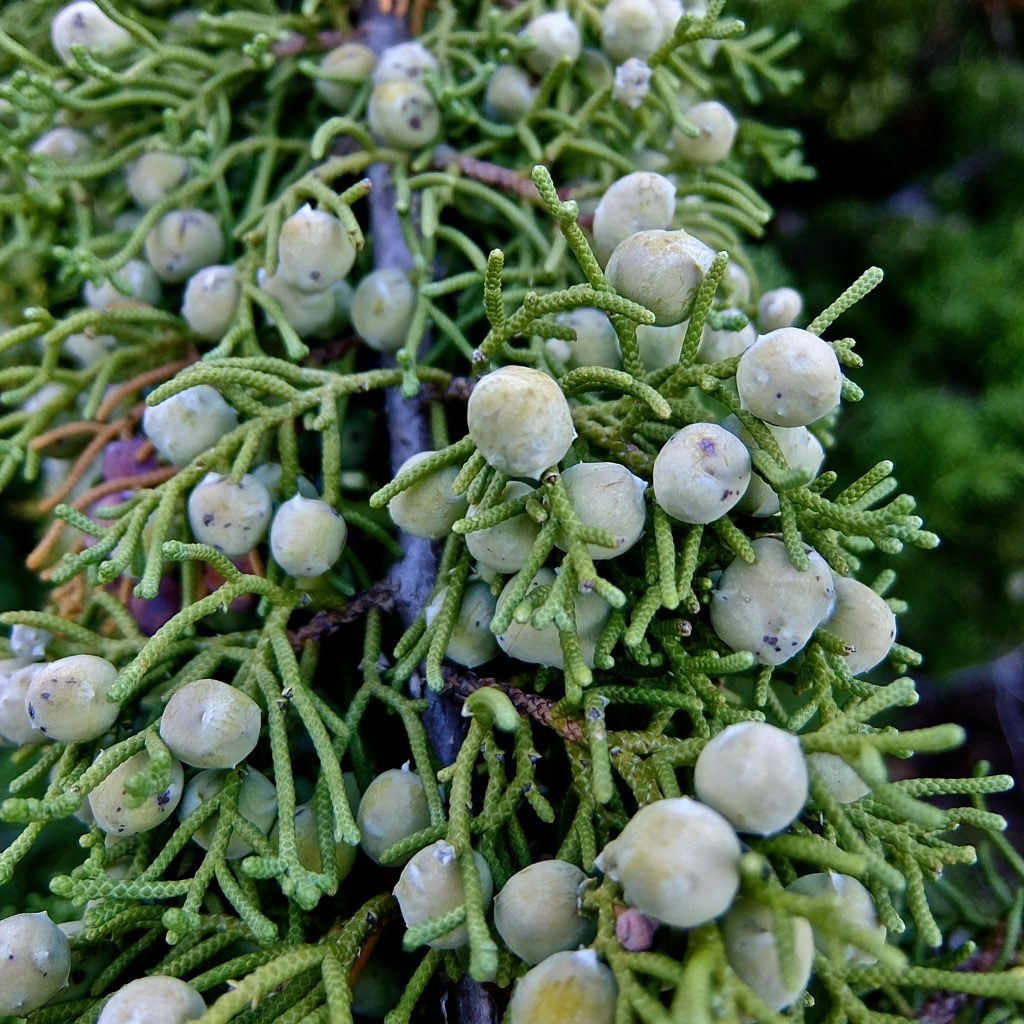
Key Identifying Features
California Juniper (Juniperus californica) is a shrubby, multi-stemmed juniper of California's deserts and dry foothills. Recognize it by gray-green scale-like foliage, reddish-brown to bluish berry-cones often with a bloom, and a low, bushy, often several-trunked habit with shreddy ashy-gray bark. It is a tough, drought-hardy plant of hot, arid slopes.
Leaves & Stems
- Adult foliage scale-like, gray-green to yellow-green, in threes (whorls of 3 scales), pressed to the stout twigs; often with a gland-pit on the back.
- Crushed foliage has a resinous, slightly pungent scent.
- Bark ashy-gray to reddish-brown, thin and shreddy, peeling in strips.
- Habit shrubby and rounded, usually 3 to 15 feet, commonly with several trunks from the base rather than a single bole.
Flowers & Fruit
- Usually dioecious; female plants bear berry-like cones about 8 to 14 mm, reddish-brown beneath a bluish/whitish bloom, fairly large and dry-fleshy.
- Each cone typically holds one (sometimes two) seed.
- Cones mature over roughly a year and are eaten and dispersed by birds and mammals.
How to Tell It Apart from Look-Alikes
- Utah juniper (Juniperus osteosperma) is very similar but usually has scales in pairs, a tendency toward a single trunk, and ranges into the Great Basin; California Juniper has scales in threes and is more multi-stemmed and coastal-Californian.
- Western juniper (Juniperus occidentalis) is a taller, more tree-like high-elevation species with blue cones.
- Rocky Mountain Juniper has bluer foliage and smaller blue berries and grows in the interior West.
- The gray-green scales in threes + large reddish bloomy berries + shrubby desert form point to California Juniper.
Where You'll Find It
Dry slopes, chaparral, desert foothills, and pinyon-juniper woodland of California (and into Baja and western Arizona/Nevada), from inland valleys to the Mojave and Sonoran desert margins. Tolerant of heat, drought, and poor rocky soils; a classic component of pinyon-juniper habitat.
Quick ID Checklist
- Gray-green scale foliage, scales in threes
- Reddish-brown berry-cones (8 to 14 mm) with bluish bloom
- Usually one seed per cone
- Shrubby, multi-stemmed habit, ashy shreddy bark
- Dry California desert slopes and pinyon-juniper woodland
Frequently asked questions
How do I distinguish California Juniper from Utah Juniper?
California Juniper typically has scale leaves in threes and a multi-stemmed shrubby form, while Utah Juniper usually has scales in pairs and tends toward a single trunk. Their ranges overlap at desert margins.
What do the berry-cones look like?
They are fairly large (8 to 14 mm), reddish-brown under a bluish or whitish bloom, dry-fleshy, and usually contain a single seed.
Is California Juniper a tree or a shrub?
Usually a large multi-stemmed shrub or small tree, 3 to 15 feet tall, often branching from the base rather than forming one clear trunk.
Where does it grow?
On hot, dry slopes, chaparral, and pinyon-juniper woodland in California and adjacent desert regions, tolerating drought and poor rocky soils.