
How to Care for Carpetweed
Carpetweed (Mollugo verticillata) is a flat, whorled-leaf summer annual that thrives in poor, sunny, dry soil and needs almost no care.
Read the full Carpetweed encyclopedia entry →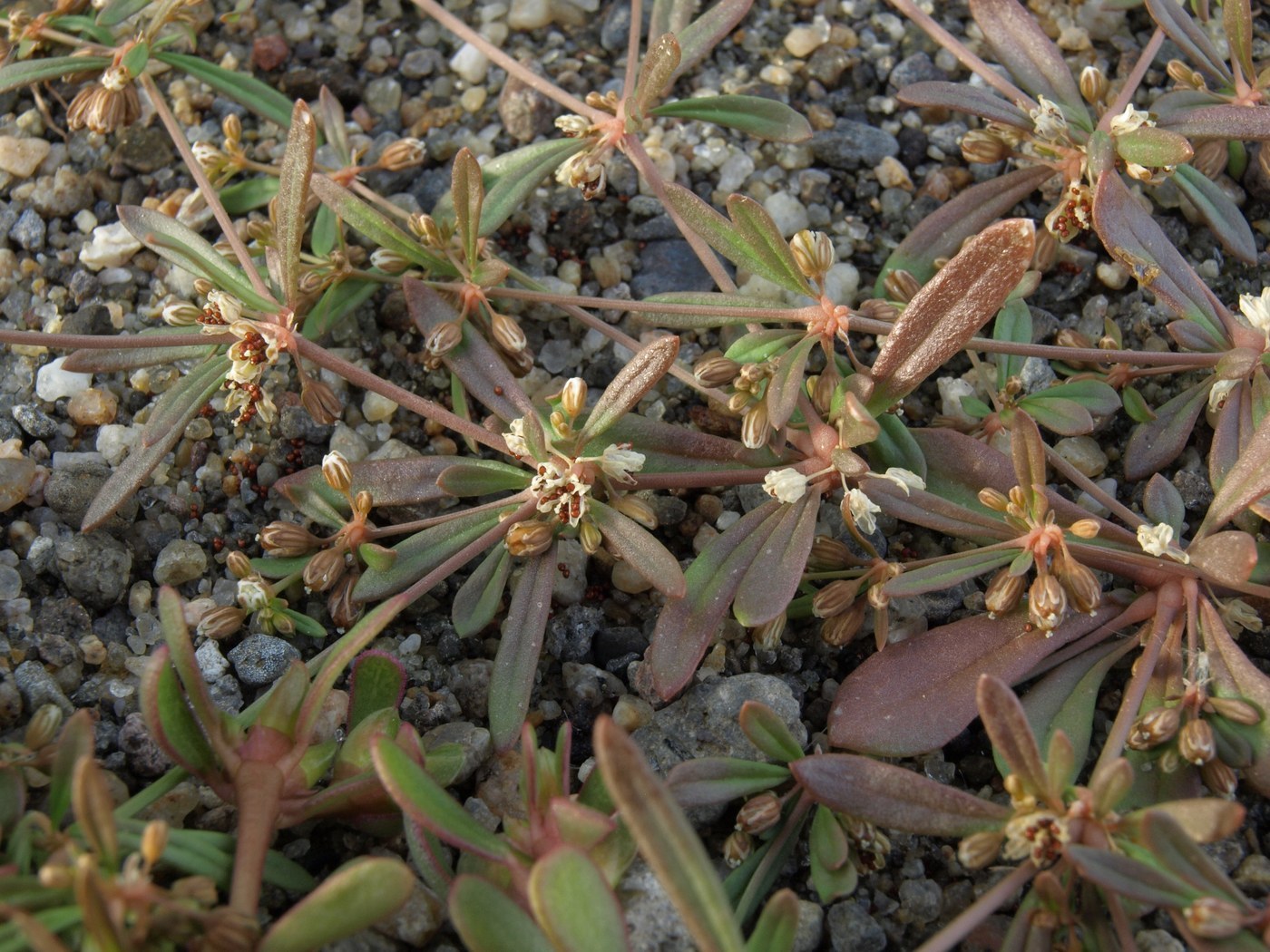
Carpetweed (Mollugo verticillata) is a low, prostrate summer annual that forms flat mats of slender whorled leaves radiating from branching stems. It is an easy, undemanding plant of open sunny ground, valued as tough green cover on poor or disturbed soil.
Light
Give carpetweed full sun. It is a heat-loving warm-season annual that spreads fastest and stays most compact in bright, open exposure. In shade it grows thin and sparse and loses its neat carpeting habit.
Water
Carpetweed is drought-tolerant and thrives on minimal watering once established. It naturally colonizes dry, sun-baked ground and will rot in constantly wet conditions. Water only during prolonged drought if you want to keep the mat lush; otherwise let it fend for itself.
Soil & Potting
It tolerates poor, sandy, gravelly, and compacted soils that defeat fussier plants. Sharp drainage matters far more than fertility. There is no need for rich amendments; carpetweed actually prefers lean ground where competition is low.
Humidity & Temperature
As a warm-season annual it germinates once soils warm and grows through summer heat, dying back with the first frost. It is unbothered by low humidity and dry heat, and it does not overwinter, completing its life cycle in a single warm season.
Feeding
No feeding is needed. Carpetweed thrives on nutrient-poor soils and rich fertilizer simply produces softer, weaker growth. Skip fertilizer entirely.
Propagation
Carpetweed reproduces by seed, self-sowing freely where the ground is open and sunny. To grow it deliberately, scatter seed on warm, bare soil in late spring and press it into the surface; germination follows once temperatures climb.
Repotting / Pruning
Being an annual, it needs no repotting or structural pruning. If you want to limit its spread, remove the mats before they set seed, since a single plant produces abundant seed and returns readily the next season.
Common Problems & Pests
Carpetweed is remarkably trouble-free and rarely bothered by pests or disease. Its main issue in a managed garden is its own vigor: it self-seeds prolifically and can crowd bare patches. Poor drainage or persistent wet is the only condition it dislikes.
Seasonal Care Tips
In late spring, let or sow seed on warm open ground. Through summer it needs essentially no care beyond occasional water in extreme drought. In autumn the plant dies back with frost; clear the spent mats if you want to reduce next year's self-sown seedlings.
Frequently asked questions
Does carpetweed need watering?
Very little. It is drought-tolerant and naturally grows on dry, sun-baked soil. Water only during extended drought if you want a lusher mat; constant wet will cause it to rot.
Will carpetweed come back every year?
Not from the same plant. It is a warm-season annual that dies with frost, but it self-sows freely, so seedlings reappear the following summer wherever the soil is open and sunny.
What soil does it like?
Poor, sandy, gravelly, or compacted soil with sharp drainage. It actually prefers lean ground and needs no fertilizer.
Why is my carpetweed thin and leggy?
It is likely getting too much shade. Move it or sow it in full sun, where it forms dense, flat mats instead of sparse straggly growth.