
Cast Iron Plant Identification Guide
Identify the Cast Iron Plant (Aspidistra elatior) by its tall, leathery dark-green blades rising straight from the soil and its famously tough, shade-loving nature.
Read the full Cast Iron Plant encyclopedia entry →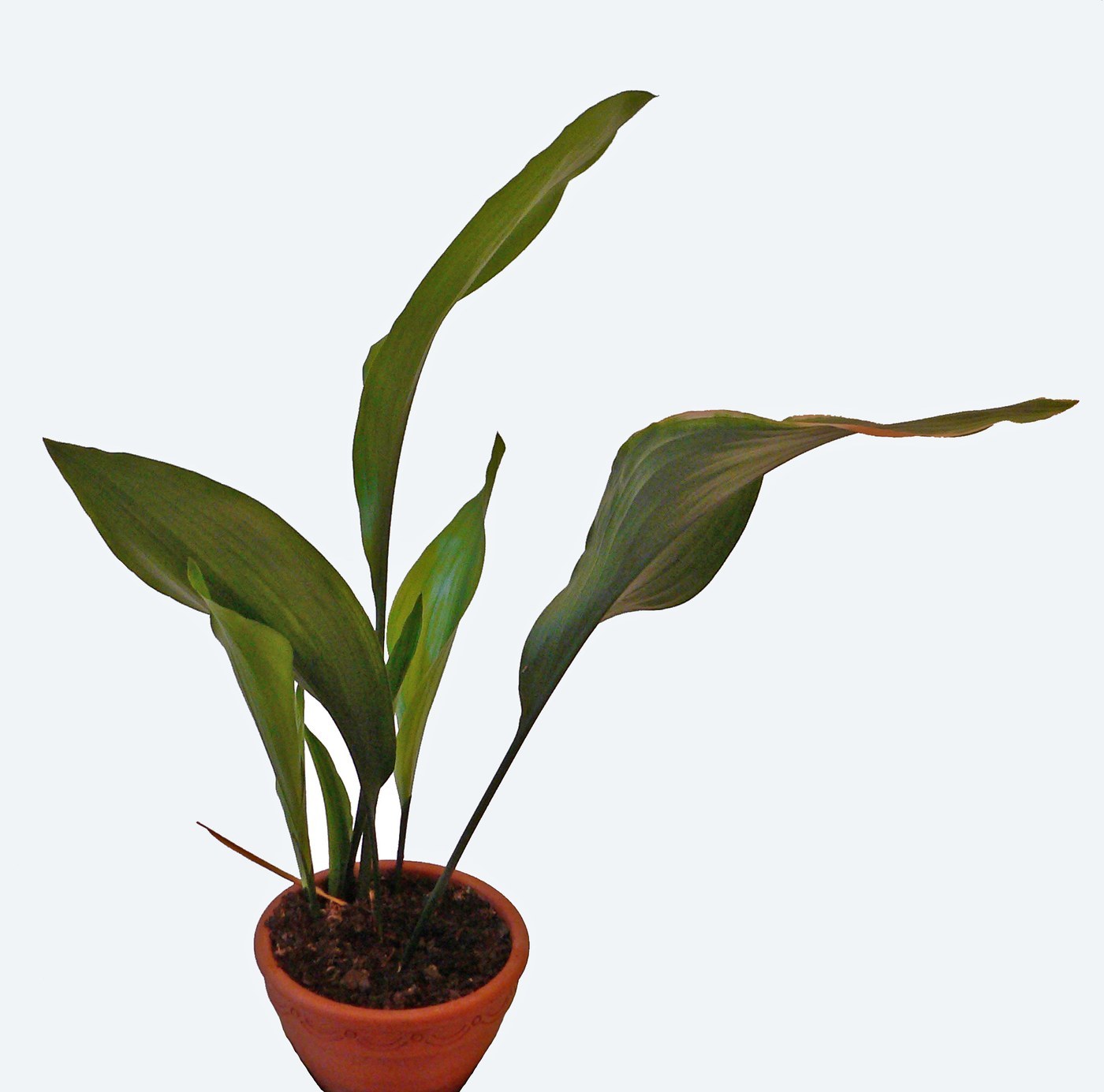
Key Identifying Features
The Cast Iron Plant (Aspidistra elatior) earns its name from near-indestructible toughness. It forms clumps of large, lance-shaped dark-green leaves that emerge individually straight from the soil on stiff stalks, with no visible above-ground trunk or branching.
- Broad, leathery, glossy dark-green leaves, 30–60 cm long
- Each leaf rises directly from the ground on its own petiole
- Clumping, slowly spreading habit via underground rhizomes
- Thrives in deep shade where most plants fail
Leaves & Stems
Leaves are the whole show. Each is a single arching blade — broadly lance-shaped, pointed at the tip, with a prominent midrib and smooth (untoothed) margins. The surface is thick, stiff, and waxy, giving a tough, almost plastic feel. There is no true upright stem; leaves and flowers arise from a creeping rhizome at soil level. Variegated cultivars exist: 'Variegata' has cream-and-green vertical stripes, and 'Milky Way' (sometimes sold as A. elatior forms) is speckled with white dots.
Flowers & Fruit
One of the plant's oddest features is its flowers. Small, fleshy, dull purple-brown flowers appear at ground level, half-buried in the soil among the leaf bases, and are easily missed. They are pollinated near the soil surface and rarely seen in indoor specimens. If you spot strange cup-shaped maroon blooms hugging the dirt, that is a strong confirmation of Aspidistra.
How to Tell It Apart from Look-Alikes
- Peace Lily (Spathiphyllum): similar dark glossy leaves rising from the base, but produces showy white spathe flowers and has thinner, more pliable leaves.
- Aspidistra leaves are stiffer and leathery, and its flowers sit on the soil rather than on tall stalks.
- Ti plant or Dracaena: have visible woody stems/canes, which the stemless Cast Iron Plant lacks.
- The combination of stemless ground-level leaves, extreme shade tolerance, and soil-level brown flowers is diagnostic.
Where You'll Find It
Native to the forest floors of Japan and China, it grows wild in deep shade. It is a classic Victorian parlor plant and a staple of dim hallways, north-facing rooms, and shaded garden beds in mild climates. Its renowned tolerance of low light, neglect, drought, and temperature swings is itself an identifying clue.
Quick ID Checklist
- Large leathery dark-green lance-shaped leaves
- Each leaf rises straight from the soil — no above-ground stem
- Clumping growth from underground rhizomes
- Odd dull-purple flowers at soil level (if present)
- Surviving in deep shade with little care
Frequently asked questions
Why is it called the Cast Iron Plant?
The name refers to its near-indestructible toughness. It survives deep shade, irregular watering, dust, and temperature extremes that kill most houseplants.
Does the Cast Iron Plant flower?
Yes, but unusually: it produces small, fleshy, dull purple-brown flowers right at soil level among the leaf bases. They are easy to miss and rarely appear on indoor plants.
How do I tell it apart from a Peace Lily?
Both have dark glossy leaves rising from the base, but the Cast Iron Plant has stiffer, leathery leaves and ground-level brown flowers, while the Peace Lily has thinner leaves and tall white spathe blooms.
Why does my Cast Iron Plant grow so slowly?
Slow growth is normal for Aspidistra. It spreads gradually via underground rhizomes and may produce only a few new leaves per year, which is part of its tough, low-maintenance character.