
Cherry Blossom Identification Guide
How to recognize flowering cherry trees by their clustered five-petaled spring blossoms, notched petals, horizontal bark lenticels, and serrated leaves.
Read the full Cherry Blossom encyclopedia entry →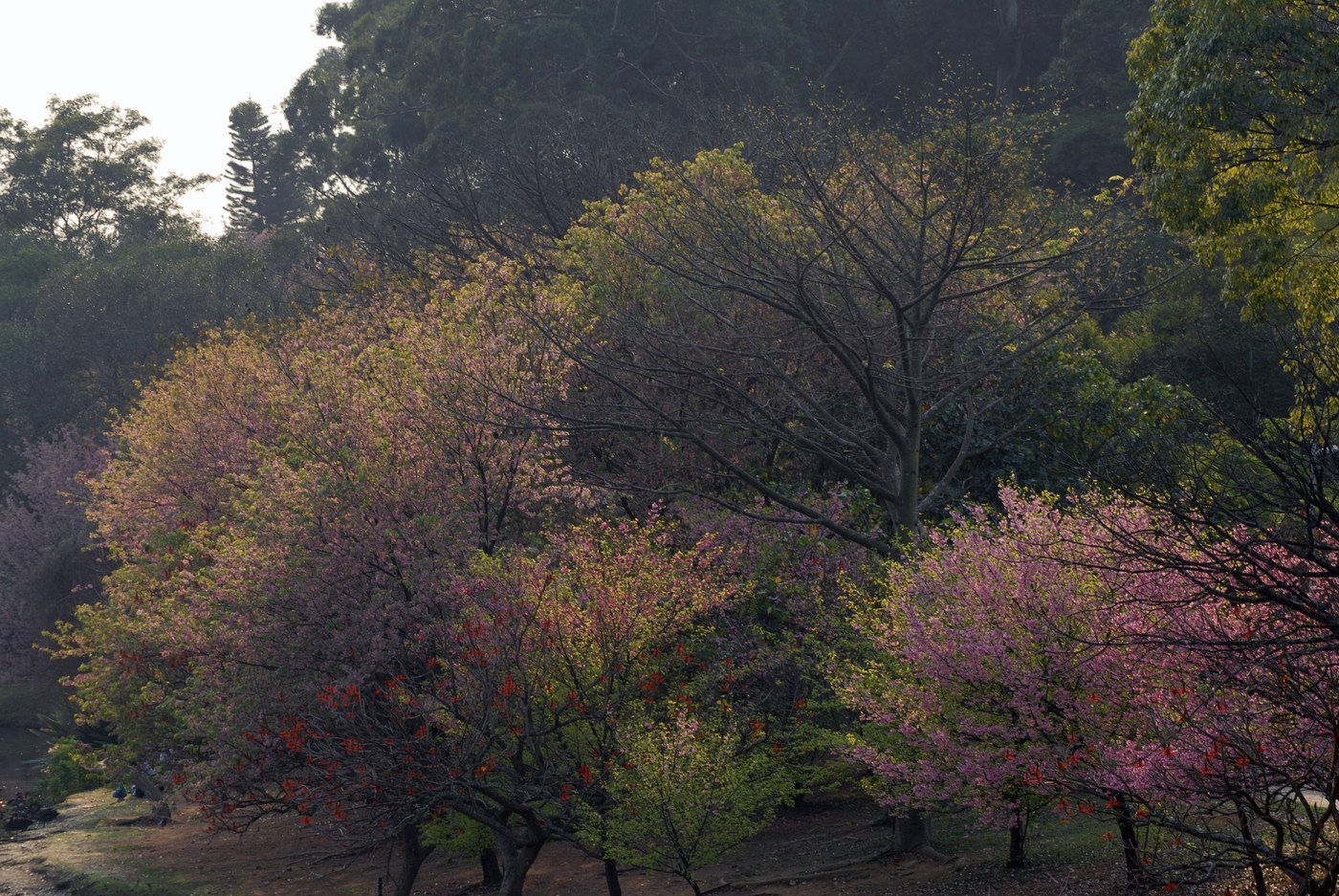
Key Identifying Features
Cherry blossoms are the spring flowers of ornamental cherry trees (Prunus species such as P. serrulata, P. × yedoensis, and P. subhirtella) in the rose family (Rosaceae). Look for:
- Clusters of pink or white five-petaled flowers that open before or with the leaves.
- Petals usually notched at the tip, giving a heart-shaped outline.
- Smooth gray-brown bark marked with horizontal raised lines (lenticels).
Leaves & Stems
Leaves emerge with or just after the flowers. They are oval to elliptic with a pointed tip and finely serrated (saw-toothed) margins, 2–5 inches long, often bronze or reddish when young and turning green, then yellow-orange-red in autumn. Many have tiny glands at the leaf base near the stalk — a useful Prunus trait. Stems and twigs are slender and reddish-brown. The bark is a hallmark: smooth, gray to reddish-brown, with conspicuous horizontal lenticel bands circling the trunk.
Flowers & Fruit
Flowers appear in showy clusters on short stalks, blooming en masse for 1–2 weeks in early to mid spring. Each blossom has five petals (single forms) or many petals (double cultivars like 'Kanzan'), in white through pale and deep pink, with a tuft of yellow stamens at the center. Single-flowered, pollinated types may produce small dark cherries; many ornamental doubles are sterile and fruitless. The mass of bloom on bare or barely leafed branches is the signature display.
How to Tell It Apart from Look-Alikes
- Plum (Prunus spp.): Blooms are similar but plums often flower slightly earlier, have rounder, less-notched petals, and bark without the strong horizontal lenticels.
- Crabapple (Malus): Flowers have rounded, un-notched petals, leaves lack basal glands, and bark is rougher; blossoms come with the leaves.
- Almond/peach: Pink blossoms too, but borne singly or in pairs along the twig, not in stalked clusters.
Notched petals + horizontal bark lenticels + clustered early-spring bloom point firmly to cherry.
Where You'll Find It
Flowering cherries are planted as ornamental street, park, and garden trees worldwide, famous in spring festivals. They prefer full sun and well-drained soil in temperate climates. You'll find them lining avenues, around public squares, and in home landscapes, typically as small to medium trees 15–40 feet tall.
Quick ID Checklist
- Clusters of five-petaled (or double) pink/white flowers in spring
- Petals usually notched at the tip
- Smooth bark with horizontal lenticel lines
- Serrated, pointed oval leaves, often bronze when young
- Small glands at the leaf base
- Bloom largely before or with leaf emergence
Frequently asked questions
How do I tell a cherry blossom from a plum blossom?
Cherry petals are usually notched at the tip and the bark shows distinct horizontal lenticel lines. Plum blossoms tend to have rounder petals, often bloom a bit earlier, and lack the prominent banded bark.
Do all cherry blossom trees produce cherries?
No. Many ornamental double-flowered cultivars are sterile and produce no fruit. Single-flowered types that get pollinated may form small dark cherries.
What is the horizontal banding on the bark?
Those are lenticels, raised pores that let the bark exchange gas. Their conspicuous horizontal bands are a classic feature of cherry trees and help distinguish them from crabapples.
When do cherry blossoms bloom?
Most flowering cherries bloom for one to two weeks in early to mid spring, often before or just as the leaves emerge, which creates their dramatic clouds of bloom.