Chinese Evergreen Identification Guide
Identify the Chinese Evergreen (Aglaonema) by its broad, patterned lance-shaped leaves, bushy clumping habit, and peace-lily-like blooms.
Read the full Chinese Evergreen encyclopedia entry →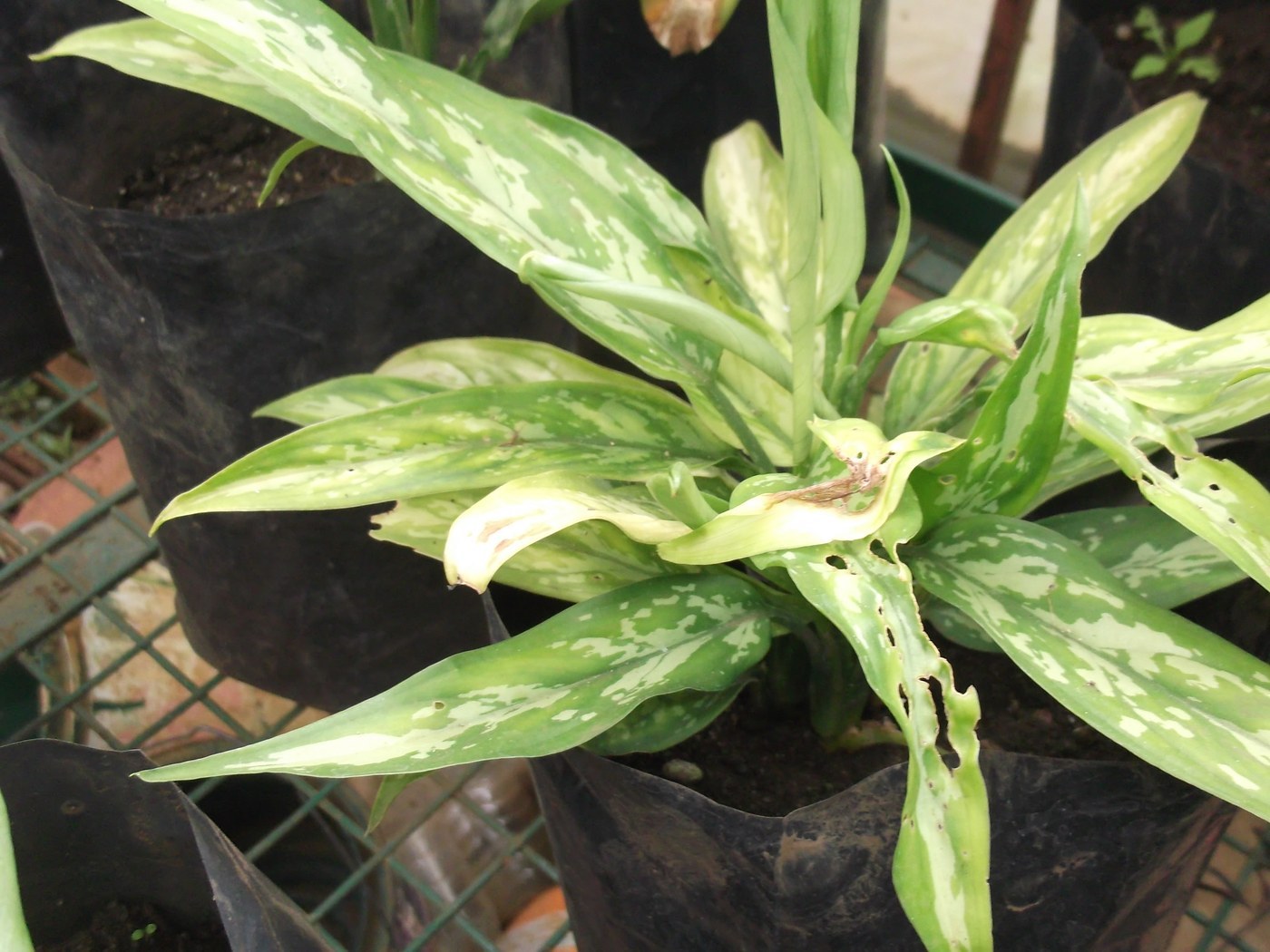
Key Identifying Features
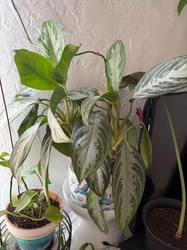
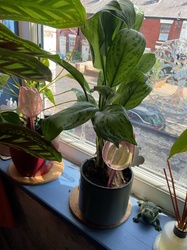
Chinese Evergreen (Aglaonema species and hybrids) is a popular foliage houseplant grown for richly patterned leaves and tolerance of low light. Look for broad, lance-shaped to oval leaves marbled in silver, green, cream, pink, or red, arranged in a bushy clump.
- Glossy lance-shaped or oval leaves, 10–30 cm long
- Variegation: silver streaks, speckles, or vivid pink/red veining
- Bushy, clumping habit with short stems
- Slow-growing and shade-tolerant
Leaves & Stems
Leaves grow on short petioles from a central base, with new growth emerging from the crown. Patterns are the main ID clue and vary widely by cultivar: classic 'Silver Queen' has silvery-green camouflage marbling, while modern hybrids like 'Siam Aurora' or 'Red Valentine' display bright pink-to-red midribs and margins. Leaf surfaces are smooth and semi-glossy with a feathered or blotched pattern following the lateral veins. Stems are short and cane-like; as lower leaves drop, older plants develop a visible trunk-like stem.
Flowers & Fruit
Aglaonema flowers resemble a small peace lily: a pale green-white spathe (hood) wrapped around a cream spadix. Blooms are modest and held among the leaves. If pollinated, they form clusters of red berries. These aroid-family flowers help distinguish Aglaonema from non-aroid look-alikes.
How to Tell It Apart from Look-Alikes
- Dieffenbachia (Dumb Cane): larger, broader leaves with similar variegation, but typically grows taller on a thicker single cane and has bigger leaves; Aglaonema stays bushier and more compact.
- Dracaena: has narrower strap leaves and woody canes, lacking the broad patterned blades of Aglaonema.
- Calathea: has purple undersides and moves at night; Aglaonema does neither.
- The combination of bushy clumping habit, broad patterned lance leaves, and a peace-lily-style spathe flower identifies Chinese Evergreen.
Where You'll Find It
Native to the tropical forests of Southeast Asia, growing as understory plants. As houseplants they are prized for thriving in low to moderate indirect light, making them office and home favorites. Darker green varieties tolerate the lowest light; brightly colored red/pink types need more light to keep their color.
Quick ID Checklist
- Broad lance-shaped or oval leaves with silver, cream, pink, or red patterning
- Bushy, clumping growth on short stems
- Peace-lily-style spathe-and-spadix flowers
- Tolerates low light
- Belongs to the aroid (arum) family
Frequently asked questions
How do I tell a Chinese Evergreen from a Dieffenbachia?
Both have patterned variegated leaves, but Dieffenbachia grows taller on a thick single cane with larger leaves, while Aglaonema stays bushier and more compact with smaller lance-shaped leaves.
What do the flowers look like?
Aglaonema produces small peace-lily-like blooms: a pale greenish-white spathe wrapped around a cream spadix, sometimes followed by red berries.
Why is my red Chinese Evergreen turning green?
Brightly colored pink and red varieties need more bright, indirect light to maintain their pigment. In low light they revert toward green to maximize photosynthesis.
Can Chinese Evergreen grow in low light?
Yes, especially the darker green and silver varieties. They are among the most shade-tolerant houseplants, though colorful cultivars keep their hues best in brighter indirect light.
Chinese Evergreen identified by the community
Recent Chinese Evergreen specimens identified with Plant Identifier.