
Cleome Identification Guide
Identify Cleome (spider flower) by its tall stems topped with airy clusters of long-stamened flowers, palmate leaves, and slender whisker-like seed pods.
Read the full Cleome encyclopedia entry →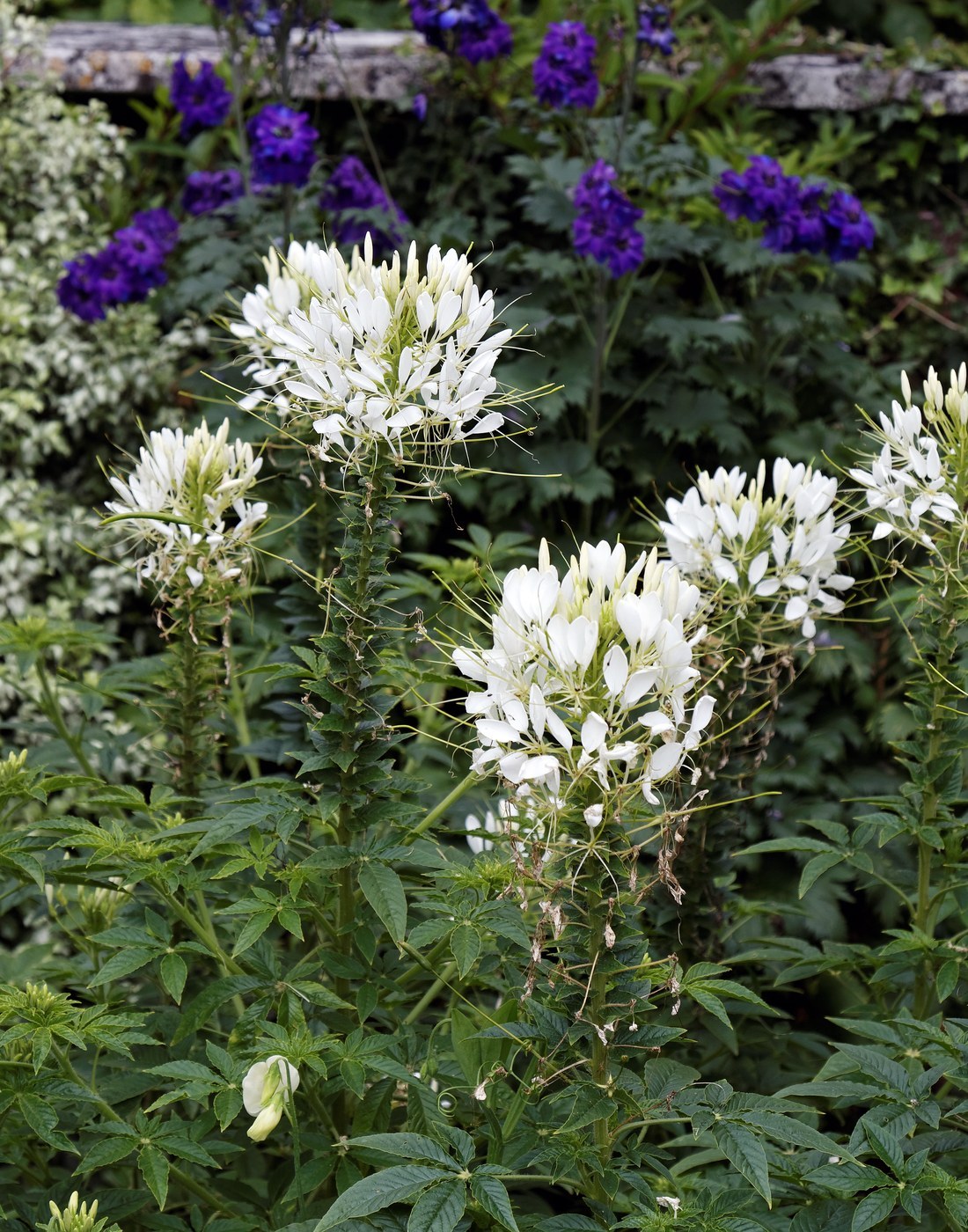
Key Identifying Features
Cleome (Cleome hassleriana), or spider flower, is a tall, dramatic warm-season annual. Its nickname comes from the extremely long, spidery stamens and the thin seed pods that splay out like spider legs.
- Tall, upright habit, often 3-5 ft (90-150 cm)
- Flowers in large, airy, rounded clusters at stem tips
- Each flower has four petals and very long protruding stamens
- Colors: pink, rose, lavender, purple, and white
- A faintly pungent/musky scent when foliage is handled
Leaves & Stems
Leaves are distinctive: palmately compound, with 5-7 leaflets radiating from a central point like fingers on a hand (lower leaves have more leaflets than upper ones). The foliage is slightly sticky and aromatic. Stems are stout, upright, and often armed with small spines at the leaf bases, so handle with care. The plant has a slightly resinous, skunky smell that aids ID.
Flowers & Fruit
The flower cluster (raceme) keeps elongating upward as it blooms, opening from the bottom up so flowers and developing seed pods appear together. Each flower has four clawed petals and six dramatically long stamens that give the airy spidery look. After bloom, long, narrow seed pods (up to several inches) project outward on thin stalks below the flowers — a hallmark feature that confirms the plant at a glance.
How to Tell It Apart from Look-Alikes
- Bee balm (Monarda): also produces wispy clustered flowers, but has square stems, tubular two-lipped flowers, and aromatic mint-like foliage — no spidery stamens or whisker pods.
- Spider plant (Chlorophytum): an unrelated houseplant with strappy leaves; only the name overlaps.
- The combination of palmate finger-like leaves, four-petaled long-stamen flowers, and long projecting seed pods is unique among common garden annuals.
Where You'll Find It
Cleome is grown at the back of sunny borders, in cottage gardens, and as a tall accent thanks to its height and long bloom season. It tolerates heat and drought, attracts bees and hummingbirds, and self-seeds vigorously — volunteer seedlings often reappear, sometimes naturalizing in disturbed ground.
Quick ID Checklist
- Tall (3-5 ft) upright annual
- Airy rounded flower clusters at stem tips
- Four-petaled flowers with very long protruding stamens
- Palmate, finger-like compound leaves (5-7 leaflets)
- Long, thin seed pods projecting below the flowers
- Spiny stems and a musky scent
Frequently asked questions
Why is cleome called the spider flower?
Its flowers have unusually long, protruding stamens and produce thin seed pods that splay outward like spider legs, giving the airy bloom clusters a spidery appearance.
Does cleome have thorns?
Many cleome varieties have small spines at the leaf bases along the stems, so it's wise to handle them with care. This, plus the musky scent, helps confirm the plant.
How do the long pods help identify cleome?
As the flower cluster grows upward, it leaves behind long, narrow seed pods on thin stalks projecting outward below the blooms. Seeing flowers and these whisker-like pods together is a strong ID clue.
Will cleome come back next year?
Though grown as an annual, cleome self-seeds heavily and often returns from volunteer seedlings the following season, sometimes spreading into nearby beds and disturbed soil.