
How to Care for Crown of Thorns
Grow crown of thorns (Euphorbia milii): an easy, long-blooming spiny succulent for bright light and dry soil.
Read the full Crown of Thorns encyclopedia entry →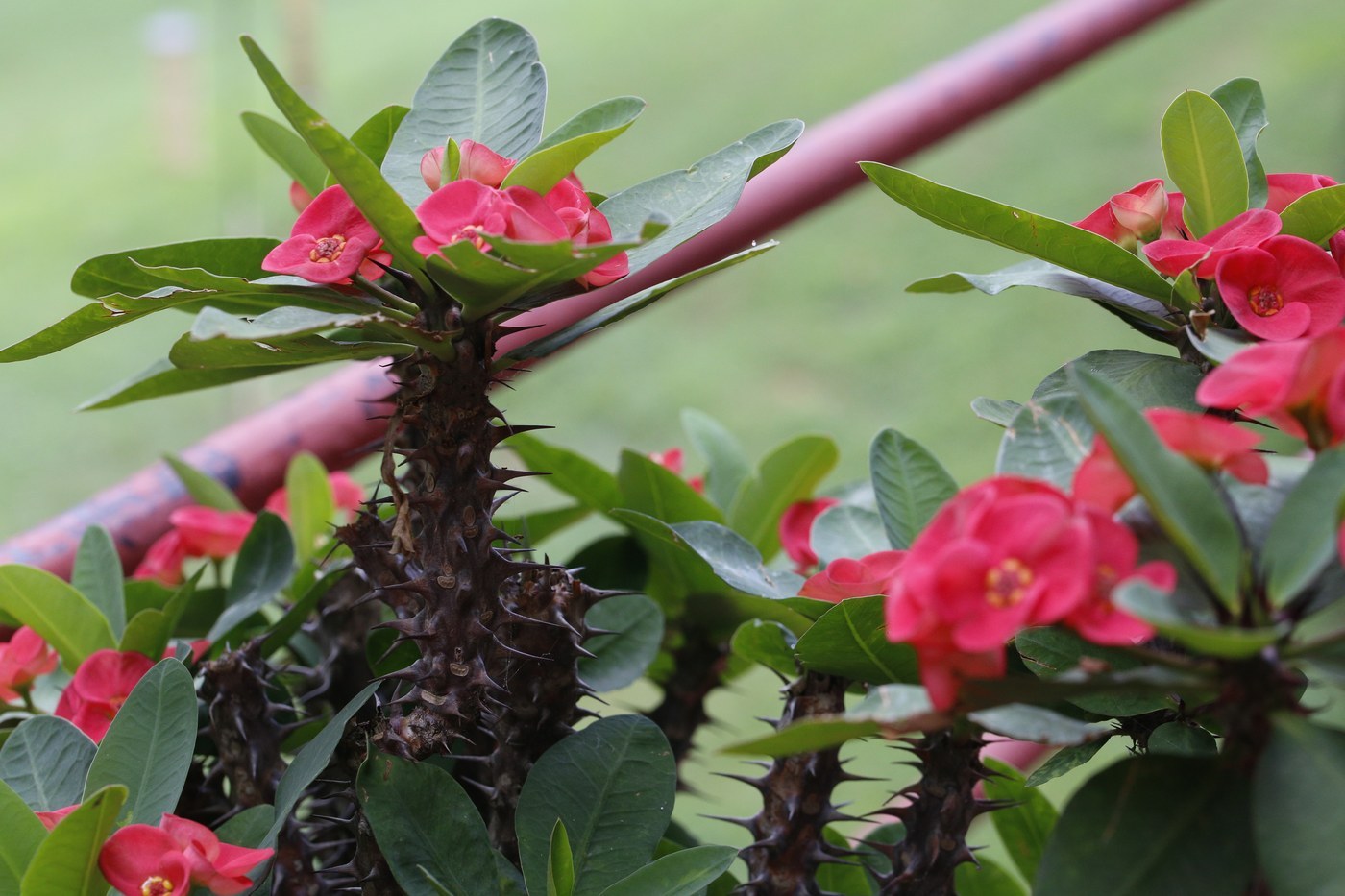
Crown of thorns is a woody, spiny succulent shrub grown for its near year-round display of small, colorful bracts in red, pink, coral, yellow, or white above thick thorny stems. Tough, drought-tolerant, and undemanding, it is one of the easiest flowering succulents to keep.
Light
Give crown of thorns as much light as possible: full sun outdoors or the brightest window indoors, ideally with several hours of direct sun. Abundant light is the key to steady flowering. In dim conditions it grows leggy, drops leaves, and blooms sparsely.
Water
Water only when the soil has dried out; this is a drought-tolerant succulent that stores water in its stems. Soak thoroughly, then let the top inch or two dry before watering again. Cut back sharply in winter when growth slows. Overwatering and standing water are the fastest way to cause rot.
Soil & Potting
Use a fast-draining cactus or succulent mix, or amend regular potting soil with plenty of coarse sand, perlite, or grit. A slightly gritty, gritty mix that never stays soggy is ideal. Always use a pot with drainage holes; unglazed terracotta helps the root ball dry between waterings.
Humidity & Temperature
Crown of thorns thrives in warm, dry air and typical indoor humidity. It is frost-tender and should be kept above about 50°F (10°C); protect it from cold drafts and move it indoors before frost in cool climates. It tolerates the heat and dryness of sunny rooms well.
Feeding
Feed lightly during the active growing season, spring through summer, with a diluted balanced or bloom-type fertilizer every few weeks. Stop feeding in autumn and winter. It is a light feeder, so avoid heavy fertilizing, which favors leaves over flowers.
Propagation
Propagate from stem-tip cuttings in spring or summer. The cut ends exude a milky sap, so let cuttings dry and callus for several days before potting into barely moist gritty mix. Wear gloves and handle the spines carefully. Rooting is reliable in warm, bright conditions.
Repotting / Pruning
Repot every two to three years in spring, only when pot-bound, moving up one pot size into fresh gritty mix. Prune in spring to shape the plant, control size, and encourage branching; wear thick gloves against the thorns and irritant sap. Removing leggy stems keeps growth full and floriferous.
Common Problems & Pests
The most common issue is root or stem rot from overwatering or poor drainage; keep the mix lean and let it dry out. Leaf drop usually signals too little light, cold, or watering stress. Watch for mealybugs, scale, and spider mites, especially indoors; treat with insecticidal soap or by wiping stems clean.
Seasonal Care Tips
In spring and summer, give maximum light, water when the soil dries, and feed lightly for peak bloom. In autumn, reduce watering as growth slows. In winter, keep it warm, bright, and much drier, watering just enough to prevent shriveling, and protect it from any frost.
Frequently asked questions
Why is my crown of thorns dropping leaves?
Leaf drop is usually caused by too little light, cold temperatures, or watering stress from either overwatering or extreme drought. Give it bright light and consistent, careful watering.
How often should I water crown of thorns?
Only when the soil has dried out. Soak thoroughly, let the top inch or two dry, then water again. Water much less in winter, as overwatering quickly causes rot.
How do I get crown of thorns to bloom more?
Give it as much direct light as possible, which is the main driver of flowering, and feed lightly during the growing season. It can bloom nearly year-round in bright conditions.
How do I propagate crown of thorns?
Take stem-tip cuttings in spring or summer, let the cut ends dry and callus for several days, then pot into barely moist gritty mix. Wear gloves for the spines and milky sap.