
How to Care for Cup and Saucer Vine
Grow Cobaea scandens for fast-climbing coverage and bell-shaped flowers that open cream and mature to deep violet on a leafy vine.
Read the full Cup and Saucer Vine encyclopedia entry →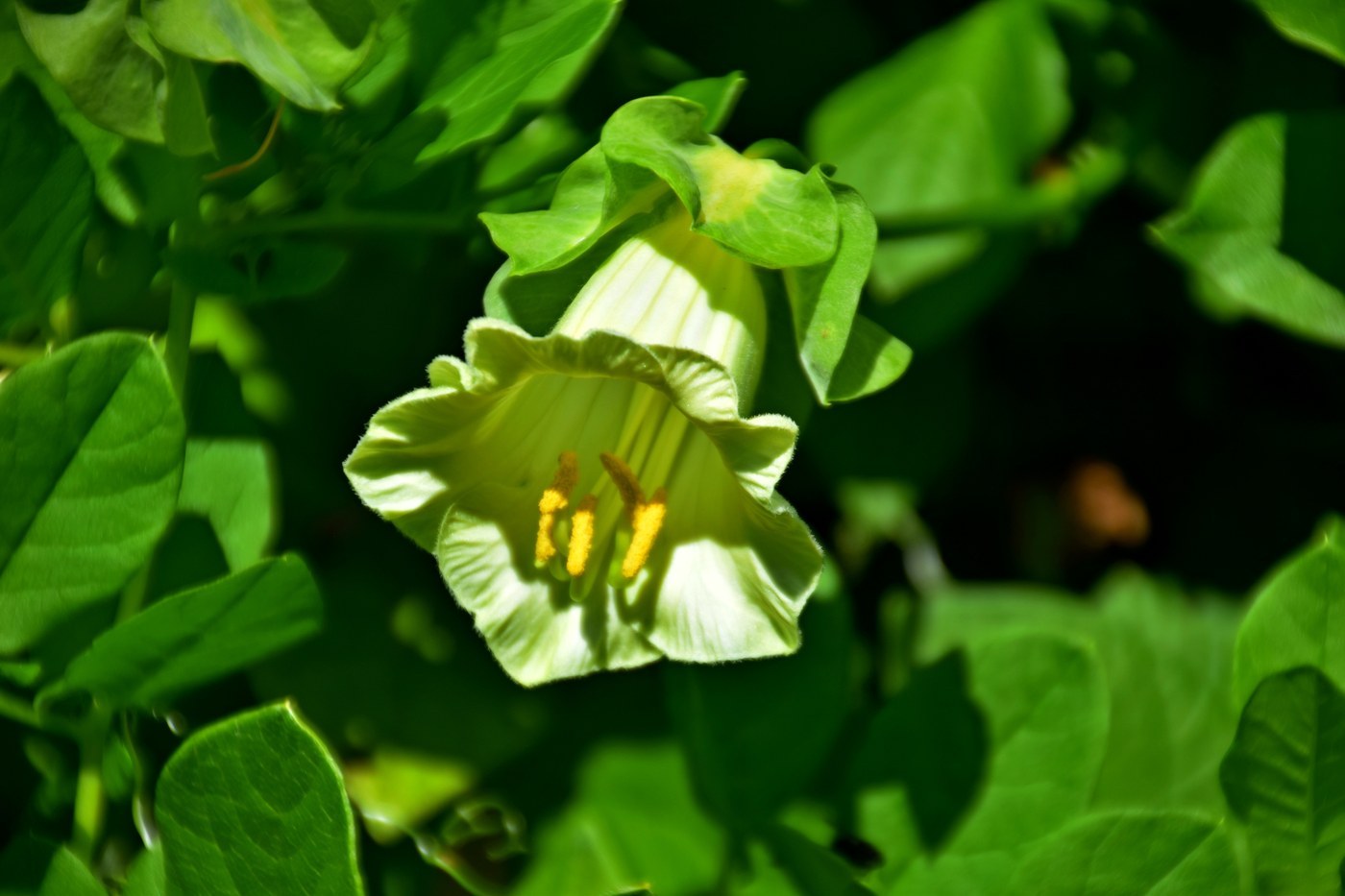
The Cup and Saucer Vine (Cobaea scandens) is a vigorous, fast-growing climber famous for its large bell-shaped flowers that open greenish-cream and deepen to rich purple, each cradled in a leafy calyx that gives the plant its name. Usually grown as an annual in cool climates and a tender perennial in frost-free ones, it is a moderate-difficulty flower that can scramble many feet in a single season.
Light
Cup and saucer vine needs full sun to flower well, ideally six or more hours of direct light daily. Ample sun encourages strong stems, abundant tendrils, and the heaviest bloom. In too much shade the vine grows leafy but produces few flowers, so choose a bright, warm, sheltered spot such as a sunny wall, trellis, or fence.
Water
Keep the soil evenly moist, especially during hot weather and while the vine is putting on rapid growth. Water regularly so the root zone never dries out completely, but avoid waterlogging. Container plants dry quickly and need frequent checking. A layer of mulch helps retain moisture and keeps the roots cool through summer.
Soil & Potting
Plant in fertile, well-draining soil enriched with compost. This vine tolerates a range of soils but performs best in moderately rich ground that holds moisture yet drains freely. For containers, use a good-quality potting mix and a large, deep pot to support the extensive growth, always with drainage holes to prevent sodden roots.
Humidity & Temperature
Cobaea is a warm-season grower that appreciates mild to warm temperatures and dislikes frost, which kills top growth. Start seeds indoors in cool climates and plant out only after the last frost when soil has warmed. It handles average outdoor humidity well; in very hot, dry regions, extra water and a little afternoon shade help it thrive.
Feeding
Feed with a balanced fertilizer early in the season to establish the vine, then switch to a formula lower in nitrogen and higher in potassium and phosphorus once it is climbing, to favor flowers over excess foliage. Too much nitrogen produces lush leaves and few blooms. A monthly liquid feed through the growing season keeps it flowering.
Propagation
Grow from seed sown indoors six to eight weeks before the last frost; sow the flat seeds on edge and keep warm to speed germination, which can be slow and uneven. Soaking seeds beforehand helps. Harden off seedlings before transplanting outdoors. Softwood cuttings can also root in warmth for overwintering favorite plants.
Repotting / Pruning
Provide a sturdy support at planting time, since the vine climbs vigorously by tendrils and quickly covers a trellis or netting. Pinch young plants to encourage branching. Pot up seedlings into larger containers as they grow so they never become root-bound before planting out. Trim wayward stems during the season to keep growth within bounds.
Common Problems & Pests
Slow or failed germination is the most common frustration; use fresh seed, warmth, and patience. Aphids and spider mites can colonize tender new growth, so rinse them off or treat with insecticidal soap. Sparse flowering usually traces to too little sun or too much nitrogen. Powdery mildew may appear in crowded, humid conditions, so ensure good air circulation.
Seasonal Care Tips
Start seeds indoors in late winter to early spring for a long flowering season. Plant out after all frost danger passes and keep well watered as the vine takes off through summer, when it blooms most heavily into autumn. In frost-free areas it may persist as a short-lived perennial; elsewhere, collect seed or take cuttings before the first freeze ends the season.
Frequently asked questions
Is cup and saucer vine an annual or perennial?
It is a tender perennial grown as an annual in cold climates. In frost-free regions it can persist and grow larger year to year.
Why isn't my Cobaea scandens flowering?
Too little sun or too much nitrogen fertilizer causes leafy growth and few blooms. Give it full sun and a lower-nitrogen, higher-potassium feed.
How do I get cup and saucer vine seeds to germinate?
Sow fresh seed on edge in warm soil, keep it consistently warm and moist, and be patient; germination is often slow and uneven.
How big does cup and saucer vine get?
It is a very vigorous climber that can reach many feet in a single season, so give it a strong trellis or netting to scramble up.