
Cup and Saucer Vine Identification Guide
Identify cup and saucer vine (Cobaea scandens) by its vigorous tendril-climbing stems and large bell-shaped flowers that open green and age to purple.
Read the full Cup and Saucer Vine encyclopedia entry →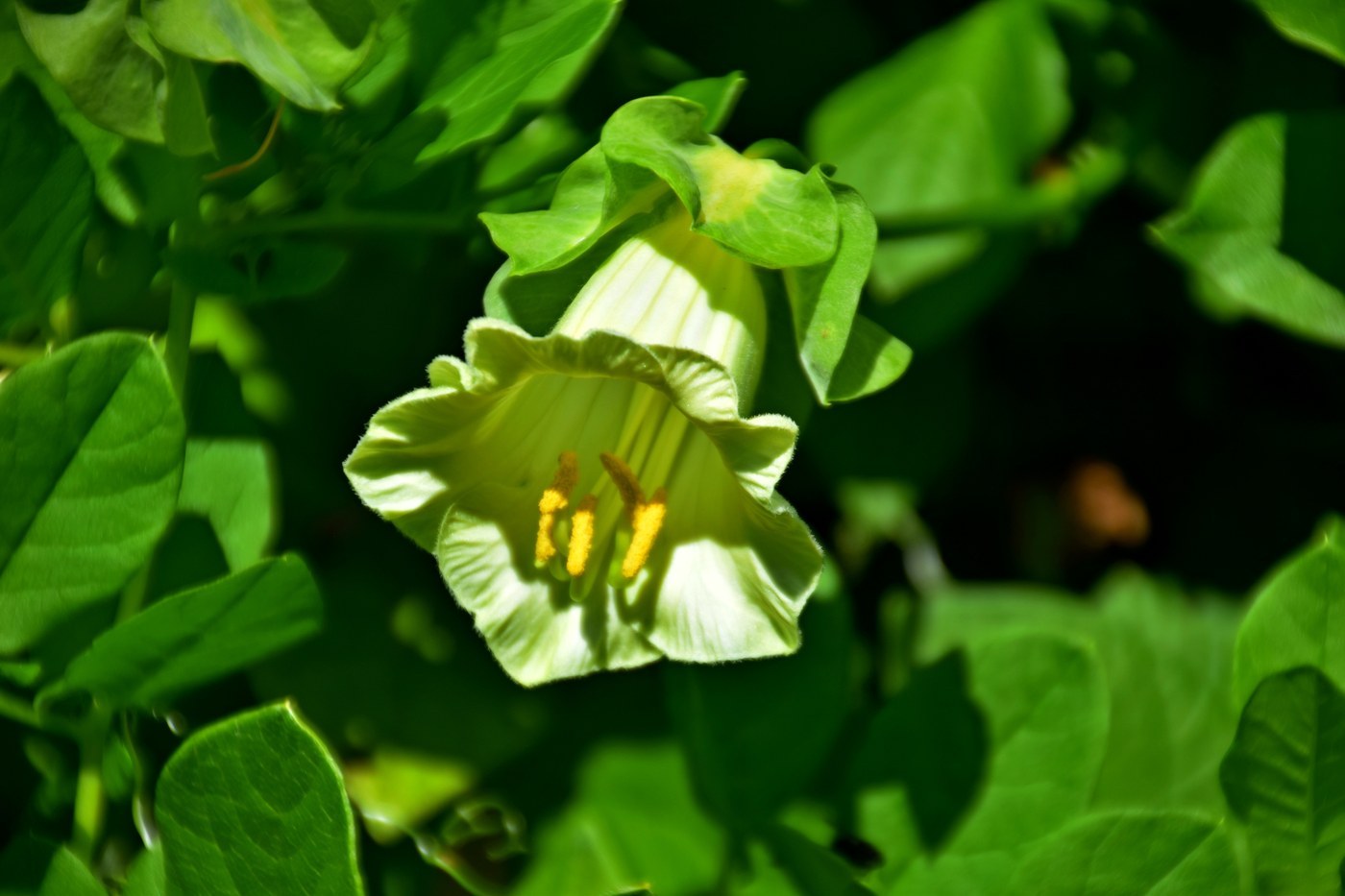
Key Identifying Features
Cup and saucer vine (Cobaea scandens), also called cathedral bells, is a vigorous climbing vine grown as an annual in cool climates. Its name comes from the large, bell-shaped flower ('cup') sitting atop a broad, flaring green calyx ('saucer'). Flowers open creamy green and age to deep violet-purple, so a healthy vine shows both colors at once. It climbs fast (10–20+ feet a season) using branched, grasping tendrils.
- Vigorous tendril-climbing vine, 10–20+ ft
- Bell-shaped flowers in a flat green 'saucer' calyx
- Blooms open green, mature to purple
- Long bloom from summer to frost
Leaves & Stems
Leaves are alternate and pinnately compound, each with two or three pairs of oval leaflets and ending in a branched, curling tendril that the vine uses to grab supports. Stems are slender, green to purplish, and twining. The foliage is lush and somewhat ribbed, climbing trellises, fences, and netting quickly in warm weather.
Flowers & Fruit
Flowers are large (about 2 inches long), bell- or cup-shaped with five spreading lobes, held on long stalks. Each cup is cradled by a wide, leafy, pale-green saucer-like calyx. Newly opened blooms are greenish-white with a slightly musty scent, shifting through to rich purple as they age; a touch of honey fragrance develops. Long, protruding stamens add to the exotic look. Fruit is an oval, leathery green capsule.
How to Tell It Apart from Look-Alikes
- Morning glory and moonflower are twining vines without tendrils and have funnel-shaped (not cup-and-saucer) flowers.
- Sweet pea has tendrils and compound leaves too, but its flowers are typical pea blossoms, not bells with a green saucer.
- The bell flower seated in a flat green calyx, color-changing green to purple, is unique to Cobaea.
Where You'll Find It
Native to Mexico, cup and saucer vine is grown on trellises, arbors, pergolas, and fences in full sun. It needs a long warm season to bloom, so it is started early indoors in cooler regions. In frost-free climates it can be a perennial and may naturalize. It attracts bees and, in its native range, bats as pollinators.
Quick ID Checklist
- Fast vine climbing by branched tendrils
- Pinnate leaves with 2–3 pairs of leaflets
- Bell-shaped flowers in a flat green saucer calyx
- Blooms open green, age to purple
- Long bloom, full sun, long warm season
A tendril-climbing vine with green-to-purple bell flowers seated in leafy green saucers is cup and saucer vine.
Frequently asked questions
Why is it called cup and saucer vine?
Each flower is a large bell or 'cup' that sits in a broad, flat, leafy green calyx that looks like a 'saucer,' giving the plant its descriptive common name.
Why do the flowers change color?
Blooms open creamy green and gradually deepen to violet-purple as they age, so an established vine displays both green and purple flowers at the same time.
How does it climb?
It climbs using branched, curling tendrils at the tips of its compound leaves, which grab onto trellises, netting, and other supports.
Is it an annual or perennial?
It is a tender perennial native to Mexico but is grown as an annual in cool climates, where it needs an early start to bloom before frost.