
Daffodil Identification Guide
Identify daffodils by their six-tepal flowers with a central trumpet or cup (corona), flat strap-like leaves, and spring bloom from a bulb.
Read the full Daffodil encyclopedia entry →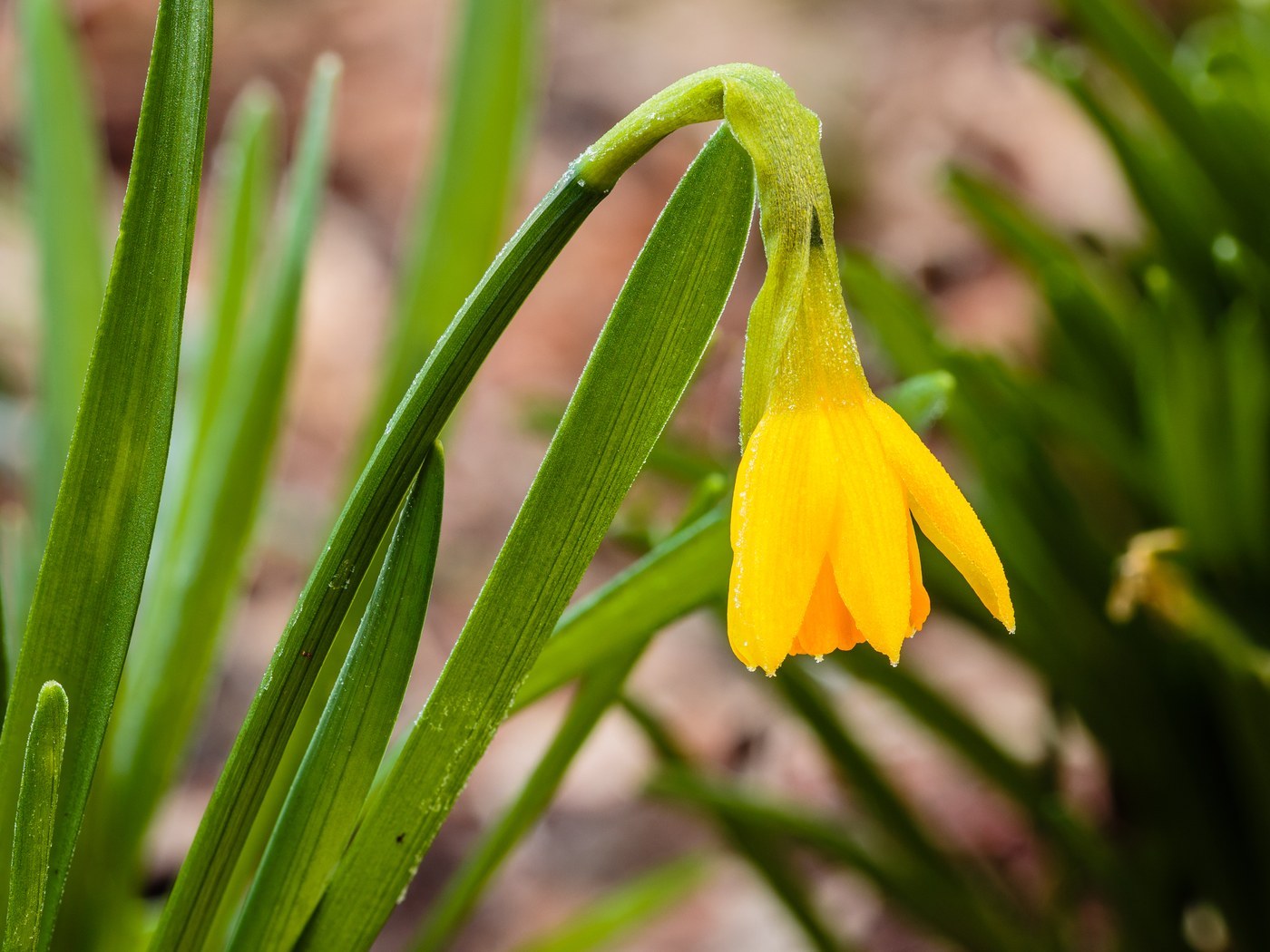
Key Identifying Features
Daffodils (Narcissus species) are spring bulbs instantly known by their two-part flower. Identify them by:
- A flower with six outer tepals surrounding a central trumpet or cup called the corona
- Usually yellow, white, or bicolored blooms, often fragrant
- Flat, strap-shaped blue-green leaves all rising from the base
- A hollow, leafless flower stalk (scape) with a papery sheath at the bud
- Growth from a tunicated bulb, blooming in early to mid spring
Leaves & Stems
Daffodil leaves are basal, linear to strap-shaped, flat or keeled, and blue-green, emerging directly from the bulb with no stem leaves. The flower stalk is leafless, smooth, and often slightly flattened or hollow, ending in one or several flowers. A thin papery spathe (sheath) wraps the bud before it opens. Plant height ranges from miniature 10 cm types to robust 45 cm garden daffodils. The bulbs are generally left alone by rodents and deer.
Flowers & Fruit
The corona is the diagnostic feature: a tubular trumpet (as long as or longer than the tepals in large 'trumpet' daffodils) or a shorter cup or ring in other divisions. Behind it spread six tepals (the perianth). Flowers may be solitary (large trumpets) or clustered several to a stem (jonquils and tazettas), and many are sweetly scented. Bloom time is early to mid spring. If pollinated, a three-chambered capsule forms and releases black seeds, though daffodils mostly multiply by bulb offsets, forming expanding clumps over years.
How to Tell It Apart from Look-Alikes
- Tulips have a simple six-tepal cup with no central corona and broader basal leaves.
- Crocuses are smaller, nearly stemless, with grass-like white-striped leaves arising from a corm.
- Snowdrops and snowflakes have nodding white bell flowers without a trumpet.
- The unmistakable daffodil mark is the central trumpet/cup corona set against six tepals on a leafless stalk over flat blue-green basal leaves.
Where You'll Find It
Daffodils are planted in gardens, borders, lawns, and naturalized drifts under trees throughout temperate regions, and wild Narcissus grow in meadows and woodlands of Europe and North Africa. They prefer full sun to light shade and well-drained soil, and need a cold winter to bloom.
Quick ID Checklist
- Six tepals surrounding a central trumpet or cup (corona)
- Yellow, white, or bicolored spring flowers
- Flat, strap-shaped blue-green basal leaves
- Hollow, leafless flower stalk with a papery sheath
- Grows from a bulb in clumps
- Blooms early to mid spring
Any six-tepal spring flower with a central trumpet or cup over flat basal leaves is a daffodil.
Frequently asked questions
What's the difference between a daffodil and a narcissus?
They are the same plant. 'Narcissus' is the botanical genus name for all daffodils, while 'daffodil' is the common English name. 'Jonquil' refers specifically to certain scented, multi-flowered Narcissus types.
How do I tell a daffodil from a tulip before blooming?
Daffodil leaves are narrow, flat, and blue-green strap-like, while tulip leaves are broader and waxier. Once open, daffodils show a central trumpet that tulips lack.
How are daffodil leaves arranged?
Daffodil leaves are all basal, rising directly from the bulb with no leaves on the flower stalk. They are flat to keeled, strap-shaped, and blue-green, which helps separate them from broader-leaved spring bulbs.
What is the trumpet in the middle of the flower called?
It is the corona. Its length defines the type: long trumpets equal or exceed the tepals, while large-cup and small-cup daffodils have progressively shorter coronas.