
Diascia Identification Guide
Identify diascia (twinspur) by its trailing mounds of small leaves and dense clusters of tubby, two-spurred coral, pink, or apricot flowers.
Read the full Diascia encyclopedia entry →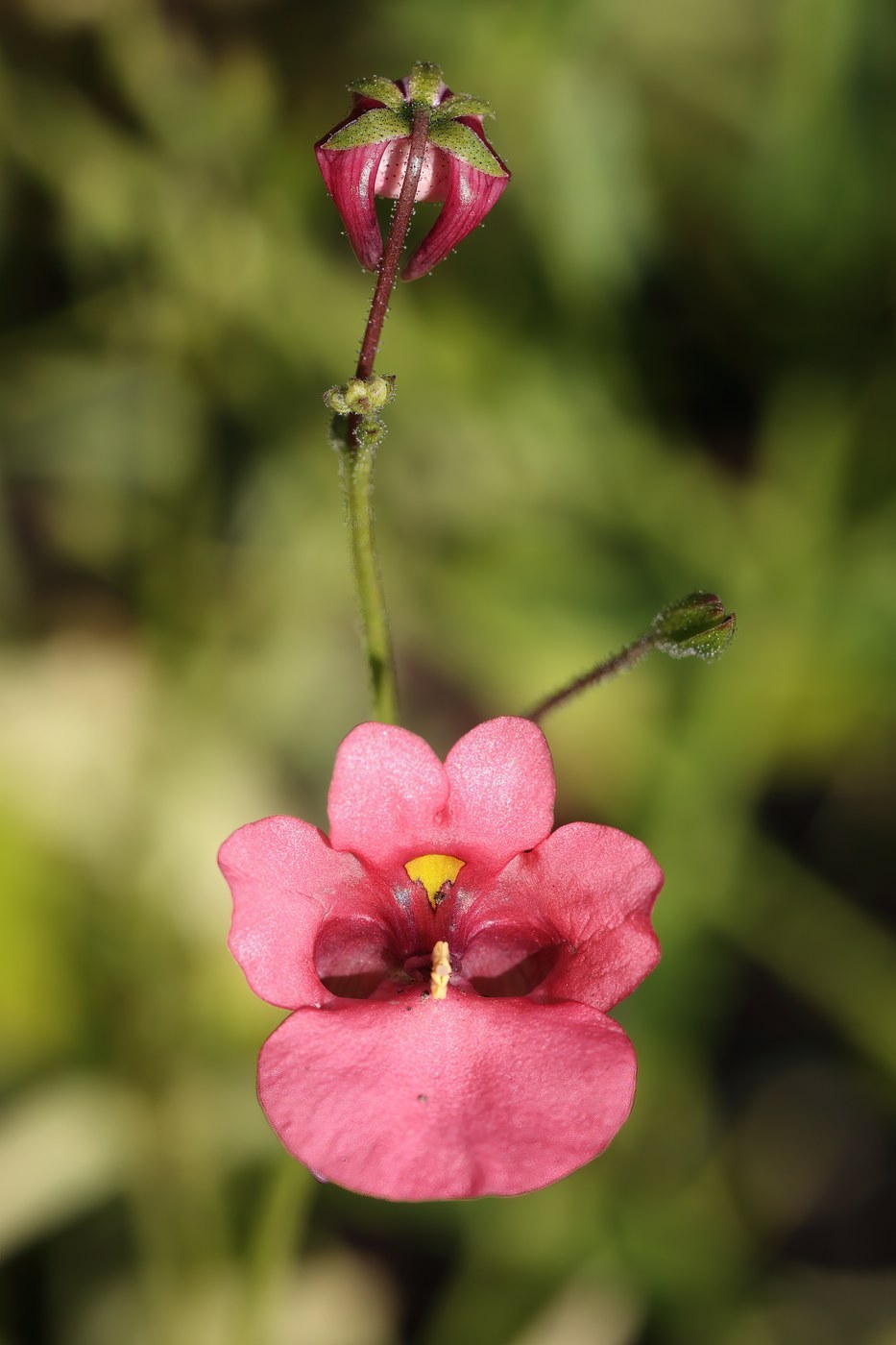
Key Identifying Features
Diascia, commonly called twinspur, is a low, spreading annual or tender perennial native to South Africa, grown for its profuse small flowers in coral, pink, apricot, salmon, or white. The name 'twinspur' comes from the two backward-pointing spurs on the back of each flower, a feature unique enough to clinch the ID. Plants form trailing or mounding mats 8–12 inches high, ideal for baskets and edges.
- Low, trailing-to-mounding habit
- Loose spikes of small, flat-faced flowers with two rear spurs
- Soft coral, pink, apricot, or salmon coloring
- Heavy bloom in cool spring and fall weather
Leaves & Stems
Stems are slender, wiry, and branching, often reddish and sprawling. Leaves are small, opposite, heart-shaped to oval, with lightly toothed (serrated) margins and a fresh green color. The foliage forms a fine-textured mat beneath the flowers. The whole plant has a delicate, airy look compared to bolder bedding annuals.
Flowers & Fruit
Flowers are borne in loose terminal racemes held just above the foliage. Each bloom is small (about 1/2–3/4 inch), flattened, and five-lobed, with a slightly cupped lower lip and two distinctive curved spurs projecting behind. Inside are yellow or maroon 'windows' (oil-secreting patches) that attract specialized bees. Flowering peaks in cool weather and may pause in midsummer heat, resuming in fall. Tiny capsules of small seeds follow.
How to Tell It Apart from Look-Alikes
- Nemesia is a close relative with similar mounded form but two-lipped, often bicolored 'snapdragon-like' flowers and a single short spur or pouch, versus diascia's flatter face and paired spurs.
- Bacopa (Sutera) has white or pale flowers and rounded leaves but lacks spurs.
- Calibrachoa (million bells) has trumpet-shaped flowers and no spurs.
- The twin rear spurs are the surest distinguishing feature.
Where You'll Find It
Diascia is sold as a spring and fall bedding/basket plant for cool-season color in containers, window boxes, and border edges. It favors full sun to part shade and moist, well-drained soil, blooming best when nights are cool. It is a garden plant rather than a wild species in most regions.
Quick ID Checklist
- Low trailing/mounding habit, wiry reddish stems
- Small, opposite, toothed heart-shaped leaves
- Small flat flowers in coral, pink, or apricot
- Two backward-pointing spurs behind each bloom
- Best bloom in cool spring/fall weather
A cool-season trailing mat covered in small coral-pink flowers with paired rear spurs is diascia.
Frequently asked questions
Why is it called twinspur?
Each flower has two short, curved spurs pointing backward from the bloom, a feature that gives diascia its common name and is the easiest way to identify it.
How do I tell diascia from nemesia?
Nemesia flowers are more two-lipped and snapdragon-like, often bicolored with a single pouch or spur, while diascia has a flatter face and two distinct rear spurs.
Why did my diascia stop blooming in summer?
Diascia is a cool-season plant that often pauses flowering during midsummer heat and rebounds when temperatures cool in fall; trimming back can encourage rebloom.
What colors does diascia come in?
Common colors include coral, pink, salmon, apricot, and white, often with subtle yellow or maroon markings at the flower's throat.