
How to Care for Dog Fennel
Grow Dog Fennel (Eupatorium capillifolium), a fast, feathery native with lacy foliage that thrives in full sun and poor, dry soils.
Read the full Dog Fennel encyclopedia entry →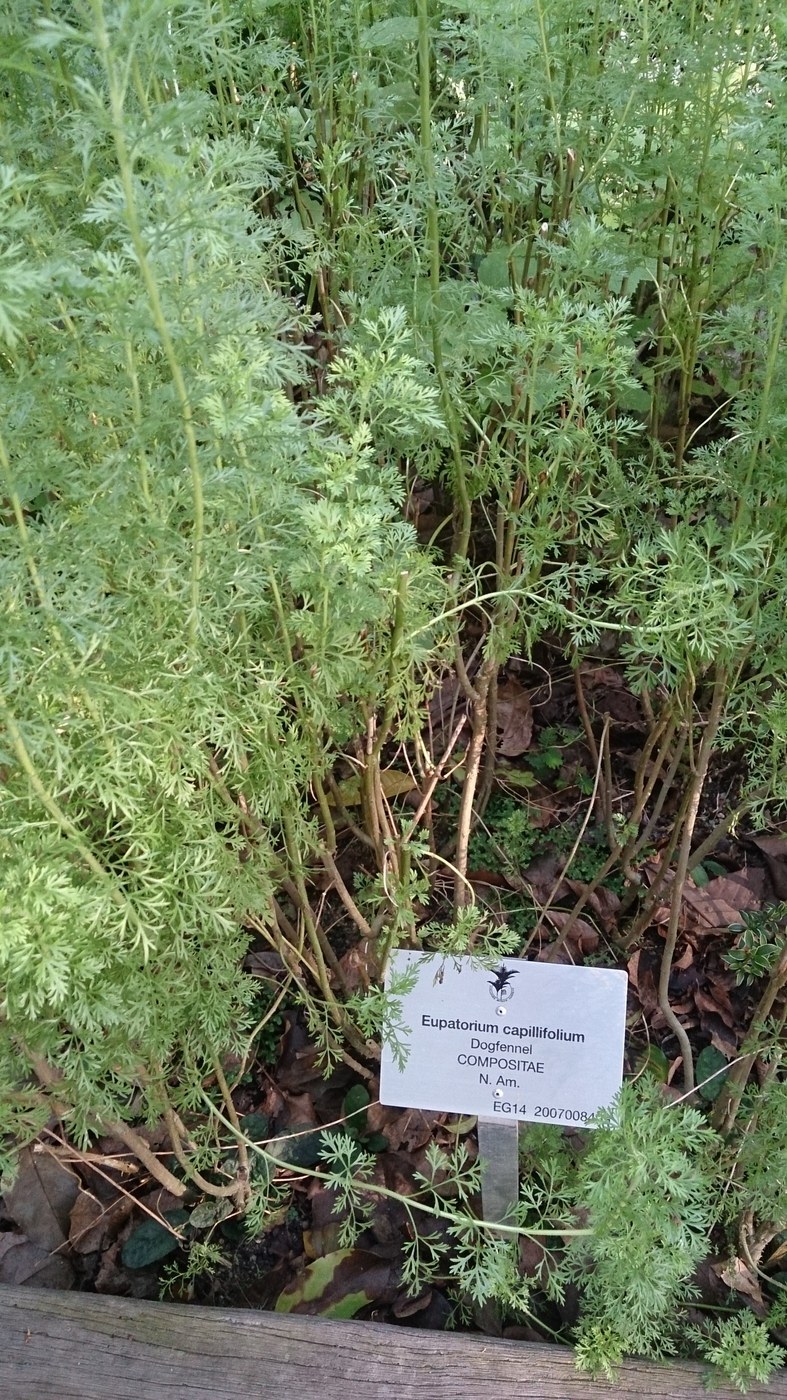
Dog Fennel (Eupatorium capillifolium) is a tall, fast-growing native of the southeastern U.S. prized in wild and meadow gardens for its soft, feathery, fern-like foliage and airy plumes of tiny greenish-white flowers in fall. It is an easy, undemanding plant that colonizes disturbed ground and open fields with almost no help.
Light
Give Dog Fennel full sun for the sturdiest, most upright growth and the finest foliage color. It tolerates a little light shade but stems become floppy and lean toward the light, so an open, unshaded position is best.
Water
Water is rarely a concern. Once established this plant is markedly drought-tolerant and does well on low to moderate moisture. Water new plants during their first season to help roots establish, then let rainfall do the work. Avoid waterlogged sites, which invite rot.
Soil & Potting
Dog Fennel is famously unfussy about soil. It grows in poor, sandy, gravelly, or clay soils and tolerates a wide pH range. Sharp drainage is the only real requirement. It actually looks lusher on lean soils; overly rich ground produces tall, weak, top-heavy stems.
Humidity & Temperature
A warm-climate plant, it thrives in the heat and humidity of the Southeast and is hardy through roughly USDA zones 6-10. It dies back in winter and returns from the roots. No special humidity measures are needed outdoors.
Feeding
Do not feed. Dog Fennel performs best in unimproved soil, and fertilizer only encourages weak, floppy overgrowth. Skip amendments entirely.
Propagation
It self-sows freely from its abundant wind-borne seed, so new plants often appear on their own. To propagate deliberately, collect seed in late fall and scatter it on bare soil, or divide established clumps in early spring. Basal shoots can also be lifted and transplanted while young.
Repotting / Pruning
Cut stems back hard in late winter before new growth emerges to keep the plant tidy and control its considerable height. Because it self-seeds aggressively, deadhead or cut back the plumes before seed matures if you want to limit spread. Pinching young stems in early summer encourages a bushier, shorter habit.
Common Problems & Pests
Dog Fennel is tough and largely pest-free. Its main drawback is vigor: it spreads readily and can crowd out neighbors, so site it where its wandering is welcome. In rich or crowded conditions stems may flop and need staking or hard pruning. Powdery mildew occasionally appears in humid, still air, which good spacing prevents.
Seasonal Care Tips
In spring, thin seedlings and cut old stems to the ground. Through summer, pinch for bushiness and enjoy the fine texture. In fall it produces its plumes; cut them before seed sets if you want to curb spread. Winter dieback is normal, and the plant resprouts reliably from the crown.
Frequently asked questions
Why is my Dog Fennel flopping over?
Floppy stems usually mean soil that is too rich, too much shade, or too much water. Grow it lean and in full sun, and cut it back hard to encourage sturdier regrowth.
How big does Dog Fennel get?
In a single season it commonly reaches 3 to 6 feet, and in rich ground it can top 8 feet. Pinching in early summer keeps it shorter and bushier.
Does Dog Fennel spread aggressively?
Yes. It self-sows prolifically from wind-borne seed and can colonize open ground quickly. Cut the plumes before seed matures to keep it in check.
Do I need to fertilize Dog Fennel?
No. It thrives in poor soil, and feeding only produces weak, overgrown, top-heavy stems. Leave it unfed.