
Dog Fennel Identification Guide
Identify dog fennel (Eupatorium capillifolium), a tall, bushy perennial weed with finely dissected, feathery, aromatic foliage and tiny dull-white fall flower heads. Covers how to separate it from true fennel and ragweed.
Read the full Dog Fennel encyclopedia entry →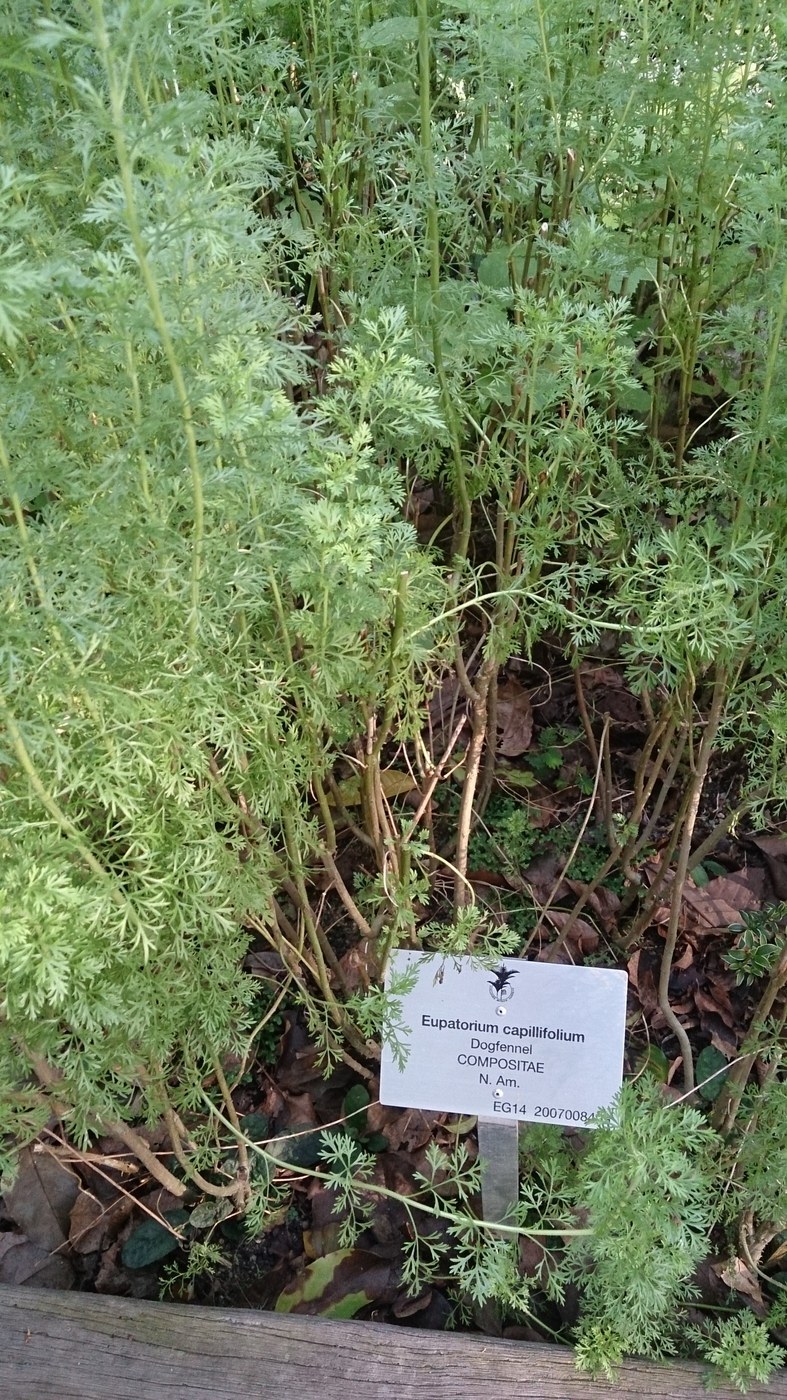
Key Identifying Features
Dog fennel (Eupatorium capillifolium) is a tall, weedy perennial of the aster family known for its soft, feathery, thread-like foliage and pungent smell when crushed. Despite the name, it is not a true fennel. Identify it by its finely divided, almost ferny leaves, its great height by late summer, and its plume-like sprays of tiny, dull greenish-white flower heads in fall.
- Tall, bushy perennial, often 3 to 10 feet by autumn
- Very finely dissected, feathery (hair-like) leaves
- Strongly aromatic/pungent when crushed
- Numerous tiny dull-white flower heads in branching plumes
- Stems hairy, branching toward the top
Leaves & Stems
The foliage is the giveaway: leaves are repeatedly divided into very narrow, thread-like segments (the species name capillifolium means "hair-leaved"), creating a soft, feathery, dill- or fennel-like texture. Lower leaves are opposite, becoming alternate and crowded upward. When bruised the foliage gives off a distinctive, somewhat unpleasant pungent odor. Stems start single but become much-branched and bushy near the top, are finely hairy, and grow remarkably tall in a single season from a perennial crown.
Flowers & Fruit
In late summer and fall the plant produces large, open, plume-like panicles of tiny flower heads. Each head is small, narrow, and dull greenish-white, containing only a few inconspicuous disk florets and no showy ray petals. The overall effect is a hazy, grayish-white feathery spray. Fruits are tiny achenes with a pappus of fine bristles, dispersed by wind. Flowering peaks in autumn.
How to Tell It Apart from Look-Alikes
- True fennel (Foeniculum vulgare): Has a sweet anise/licorice scent, yellow flat-topped flower umbels, and is in the carrot family; dog fennel smells rank and has tiny white aster-type heads.
- Common ragweed: Has coarser, more deeply lobed (not thread-fine) leaves and greenish flower spikes; dog fennel's foliage is far finer and feathery.
- Mayweed/chamomile: Are low and produce daisy-like white-and-yellow flower heads, not tiny rayless white heads in tall plumes.
The trio of feathery thread-like leaves, towering bushy growth, and small dull-white fall flower plumes confirms dog fennel.
Where You'll Find It
Dog fennel is abundant in the southeastern United States and beyond, colonizing abandoned fields, pastures, roadsides, fencerows, ditches, and disturbed sandy ground. It thrives in full sun and poor soils and is a common indicator of neglected or overgrazed land. Large stands turn fields feathery gray-green by late summer.
Quick ID Checklist
- Tall bushy perennial, 3 to 10 ft by fall
- Feathery, thread-like dissected leaves
- Pungent smell when crushed (not licorice)
- Tiny dull greenish-white rayless flower heads in plumes
- Finely hairy, top-branching stems
- Disturbed fields and roadsides, especially the Southeast
Frequently asked questions
Is dog fennel the same as true fennel?
No. True fennel (Foeniculum vulgare) is in the carrot family with a sweet anise scent and yellow flower umbels. Dog fennel is an aster-family weed with a rank smell and tiny dull-white flower heads.
What is the most distinctive feature of dog fennel?
Its extremely fine, feathery, thread-like leaves combined with its towering bushy growth, which give whole fields a soft gray-green, plume-like look by late summer.
How do I tell dog fennel from ragweed?
Ragweed has coarser, broadly lobed leaves, while dog fennel's leaves are divided into very narrow, hair-like segments giving a much softer, ferny texture.
When does dog fennel flower?
It blooms in late summer and fall, producing large, open plumes of tiny, dull greenish-white flower heads without showy petals.