How to Care for Dwarf Umbrella Tree
Grow a lush, glossy Schefflera arboricola indoors with bright indirect light, even watering, and simple pruning to keep it full.
Read the full Dwarf Umbrella Tree encyclopedia entry →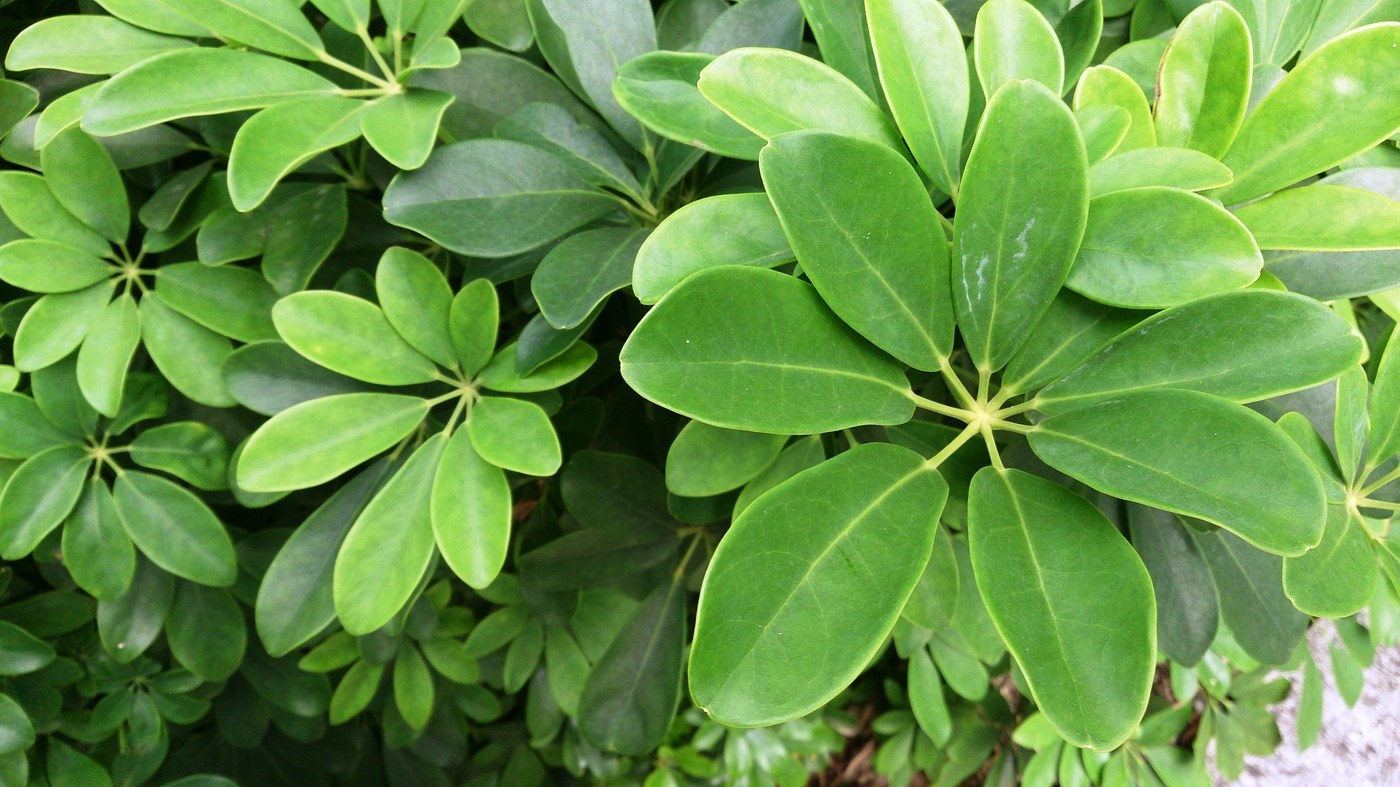
The dwarf umbrella tree (Schefflera arboricola) is a fast, forgiving foliage plant prized for its glossy, palmate leaflets that radiate like the spokes of an umbrella. With decent light and a steady watering rhythm it stays dense and upright, making it one of the easiest large-leaved houseplants to keep looking full.
Light
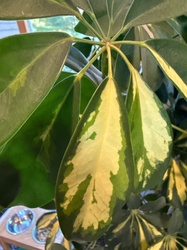
Give it bright indirect light for the best growth and tightest branching. It tolerates medium light but responds with leggy, stretched stems and wider gaps between leaves. A few hours of gentle morning sun near an east window is ideal; shield it from harsh midday sun through unshaded glass, which can scorch the foliage. Variegated forms need brighter light to hold their creamy markings. Rotate the pot a quarter turn every week or two so it grows evenly rather than leaning toward the window.
Water
Water when the top inch of soil dries out, then soak thoroughly until water runs from the drainage holes and empty the saucer. Schefflera dislikes staying wet, and soggy roots are the most common cause of decline. Let the surface dry between waterings, watering a little less in winter when growth slows. Drooping, softening stems usually signal overwatering, while crisp leaflet edges and leaf drop point to underwatering or very dry air.
Soil & Potting
Use a well-draining, peat- or coir-based houseplant mix amended with perlite or bark to keep it airy. A pot with drainage holes is essential. The plant likes to be slightly snug in its container, which also helps control its vigorous size indoors.
Humidity & Temperature
Average household humidity suits it, though it appreciates a bit more moisture in the air and will look glossier for it. Keep it in normal room temperatures of about 60-75F (16-24C) and away from cold drafts, heating vents, and doorways. Sudden chills or dry blasts of forced air trigger leaf drop.
Feeding
Feed with a balanced liquid houseplant fertilizer at half strength every 2-4 weeks during spring and summer. Pause feeding in fall and winter while growth is minimal. Over-fertilizing produces weak, floppy growth, so err on the light side.
Propagation
Propagate from stem tip cuttings in spring or summer. Take a 4-6 inch cutting below a node, remove the lower leaves, and root it in water or moist potting mix; keep it warm and bright. Air layering also works well on taller, bare-stemmed specimens.
Repotting / Pruning
Repot every 2-3 years, or when roots crowd the pot, stepping up one container size. Schefflera responds beautifully to pruning: cut back tall or leggy stems to just above a leaf node to force branching and a bushier shape. You can prune anytime in the growing season, and pinching new tips keeps the plant compact.
Common Problems & Pests
Watch for spider mites, scale, mealybugs, and aphids, especially on stressed or dusty plants; wipe the leaves periodically and treat infestations with insecticidal soap or horticultural oil. Leaf drop is the plant's stress signal for overwatering, cold drafts, or sudden light changes. Black spots or mushy stems indicate root rot from staying too wet. Dull, dusty foliage benefits from an occasional wipe or gentle shower.
Seasonal Care Tips
Growth is strongest in spring and summer, the time to feed, prune, and propagate. In fall and winter, cut back on water and stop feeding, and move the plant to your brightest available spot to compensate for weaker light. Keep it clear of cold windowpanes and heater drafts through winter.
Frequently asked questions
Why is my dwarf umbrella tree dropping leaves?
Leaf drop is Schefflera's classic stress response. The usual triggers are overwatering, cold drafts, a sudden move to lower light, or letting it dry out completely. Stabilize its watering rhythm and keep it in steady, bright indirect light and it should recover.
How do I make my Schefflera bushier?
Prune it. Cut leggy stems back to just above a leaf node during spring or summer, and pinch new growth tips. This forces the plant to branch from lower down, filling out its shape over the following weeks.
How often should I water it?
Water when the top inch of soil feels dry, then soak thoroughly and let it drain. This usually means about once a week in summer and less in winter. Never leave it sitting in water.
Does it need direct sunlight?
No. It thrives in bright indirect light. A little gentle morning sun is fine, but harsh direct afternoon sun through glass can scorch the leaflets. Too little light causes leggy, sparse growth.
Dwarf Umbrella Tree identified by the community
Recent Dwarf Umbrella Tree specimens identified with Plant Identifier.