
Edamame Identification Guide
Identify edamame (vegetable soybean) by its bushy hairy stems, three-leaflet leaves, small pale flowers, and clusters of fuzzy bright-green pods each holding two or three beans.
Read the full Edamame encyclopedia entry →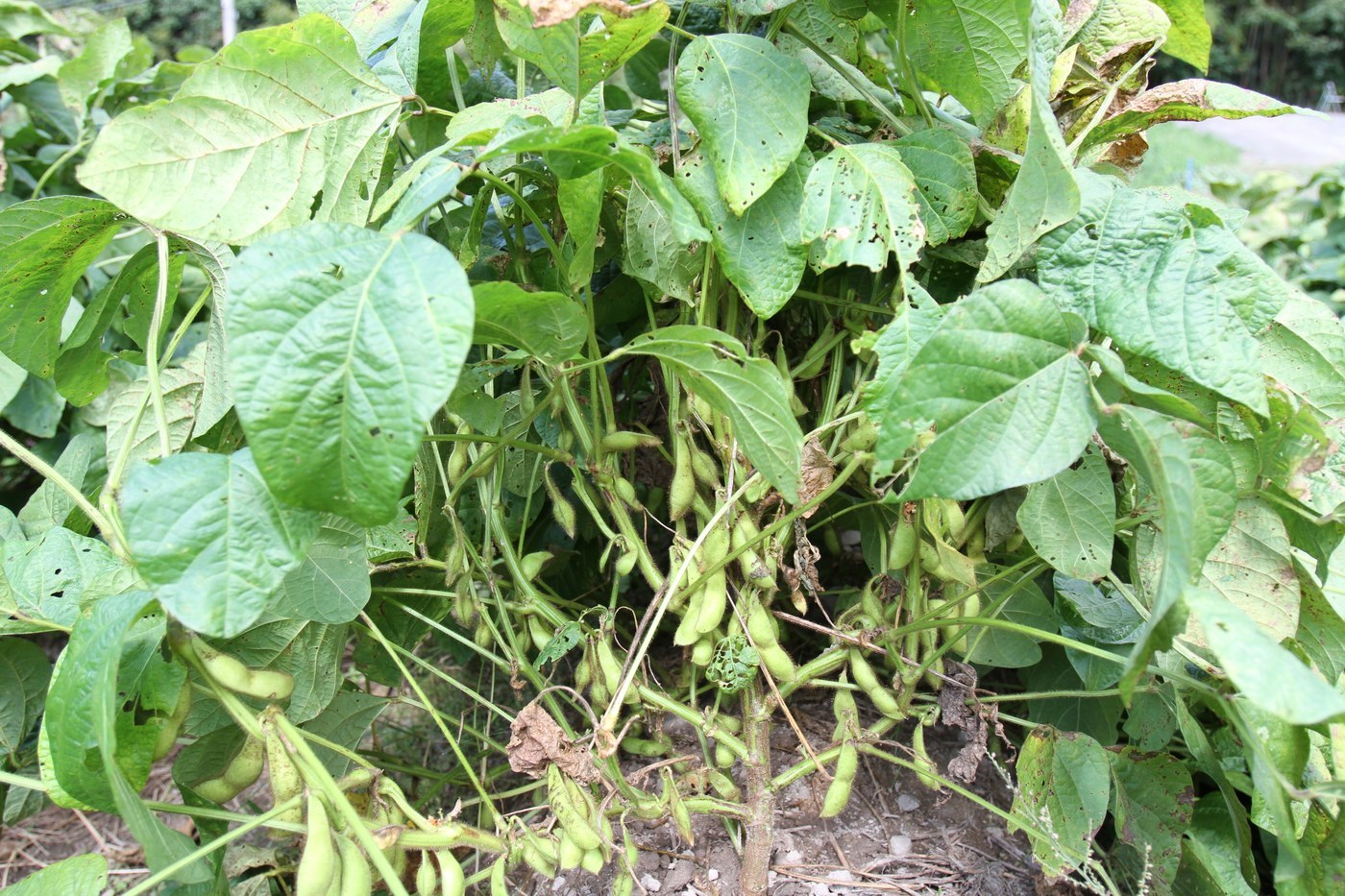
Key Identifying Features
Edamame is the immature, vegetable form of the soybean (Glycine max), an annual legume in the pea family (Fabaceae). It is identified by its bushy, hairy upright stems; compound leaves of three broad leaflets (trifoliate); small inconspicuous white-to-purple pea flowers; and the giveaway clusters of short, plump, conspicuously fuzzy green pods, each typically holding two or three round green beans.
- Growth habit: erect, branching bushy annual 1.5–3 ft tall (not a long climbing vine)
- Hairiness: stems, leaves, and pods are covered in fine brown or gray hairs
Leaves & Stems
Leaves are alternate and trifoliate — three oval to broadly pointed leaflets (a large terminal one and two laterals), each 2–4 inches long, medium green, and softly hairy. The leaflets often droop or fold. Stems are upright, branching, and hairy. The plant has a sturdy bushy form rather than the long tendril-climbing habit of common beans.
Flowers & Fruit
Flowers are small (about ¼ inch), typical pea-family shape (one upright banner petal, two wings, a keel), white to pale purple/lavender, tucked in the leaf axils and easy to overlook. The defining feature is the pod: short (1.5–3 inches), plump, flattish-cylindrical, bright green and densely covered in fine fuzzy hairs, usually borne in tight clusters along the stem. Each pod contains 1–3 large, round green beans. Left to mature, pods and beans dry to tan/brown — that's the dry soybean stage; edamame is harvested while pods and beans are still green and plump.
How to Tell It Apart from Look-Alikes
- Green/snap beans (Phaseolus): pods are long, slender, smooth (not fuzzy clustered) and beans are kidney-shaped; bean plants often vine.
- Lima beans: flat, broad pods with flat beans, smoother and larger pods than fuzzy soybean.
- Peas: smooth round pods, leaves with tendrils and many leaflets, not trifoliate and fuzzy.
- Peanut: trifoliate-ish leaves too, but yellow flowers and pods that develop underground.
The trifoliate hairy leaves + bushy form + short fuzzy clustered green pods with 2–3 round beans confirms edamame/soybean.
Where You'll Find It
Soybeans are grown across temperate farmland worldwide; edamame-specific varieties are grown in vegetable gardens and on farms for fresh eating. Look for the bushy, fuzzy-podded plants in summer vegetable plots and large field rows.
Quick ID Checklist
- Bushy upright hairy annual, 1.5–3 ft
- Trifoliate leaves (three oval leaflets), softly hairy
- Small white-to-purple pea flowers in leaf axils
- Short, plump, FUZZY green pods in clusters, 1–3 round beans each
- Fuzzy clustered pods distinguish it from smooth long green-bean pods
Frequently asked questions
How do I tell edamame from green beans?
Edamame (soybean) pods are short, plump, and densely fuzzy, borne in clusters, with 2–3 round beans inside, while green bean pods are long, slender, smooth, and contain kidney-shaped beans. Soybean plants are also bushy and hairy.
Is edamame a different plant from regular soybeans?
It's the same species (Glycine max). 'Edamame' refers to soybeans harvested young while the pods and beans are still green and tender; left to mature and dry, they become ordinary dry soybeans.
Why are the pods and leaves so fuzzy?
Soybean plants are naturally covered in fine hairs (trichomes) on their stems, leaves, and pods — the conspicuous fuzz on the bright-green pods is a reliable identification clue.
What do the leaves look like?
Each leaf is trifoliate, meaning it has three broad, oval, softly hairy leaflets — one at the tip and two at the sides — which is typical of soybeans and many legumes.