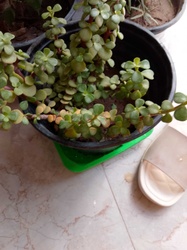
Elephant Bush Identification Guide
Identify Elephant Bush (Portulacaria afra) by its reddish-brown woody stems, small round succulent leaves, and shrubby, jade-like form.
Read the full Elephant Bush encyclopedia entry →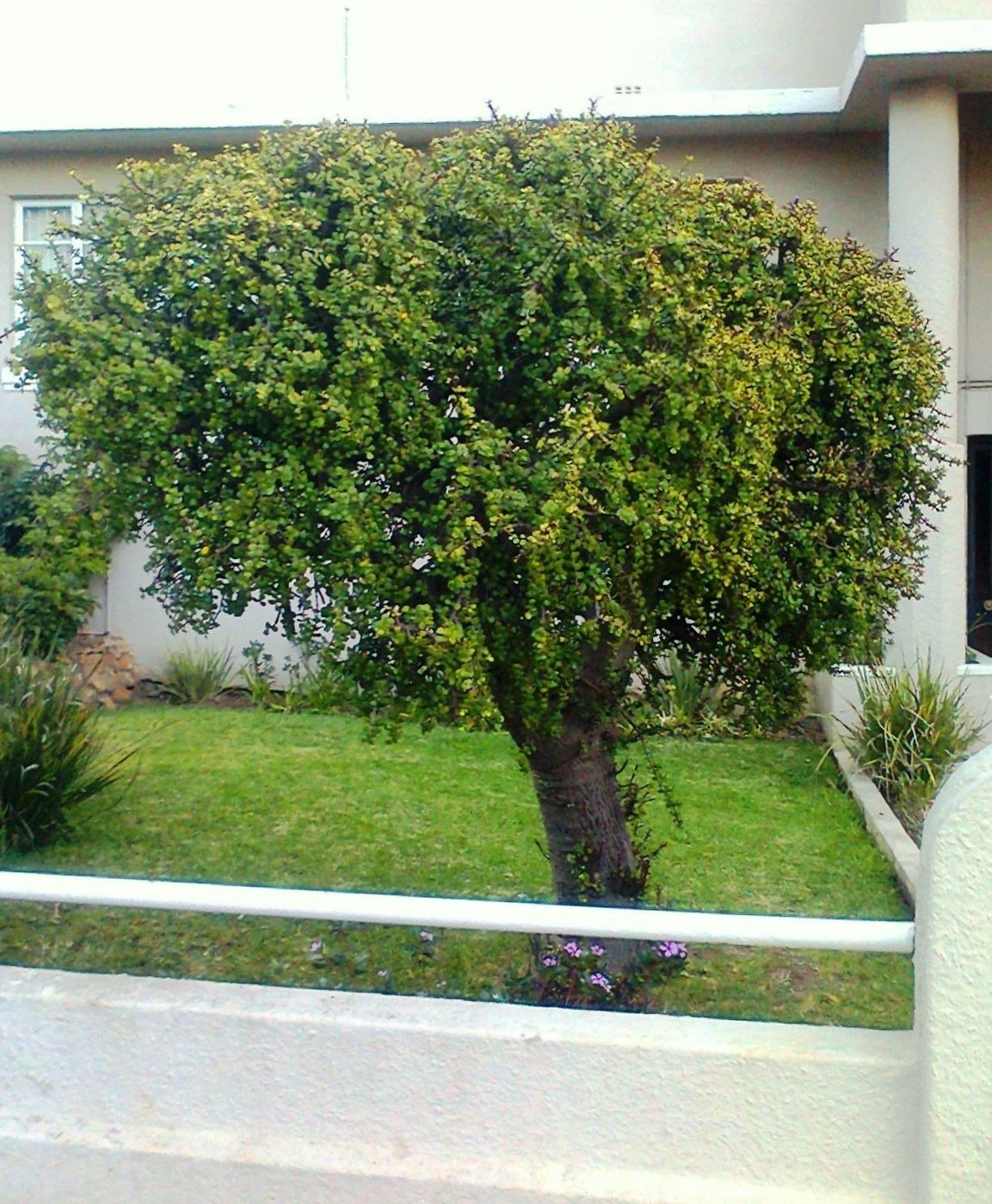
Key Identifying Features
Elephant Bush (Portulacaria afra) is a South African succulent shrub that looks like a small, dainty jade plant. Identify it by smooth, reddish-brown to mahogany woody stems bearing pairs of small, round-to-teardrop, fleshy green leaves roughly the size of a fingernail.
- Reddish-brown succulent stems (key difference from green-stemmed jade)
- Small, rounded, flat succulent leaves, 1–2 cm
- Leaves in opposite pairs along the stems
- Bushy, branching, semi-trailing habit
Leaves & Stems
Leaves are bright to mid-green, glossy, obovate (teardrop) to nearly circular, flattened and fleshy, with a smooth edge and rounded tip. They are arranged in opposite pairs, closely spaced, giving a dense, layered look. Crucially, the stems are succulent yet woody and red-brown, thinner and more flexible than a jade plant's. The popular variegated form ('Variegata') has cream-and-green leaves and pink-tinged stems; the 'Prostrata' form trails and is popular for hanging baskets and bonsai.
Flowers & Fruit
Flowering is uncommon in cultivation but in habitat mature plants bear clusters of tiny, star-shaped pale-pink flowers at the stem tips in late spring and summer, sometimes covering the shrub. Fruits are small and inconspicuous.
How to Tell It Apart from Look-Alikes
- vs. Jade Plant (Crassula ovata): jade has thicker, larger, plumper leaves (often with red-tinged edges) and green, thick stems; elephant bush has smaller leaves and slim red-brown stems and branches much more freely
- vs. Baby Jade: the dwarf jade name is sometimes shared, but jades belong to a different genus (Crassula vs. Portulacaria)
- vs. Calandrinia/other Portulaca: those are softer, non-woody herbs
A quick test: bend a stem — elephant bush stems are thin, springy and reddish; jade stems are stout and green.
Where You'll Find It
Grown worldwide as an easy houseplant, bonsai subject and, in warm climates (zones 10–11), as a hedge or groundcover. Native to the dry, rocky thickets of the Eastern Cape of South Africa, where wild elephants browse it — hence the name.
Quick ID Checklist
- Slim, reddish-brown, woody-succulent stems
- Small round-to-teardrop fleshy green leaves
- Leaves in opposite pairs, densely set
- Highly branched, shrubby or trailing habit
- Smaller and daintier than a jade plant
Frequently asked questions
How do I tell Elephant Bush from a Jade Plant?
Elephant Bush has small round leaves on thin reddish-brown stems and branches densely. Jade plant has much larger, plumper leaves on thick green stems.
Why are the stems reddish instead of green?
Reddish-brown succulent stems are a natural identifying feature of Portulacaria afra and one of the easiest ways to distinguish it from green-stemmed jade.
Is the variegated version a different plant?
No, 'Variegata' is the same species with cream-and-green leaves and pinkish stems; the leaf shape, pairing and woody red stems still confirm the ID.
Elephant Bush identified by the community
Recent Elephant Bush specimens identified with Plant Identifier.