Endive Identification Guide
Identify endive (Cichorium endivia) by its low rosette of curly or broad slightly bitter leaves, milky sap, and blue daisy-like chicory flowers.
Read the full Endive encyclopedia entry →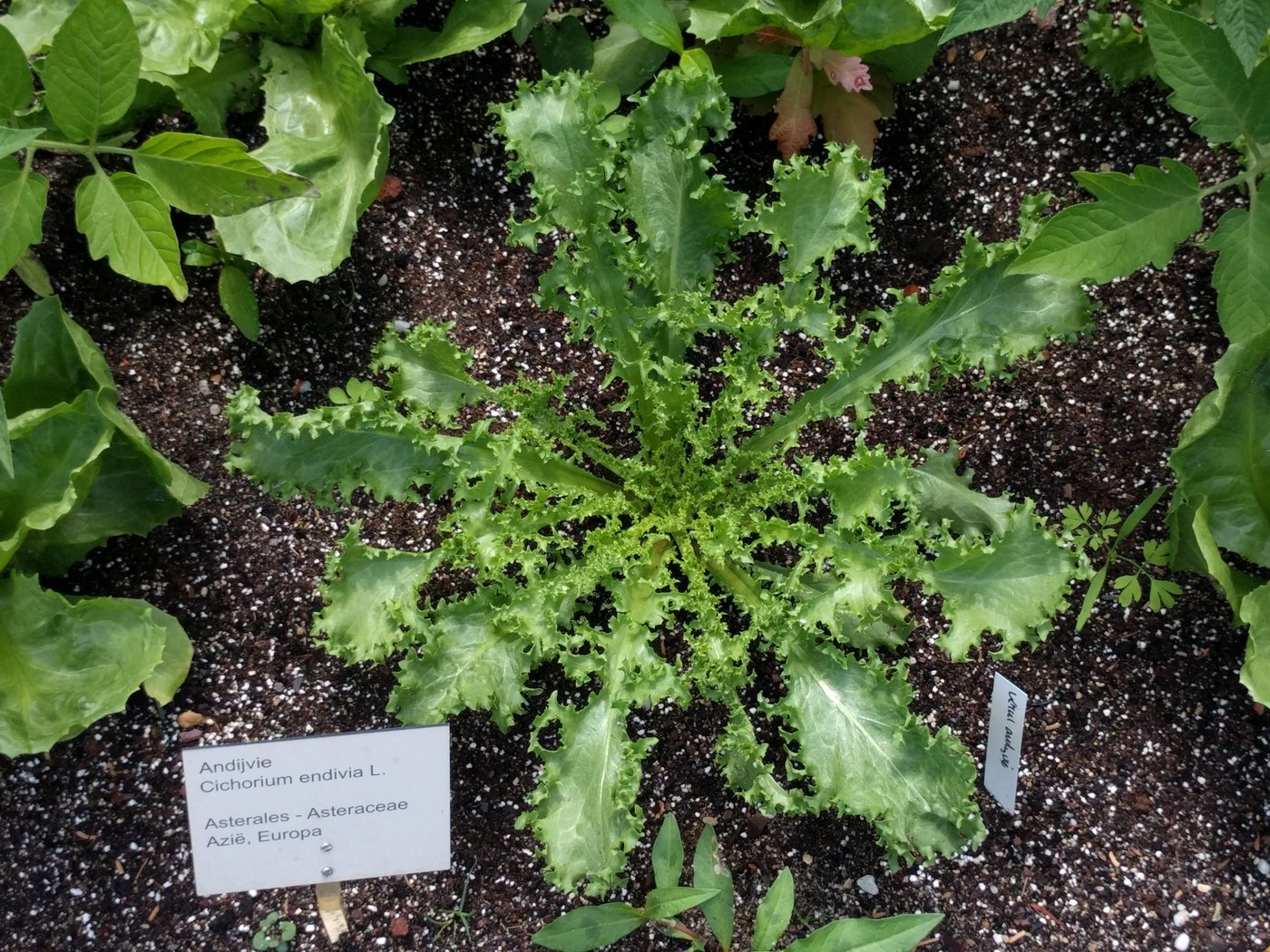
Key Identifying Features
Endive (Cichorium endivia) is a leafy salad plant in the daisy family, closely related to chicory. It forms a low, dense rosette of leaves with a characteristic slightly bitter taste and milky white sap in the stems and ribs. Two main forms exist: curly endive (frisée) with finely cut, frilly leaves, and broad-leaved escarole with wide, wavy leaves. When it bolts, it produces sky-blue chicory-like flowers.
Leaves & Stems
- Leaves form a flattened rosette, often blanched pale or creamy at the center.
- Curly type (frisée): leaves deeply cut, narrow, frilled, and curled with toothed edges.
- Broad type (escarole): leaves broad, wavy-margined, less divided, smoother.
- Midribs are pale, thick, and crisp, exuding milky latex when broken.
- Leaves are mostly hairless; outer leaves green, inner ones blanched yellow-white and milder.
Flowers & Fruit
- A bolting plant sends up a branched stalk to 1 m.
- Flowers are blue (sometimes pale lilac or white), daisy-like, with strap-shaped, square-tipped, fringed petals — classic chicory family form.
- They open in the morning and close by midday.
- Seeds are small, dry achenes.
How to Tell It Apart from Look-Alikes
- Chicory (Cichorium intybus): Very similar blue flowers, but wild chicory has a tough, often hairy stem and narrower basal leaves; endive is leafier and grown as a salad rosette. The leaf forms (frisée/escarole) and bitter milky leaves distinguish cultivated endive.
- Lettuce (Lactuca): Also has milky sap but its flowers are yellow, not blue, and leaves lack the intense bitterness.
- Dandelion (Taraxacum): Milky sap and toothed leaves, but flowers are yellow and leaves form a flatter rosette with backward-pointing lobes.
The key trio: bitter rosette leaves + milky sap + blue square-tipped strap flowers points to Cichorium endivia.
Where You'll Find It
Endive is a cool-season garden and market vegetable, grown for autumn and winter salads in temperate climates. It prefers full sun to part shade and moist, fertile soil, and is often blanched (covered to whiten the heart and reduce bitterness). It can escape to roadsides and disturbed ground, where it resembles wild chicory.
Quick ID Checklist
- Low rosette of either frilly (frisée) or broad wavy (escarole) leaves
- Slightly to distinctly bitter taste
- Milky white sap in ribs and stems
- Pale, crisp midribs; blanched cream center
- If flowering: blue, daisy-like flowers with square fringed petal tips
- Cool-season salad crop
Frequently asked questions
What is the difference between curly endive and escarole?
Both are Cichorium endivia. Curly endive (frisée) has narrow, deeply cut, frilly curled leaves, while escarole has broad, wavy, less-divided leaves. They share the same milky sap, bitterness, and blue chicory flowers.
How do I tell endive from lettuce?
Both have milky sap, but endive leaves are noticeably bitter and it produces blue daisy-like flowers, whereas lettuce is milder and flowers yellow. Endive's frilly or wavy rosette also differs from lettuce's looser or heading form.
Is endive the same as chicory?
They are close relatives in the same genus with similar blue flowers and bitterness. Endive (C. endivia) is grown as a leafy salad rosette, while chicory (C. intybus) includes wild forms and types grown for roots or Belgian endive chicons.
Why is the center of my endive pale and less bitter?
Growers blanch endive by covering the heart to block light, which keeps the inner leaves creamy white and milder. The outer leaves stay green and more bitter.
Endive identified by the community
Recent Endive specimens identified with Plant Identifier.