
How to Care for Escallonia
Escallonia is a tough, glossy-leaved evergreen shrub with clusters of pink or red flowers, ideal for hedges and coastal gardens.
Read the full Escallonia encyclopedia entry →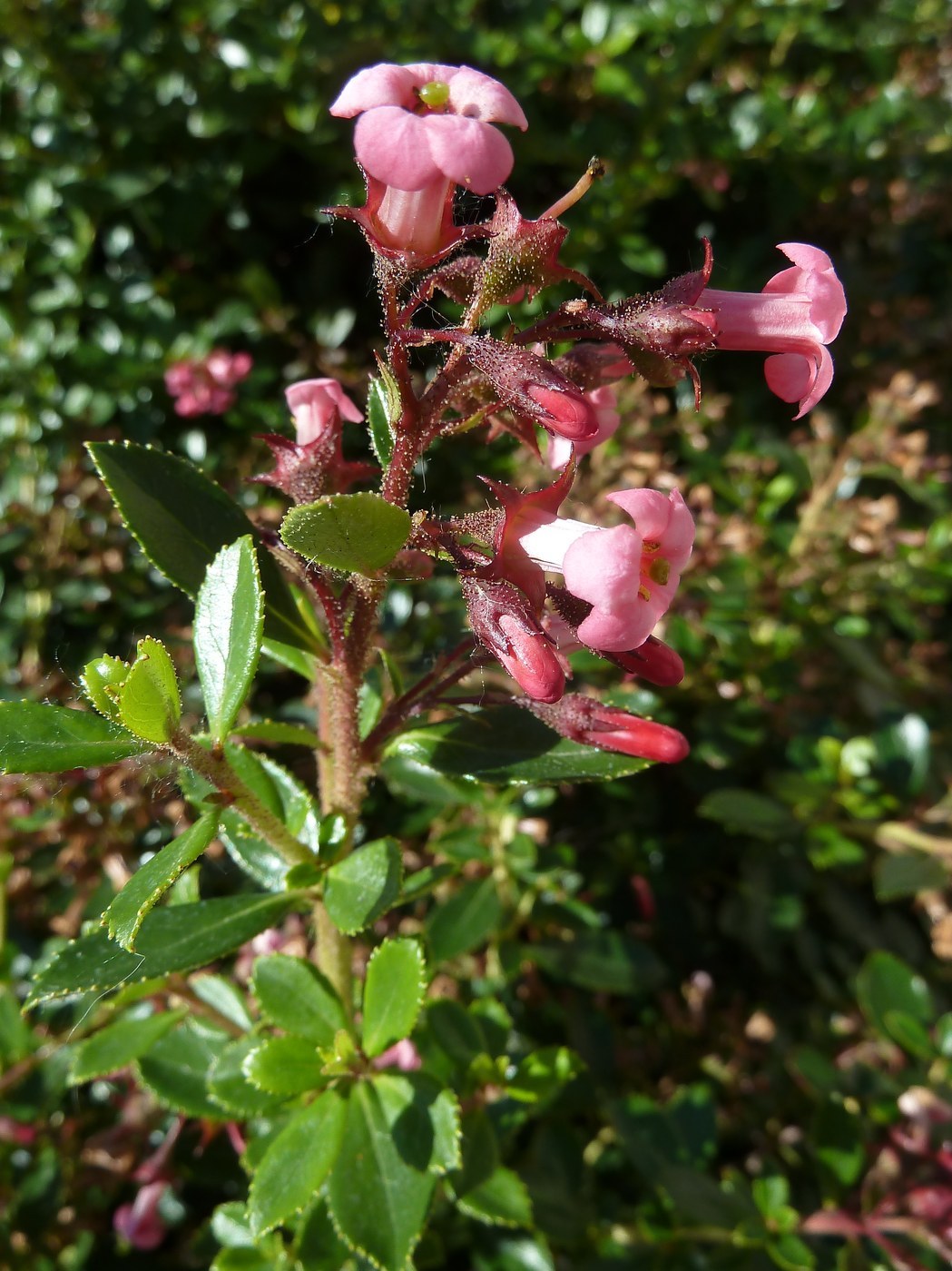
Escallonia (Escallonia rubra) is an easy-going evergreen shrub with small glossy leaves and long-lasting clusters of pink to red flowers. It is a favorite for informal hedges and seaside plantings thanks to its tolerance of wind and salt spray.
Light
Escallonia flowers best and grows densest in full sun. It accepts part shade, particularly in hot climates, but blooming is reduced and growth can become leggier with less light. A sunny, open position gives the strongest flowering display.
Water
Provide moderate, regular water while the shrub is establishing to develop a deep root system. Once established it is quite drought tolerant and needs watering only during prolonged dry periods. Avoid constantly soggy soil, which the roots dislike.
Soil & Potting
This shrub is adaptable but performs best in well-drained soil of average fertility. It tolerates sandy coastal soils and a range of pH levels. Improve heavy clay with organic matter and grit to sharpen drainage. In containers use a free-draining loam-based mix with a generous drainage layer.
Humidity & Temperature
Escallonia thrives in mild temperate and coastal climates, generally hardy in USDA zones 8 to 9. It is notably wind and salt tolerant, making it excellent for exposed seaside gardens. Hard, prolonged frost can damage foliage, so give it a sheltered spot in colder areas.
Feeding
Feed once in spring with a balanced slow-release fertilizer to support growth and flowering. Escallonia is not a heavy feeder, and overly rich conditions favor foliage at the expense of blooms. A spring mulch of compost usually supplies enough nutrition.
Propagation
Propagate from semi-hardwood cuttings in summer or hardwood cuttings in late autumn. Take firm shoots several inches long, remove lower leaves, and root in a gritty, moist medium. Cuttings root readily, which makes filling out a hedge inexpensive.
Repotting / Pruning
Prune after the main flush of flowering to shape the plant and encourage bushy growth. For hedges, trim lightly and regularly through the growing season. Escallonia responds well to renovation pruning if it becomes overgrown, resprouting from older wood. Refresh container plants every two to three years.
Common Problems & Pests
Escallonia is generally trouble-free. The main concern is escallonia leaf spot, a fungal disease that causes brown or purple blotches and some leaf drop in wet conditions; improve air flow and clear fallen leaves to manage it. Root rot can occur in waterlogged soil, so ensure good drainage.
Seasonal Care Tips
In spring, feed and mulch as growth resumes. Through summer, enjoy the long bloom and take cuttings. After flowering, prune to shape and keep hedges tidy. In colder-climate winters, mulch the root zone and shelter young plants from harsh frost and drying winds.
Frequently asked questions
Is Escallonia good for coastal gardens?
Yes, it is one of the best evergreen hedging shrubs for the coast thanks to its strong tolerance of wind and salt spray, along with glossy foliage and abundant flowers.
When should I prune Escallonia?
Prune right after the main flush of flowering. This shapes the plant and encourages dense new growth, and hedges can be lightly trimmed through the growing season.
How much water does Escallonia need?
Water regularly while it establishes, then only during dry spells. Once established it is quite drought tolerant and prefers well-drained soil over constant moisture.
Can Escallonia recover if it gets overgrown?
Yes, it tolerates hard renovation pruning and will resprout from older wood, so an overgrown plant can be cut back and rejuvenated over a season or two.