
Escallonia Identification Guide
Identify escallonia by its small glossy aromatic leaves, clusters of tubular pink-to-red flowers, and dense evergreen coastal-hedge habit.
Read the full Escallonia encyclopedia entry →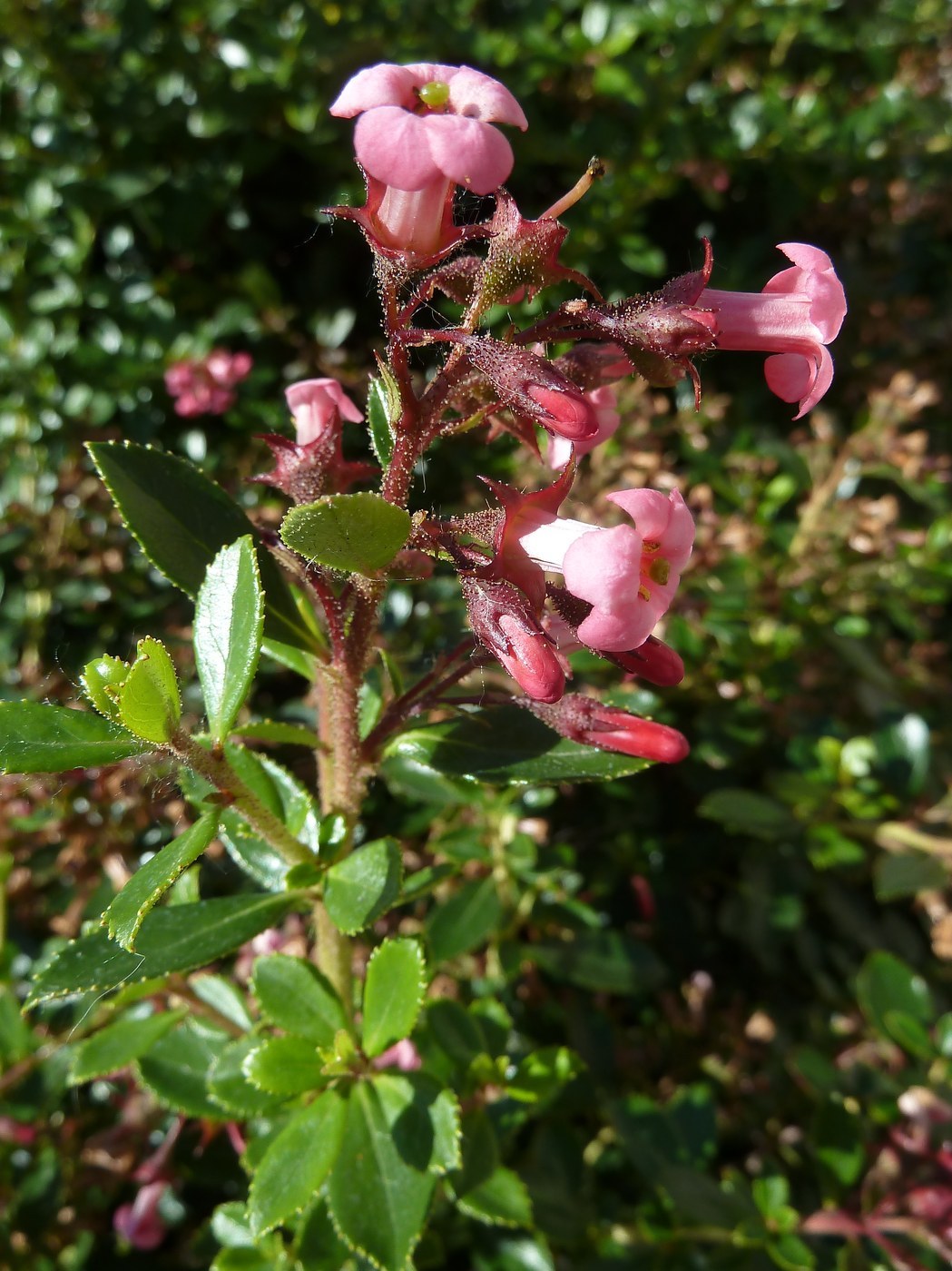
Key Identifying Features
Escallonia is a South American (Andean) evergreen shrub widely planted as a flowering hedge, especially in mild coastal regions. Its hallmarks are small, glossy, resinous-scented leaves and a long season of clustered, funnel-shaped flowers in pink, rose-red, or white.
- Dense, bushy evergreen shrub, 3–10 ft
- Small (½–1½ in), glossy dark-green leaves, finely toothed
- Tubular/funnel flowers in terminal clusters
- Blooms pink, crimson, rose, or white, summer into fall
Leaves & Stems
Leaves are alternate, small, obovate (broadest near the tip), glossy dark green, and finely toothed along the margins. They are slightly leathery and aromatic — crushed foliage and young stems are often sticky-resinous and sweetly scented. New stems can be reddish and somewhat glandular. The overall foliage texture is fine and dense, which is why the plant clips into such tidy hedges.
Flowers & Fruit
Flowers are the easiest confirmation: small tubular blooms with five flaring petals that form a narrow funnel, gathered into rounded or elongated clusters at the branch tips. Colors run from soft pink and apple-blossom through to deep rose-red and crimson, and white in some cultivars. The plant flowers profusely over a long summer-to-autumn season, drawing bees and butterflies. Fruit is a small, dry, inconspicuous capsule.
How to Tell It Apart from Look-Alikes
- Abelia: similar small glossy leaves and tubular pinkish flowers, but abelia flowers are more bell-shaped with persistent pink sepals, and leaves are often in whorls of 3.
- Privet: glossy leaves but smooth-edged and white flower panicles with a strong scent; escallonia leaves are toothed and resinous.
- Box honeysuckle (Lonicera nitida): tiny leaves but opposite, and insignificant flowers; escallonia leaves are alternate and larger with showy blooms.
- Hebe: bottlebrush flower spikes vs. escallonia's funnel-flowered clusters.
The small glossy toothed resinous leaves + clustered funnel-shaped pink/red flowers + dense coastal-hedge habit identifies escallonia.
Where You'll Find It
A classic seaside and mild-climate hedging plant (UK, Ireland, US Pacific Coast, New Zealand) because it tolerates salt spray, wind, and poor soil. You'll see it as clipped hedges, screens, and informal flowering shrubs. It prefers full sun to light shade and well-drained soil, and resents hard frost in colder zones.
Quick ID Checklist
- Dense evergreen shrub or hedge, 3–10 ft
- Small glossy dark-green leaves, finely toothed
- Foliage aromatic/sticky-resinous when crushed
- Clusters of small tubular, five-petaled flowers
- Pink, rose, crimson, or white blooms over a long season
- Coastal or mild-climate hedge setting
If you find a tidy glossy-leaved evergreen hedge covered in clusters of small pink or red funnel-shaped flowers, especially near the coast, it's an escallonia.
Frequently asked questions
Why is escallonia so popular for coastal hedges?
It tolerates salt-laden wind, exposure, and poor soil exceptionally well, stays dense and evergreen, and flowers for months. That combination of toughness and long bloom makes it a go-to seaside and mild-climate hedging shrub.
How do I tell escallonia from abelia?
Both have small glossy leaves and tubular pinkish flowers, but abelia's flowers leave behind persistent pink papery sepals after the petals drop and its leaves often come in threes. Escallonia leaves are alternate and finely toothed, and its foliage is noticeably resinous and sticky when crushed.
Does escallonia have a scent?
Yes — the leaves and young stems are resinous and release a sweet, slightly sticky aroma when crushed or brushed in warm weather. The flowers themselves are only lightly fragrant but very attractive to bees.
When does escallonia flower?
It blooms over a long season from early summer well into autumn, producing successive clusters of pink, red, or white funnel-shaped flowers, which is part of why it's valued as an ornamental hedge.