
Firewheel Tree Identification Guide
Identify the firewheel tree (Stenocarpus sinuatus) by its spectacular wheel-shaped red flower clusters, glossy lobed leaves, and woody follicle pods.
Read the full Firewheel Tree encyclopedia entry →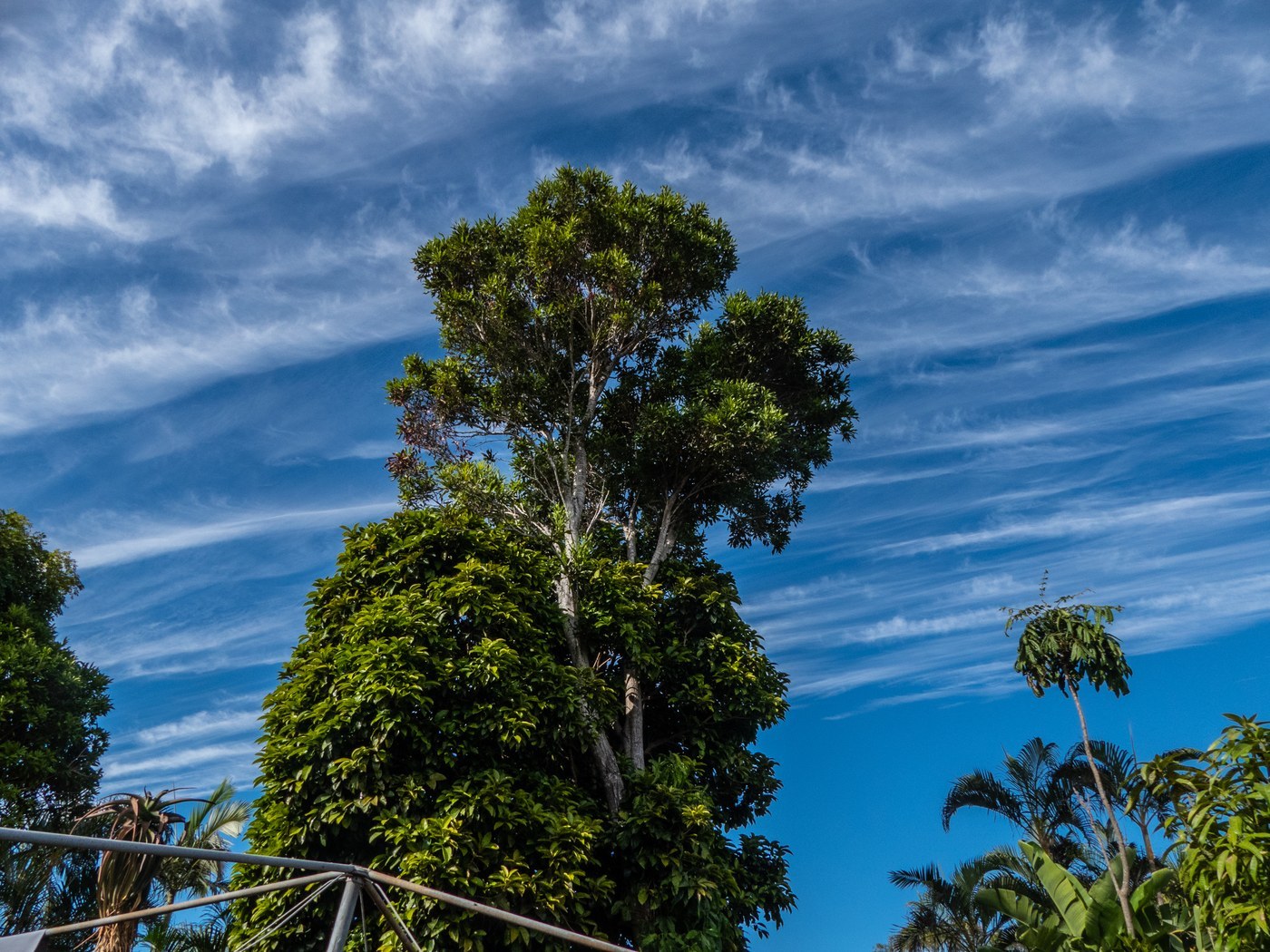
Key Identifying Features
The firewheel tree (Stenocarpus sinuatus), an Australian rainforest tree in the protea family, is named for its striking flowers arranged in a spoke-like wheel - clusters of tubular red-and-yellow blooms radiating from a central point like a Catherine wheel.
- Wheel-shaped (umbel) clusters of bright red, yellow-tipped tubular flowers
- Glossy, dark green leaves, some entire and some deeply lobed
- Hard, woody, canoe-shaped follicle pods with winged seeds
- Upright pyramidal habit, 30-100 ft in habitat (smaller in cultivation)
Leaves & Stems
Leaves are alternate, leathery, and glossy dark green with paler undersides, and are notably variable in shape (sinuatus = wavy): many are deeply and irregularly pinnately lobed like an oak or fern, while others are simple and elliptical. They can be 4-12 in long. Young growth is often bronze-tinted. Bark is gray-brown and fairly smooth. The crown is dense and upright.
Flowers & Fruit
The signature feature is the inflorescence: 10-20 tubular flowers, each about 1-2 in long, joined at the base and spreading outward in a flat circular wheel 3-4 in across. Buds are red; as the curved flowers open they show scarlet with yellow inner surfaces, attracting birds. Flowering peaks in late summer and autumn. The fruit is a dark brown, woody, boat- or canoe-shaped follicle 2-4 in long that splits along one side to release many flat, papery winged seeds.
How to Tell It Apart from Look-Alikes
- Grevillea and other proteas: related and bird-pollinated, but their flowers form one-sided brushes or toothbrush spikes, not a flat radiating wheel.
- Silk oak (Grevillea robusta): has ferny bipinnate leaves and golden one-sided flower combs, not the firewheel's lobed leaves and red wheels.
- Flame trees (Brachychiton, Delonix): red flowers but completely different leaves and flower structure.
- Schefflera (umbrella tree): glossy compound leaves and red flower spikes, but flowers in tall radiating panicles, not a single wheel.
The flat wheel of red-and-yellow tubular flowers + glossy variably lobed leaves + woody canoe pods is unique to the firewheel tree.
Where You'll Find It
Native to subtropical rainforests of eastern Australia, it is grown as an ornamental feature tree in frost-free, subtropical, and warm-temperate gardens (USDA zones 9b-11), including Australia, California, and similar climates. It prefers moist, well-drained soil and some shelter.
Quick ID Checklist
- Red, yellow-tipped tubular flowers in a flat radiating wheel
- Glossy dark leaves, some deeply lobed, some entire
- Woody, canoe-shaped follicle pods with winged seeds
- Upright, dense, pyramidal crown
- Subtropical/warm-temperate, frost-free setting
- Bronze-tinted new growth
Frequently asked questions
Why is it called the firewheel tree?
Its flowers are arranged in a flat circular cluster that radiates outward from a central point like the spokes of a wheel, and the blooms are fiery red with yellow tips, resembling a spinning Catherine wheel of fire.
How do I tell it apart from silk oak, its relative?
Both are in the protea family, but firewheel tree has glossy, variably lobed leaves and red-and-yellow flower wheels, while silk oak (Grevillea robusta) has ferny, fern-like bipinnate leaves and one-sided golden flower combs.
Why do the leaves on one tree look so different from each other?
Leaf shape in Stenocarpus sinuatus is highly variable. The same tree bears some simple elliptical leaves and some deeply, irregularly lobed leaves, which is normal for the species.
When does the firewheel tree flower?
It typically flowers in late summer and autumn, and trees often need to reach some maturity before they bloom well. The flowers are rich in nectar and attract birds.