
Flame Bottle Tree Identification Guide
Identify the flame bottle tree (Brachychiton acerifolius), the Australian flame tree, by its swollen trunk, bright red bell flowers on bare branches, and boat-shaped seed pods.
Read the full Flame Bottle Tree encyclopedia entry →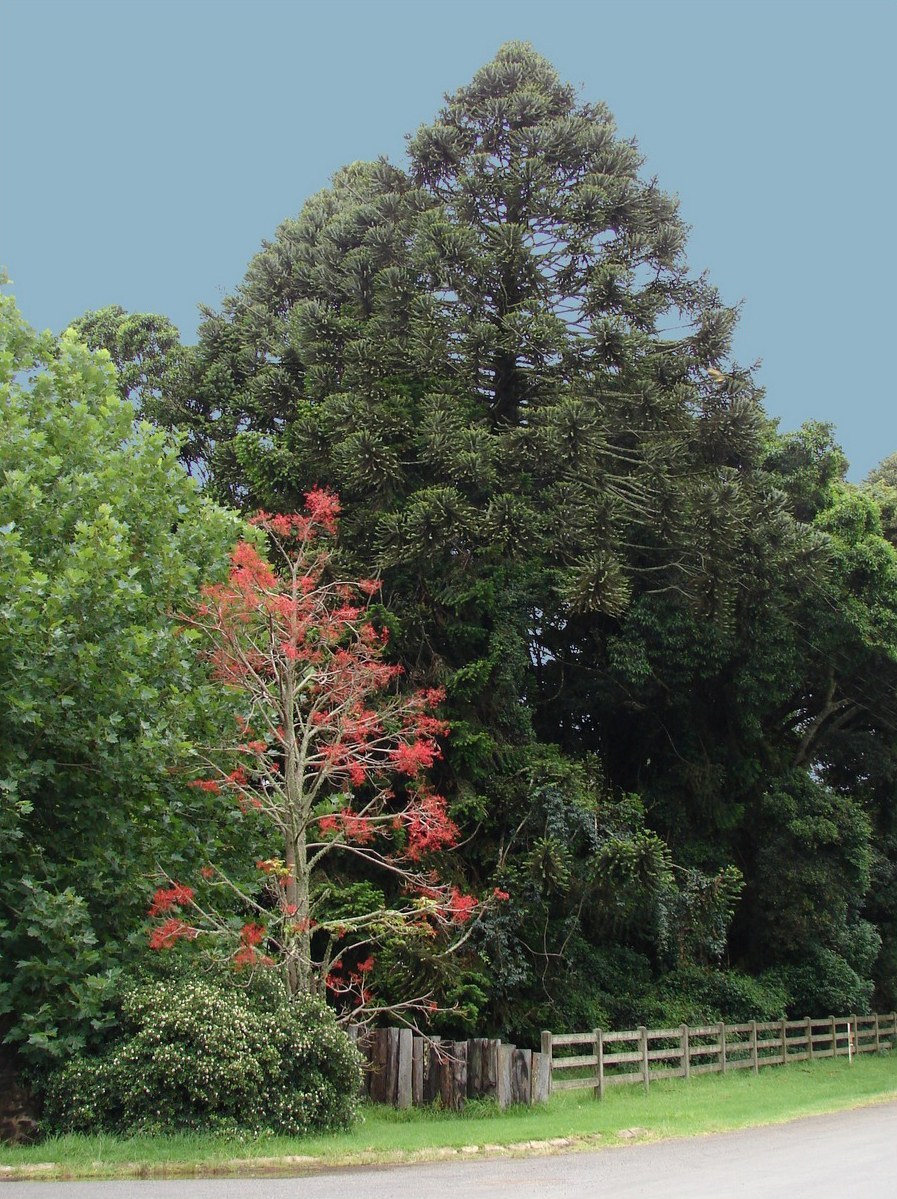
Key Identifying Features
The flame bottle tree (Brachychiton acerifolius), also called the Illawarra flame tree, is an Australian tree celebrated for a dramatic display of brilliant scarlet-red bell flowers that smother the bare branches in early summer. It belongs to the bottle tree group, and mature trees may show a slightly swollen, bottle-like trunk base.
- Masses of small, bright red, bell-shaped flowers on leafless branches
- Maple-like (acerifolius = maple-leaved) lobed glossy leaves when in foliage
- Dark brown, boat-shaped woody seed pods with irritating hairs and yellow seeds inside
- Smooth greenish-gray bark, sometimes a thickened trunk
Leaves & Stems
Leaves are alternate, simple, glossy dark green, and variable: on younger or vigorous growth they are deeply 3-7 lobed like a maple leaf, while on older branches some are entire and lance-shaped - this variability is characteristic. Leaves are 4-10 in across. The tree is briefly deciduous, shedding foliage in the area that will flower. Bark is smooth and green-gray; trunks can become buttressed or slightly swollen with age.
Flowers & Fruit
In late spring to summer, the tree produces loose panicles of waxy, scarlet-red, bell-shaped flowers about 0.75 in across, each with five lobes - there are no true petals; the color comes from the calyx. Flowering is famously erratic, with parts of the tree or only some years blooming heavily. The fruit is a dark brown, leathery, boat-shaped follicle 3-4 in long, holding rows of yellow seeds surrounded by fine irritating bristles - handle pods with care.
How to Tell It Apart from Look-Alikes
- Queensland bottle tree (Brachychiton rupestris): has a dramatically swollen bottle trunk but small creamy flowers and narrow leaves - much fatter trunk, no red flame display.
- Kurrajong (Brachychiton populneus): similar boat pods but cream bell flowers and poplar-like leaves.
- Royal poinciana / flame tree (Delonix regia): also fiery red, but has large showy petalled flowers and ferny bipinnate leaves - very different foliage.
- Coral tree (Erythrina): red flowers but pea-shaped and trifoliate leaves with thorns.
The scarlet bell flowers on bare branches + variable maple-like glossy leaves + boat-shaped follicles confirm flame bottle tree.
Where You'll Find It
Native to subtropical eastern Australia (rainforest margins), it is widely planted as a street and feature tree in frost-free to light-frost climates (USDA zones 9b-11), including Australia, California, and the Mediterranean. Look for it as a tall specimen flaring red against the summer sky.
Quick ID Checklist
- Bright scarlet, bell-shaped flowers on leafless branches in summer
- Glossy, variable maple-like lobed leaves
- Boat-shaped dark-brown woody pods with irritating hairs
- Smooth green-gray bark; trunk may be slightly swollen
- Briefly deciduous; erratic flowering
- Warm, frost-free climate
Frequently asked questions
Is the flame bottle tree the same as the Illawarra flame tree?
Yes. Brachychiton acerifolius is known by both names. 'Illawarra' refers to the region of New South Wales where it is prominent, and 'flame' describes its scarlet flowers.
How is it different from the royal poinciana flame tree?
Both have red flowers, but the flame bottle tree has small bell-shaped flowers (colored calyx, no petals) and glossy maple-like leaves, while royal poinciana (Delonix regia) has large petalled flowers and ferny bipinnate foliage.
Why does my flame tree only bloom on part of the tree?
Brachychiton acerifolius is famous for erratic, uneven flowering. It often blooms heavily only in certain years or on certain branches, usually where it has dropped its leaves, influenced by climate and stress.
Are the seed pods dangerous to handle?
The boat-shaped pods contain fine, irritating bristly hairs around the seeds that can irritate skin and eyes. Wear gloves and avoid touching your face when handling them.