
How to Care for Forget-Me-Not
Grow woodland forget-me-nots for clouds of tiny sky-blue blooms in spring. Easy, moisture-loving, and happy to self-sow year after year.
Read the full Forget-Me-Not encyclopedia entry →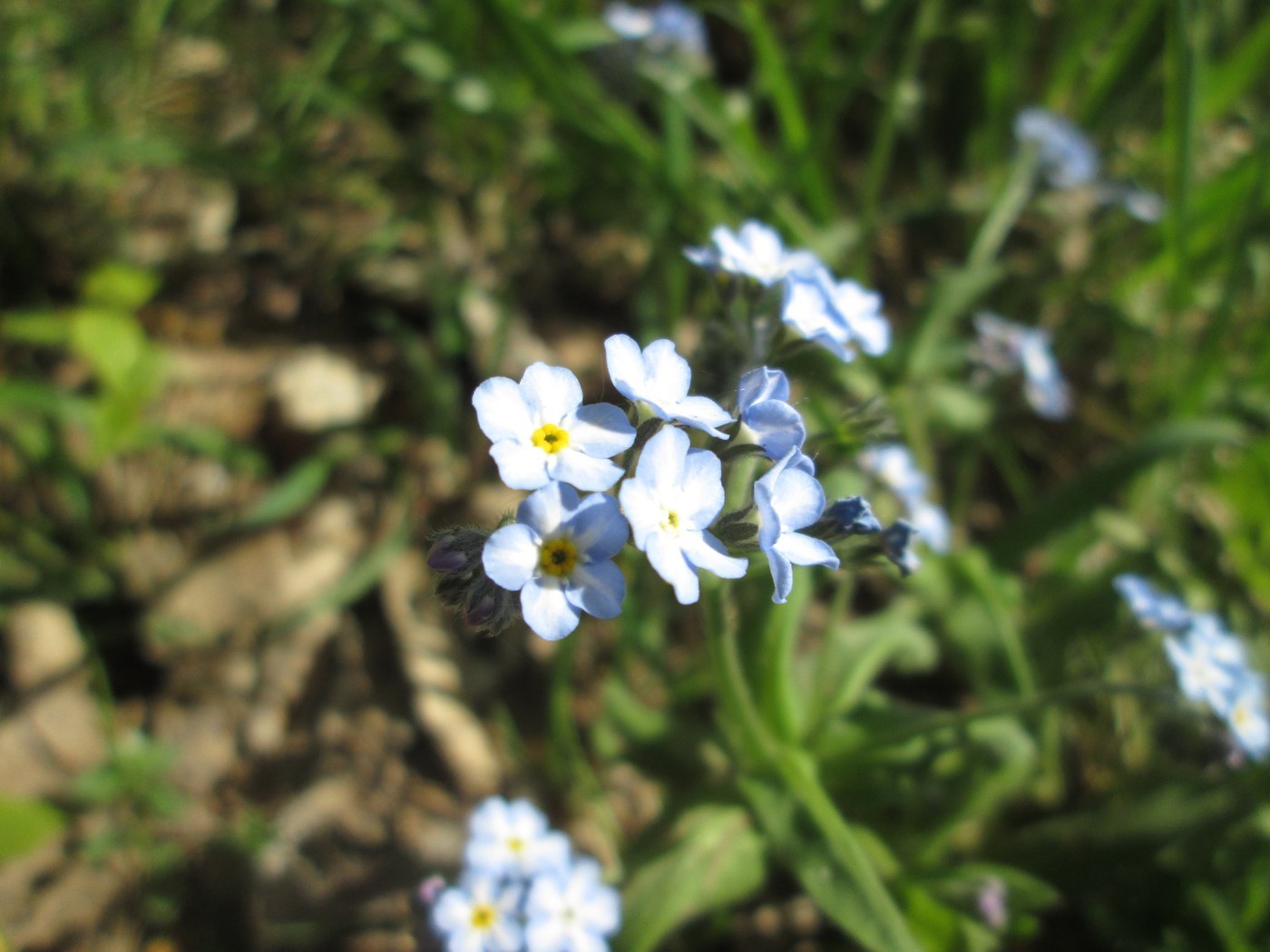
Forget-me-not (Myosotis sylvatica) is a low, mounding biennial or short-lived perennial prized for its haze of dainty sky-blue flowers with yellow eyes in spring. It thrives in cool, moist, partly shaded settings and readily self-sows, forming drifting colonies that return each year.
Light
Forget-me-nots do best in partial shade to full sun. In cool climates they tolerate full sun as long as the soil stays reliably moist, but in warmer regions dappled shade or morning sun with afternoon protection keeps the foliage fresh and extends the bloom. Too much dense shade thins the flowering and makes plants leggy.
Water
Keep the soil evenly moist at all times. These plants have shallow roots and wilt quickly if allowed to dry out, and drought stress shortens the flowering season and encourages mildew. Water regularly during dry spells, aiming to keep the root zone consistently damp but never waterlogged. A mulch of leaf mold or compost helps hold moisture.
Soil & Potting
Provide a rich, loose, humus-heavy soil that retains moisture while still draining. They tolerate a wide pH range but favor slightly acidic to neutral soils. Work in compost or leaf mold before planting. In containers use a moisture-retentive potting mix and choose a pot with drainage holes; because the roots are shallow, wide, shallow containers suit them well.
Humidity & Temperature
Forget-me-nots are cool-season plants that flourish in the mild, humid conditions of spring and early summer. They prefer temperatures roughly between 10-20 C (50-68 F) and often decline or die back in summer heat. They are quite cold-hardy and can overwinter as small rosettes to bloom the following spring.
Feeding
These are light feeders. A single application of balanced, slow-release fertilizer or a top-dressing of compost in early spring is plenty. Avoid heavy nitrogen feeding, which produces lush leaves at the expense of flowers and makes plants floppy.
Propagation
The easiest method is seed. Sow directly in late spring to early summer for bloom the following year, barely covering the fine seed. Established plants self-sow prolifically, so once you have a patch it tends to renew itself. You can also lift and divide clumps or transplant young volunteer seedlings in autumn or early spring.
Repotting / Pruning
Because plants are short-lived, repotting is rarely needed; instead refresh containers by replanting fresh seedlings each cycle. Shear plants back after the main flush of bloom to tidy them and sometimes coax a light rebloom. To limit self-seeding, cut off spent flower stems before the seed ripens; to encourage naturalizing, leave them to scatter.
Common Problems & Pests
Powdery mildew is the most common issue, especially in dry soil or crowded, poorly ventilated plantings late in the season. Space plants for airflow and keep the roots moist to reduce it. Aphids may cluster on new growth and can be rinsed off or managed with insecticidal soap. Slugs and snails sometimes nibble seedlings. Root rot occurs only in soggy, poorly drained soil.
Seasonal Care Tips
In autumn, sow seed or set out young plants so rosettes establish before winter. In spring, keep soil moist and enjoy the peak bloom. After flowering in early summer, shear plants and decide whether to pull tired specimens or let them seed. Fresh seedlings will carry the colony into the next year.
Frequently asked questions
Are forget-me-nots annual or perennial?
Myosotis sylvatica is technically a short-lived perennial usually grown as a biennial. Individual plants often fade after blooming, but they self-sow so freely that a patch behaves like a permanent planting.
Why is my forget-me-not getting a white powdery coating?
That is powdery mildew, common late in the season or when plants are stressed by dry soil. Keep the root zone evenly moist, improve air circulation by spacing plants, and remove badly affected foliage.
Can I grow forget-me-nots in containers?
Yes. Use a moisture-retentive potting mix in a pot with drainage holes, place it in partial shade, and water often since the shallow roots dry out quickly in pots.
How do I stop forget-me-nots from spreading everywhere?
Deadhead and cut back the flowering stems before the seed ripens. Removing spent blooms prevents the prolific self-seeding that lets them colonize a bed.